



Four more methanol-fuelled carriers for Waterfront Shipping
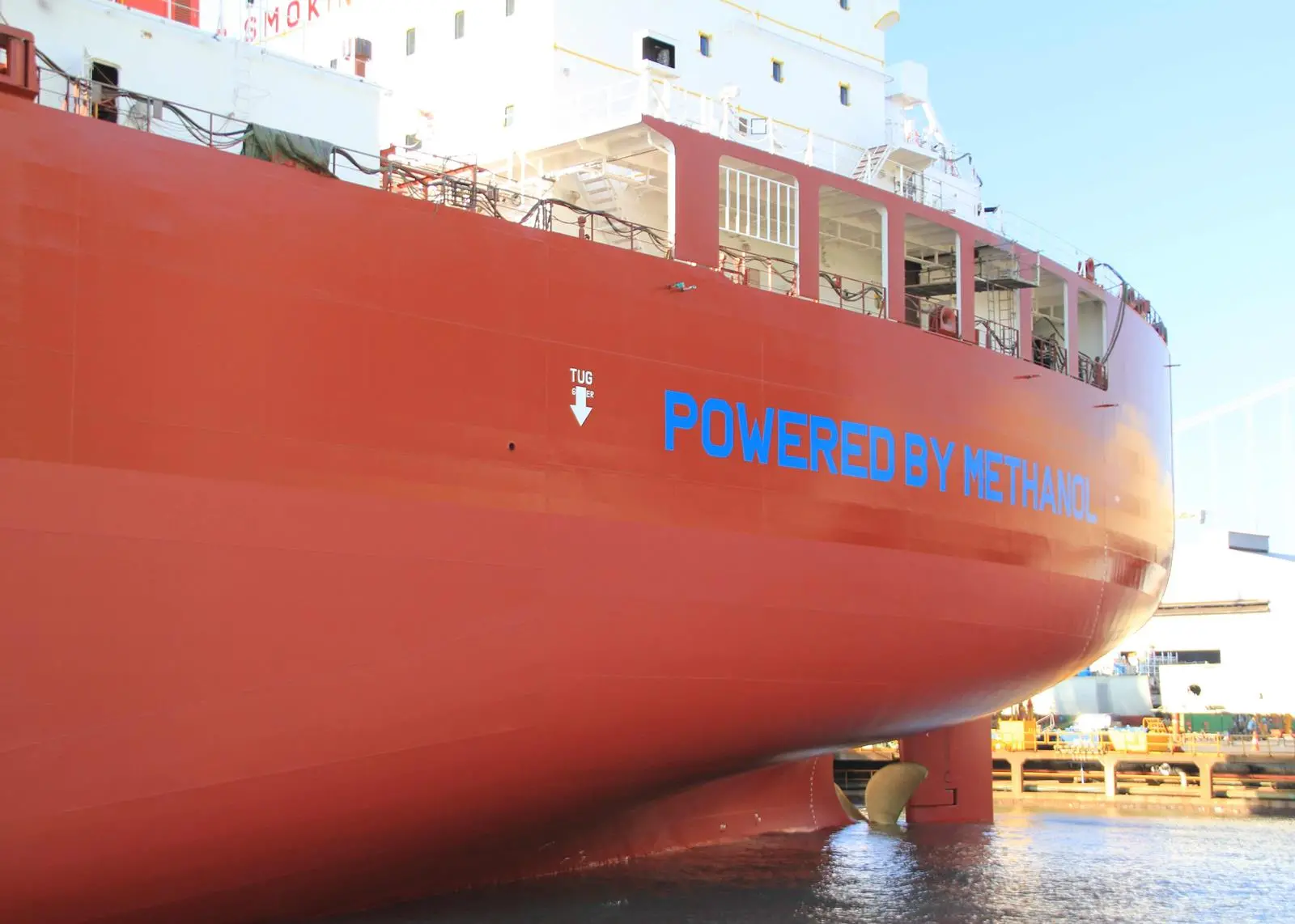
The four 49,000dwt vessels, to be delivered in 2019, will join the first seven ships ever to feature methanol-burning two-stroke engines, delivered in 2016 and also chartered by Waterfront Shipping. The new ships will be built in Korea at Hyundai Mipo Dockyard, where several of the first generation of methanol-fuelled vessels were built.
“Our seven methanol-fuelled vessels have been operating safely and reliably since 2016, and we expect these new vessels to benefit from ongoing technological advances that will continue to optimise performance and efficiency,” said Paul Hexter, president, Waterfront Shipping. “We are proud to see 40% of our fleet powered by methanol fuel technology in the coming year.”
Two of the vessels will be owned in a joint venture between Waterfront Shipping and Marinvest/Skagerack Invest, one will be owned by NYK Group and the fourth will be owned in a joint venture between IINO Kaiun Kaisha and Mitsui & Co.
Methanol is a promising alternative marine fuel that can help ship owners to meet current and impending IMO regulations on sulphur oxide and nitrogen oxide emissions. The second generation of the engine technology has also become more competitive financially, said René Sejer Laursen, promotion manager, MAN Diesel & Turbo.
“Since the ME-LGI engine entered the market in 2016, its price has dropped considerably, which makes it an even more attractive propulsion option,” Laursen said. “Allied with its environmental credentials and convenience of use when employing methanol as a fuel, we are confident the ME-LGI will continue its promising progress.”
Patrik Mossberg, chairman, Marinvest, added: “Our overall focus in the development of the dual-fuel system concept has been safety and engine reliability. We have found the technology for handling methanol is well developed and offers a safe dual-fuel solution for low-flashpoint liquid fuels.”
Related Articles
 ALTERNATIVE FUELS & LUBRICANTS
 ALTERNATIVE FUELS & LUBRICANTS
 ALTERNATIVE FUELS & LUBRICANTS