



DNV GL tackles stern tube failures
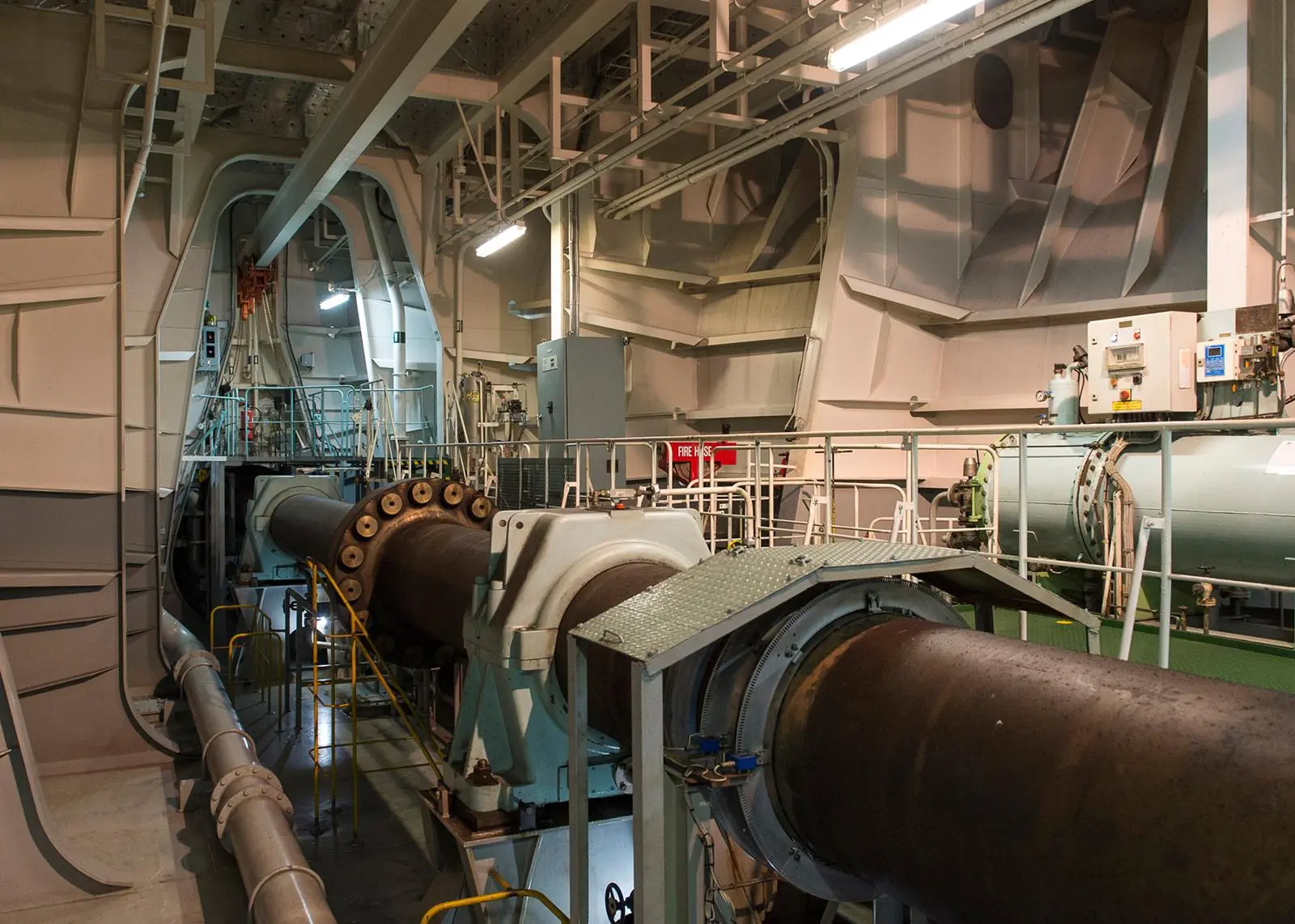
The alignment notations address one potential cause of the spate of failures. A recently announced joint research project into environmentally acceptable lubricants (EALs) will investigate the impact of biodegradable oils on these incidents.
During turning manoeuvres at high speeds, exaggerated propeller bending moments can occur, potentially causing damage to the aft bearing. Most of the reported bearing damages have been observed in the aft-most part of the aft bearing, typically during a starboard turn on a right-handed propeller installation. The new rules put additional focus on the impact of these transient hydrodynamic propeller forces and moments, induced in turning conditions, on the aft-most propeller shaft bearing.
Geir Dugstad, director of ship classification, DNV GL, said: “This revision to class rules and the two additional class notations will enable owners to enhance bearing performance and benefit from a longer lifetime in their stern tube installations.”
For both notations, and in the revised class requirements, a multi-sloped bearing design is mandatory. An additional evaluation of the aft bearing lubrication condition is also required, considering an increased propeller-induced hydrodynamic bending moment on the aft bearing in the downward direction. Further criteria are intended to increase operating margins as well as enhancing bearing performance and fatigue lifetime.
The notation ‘shaft align (1)’ is intended for propulsion systems installed on vessels with conventional hull forms. It incorporates enhanced aft bearing performance during normal and turning operating conditions. Another notation, ‘shaft align (2)’ is intended for propulsion systems requiring additional calculations to predict hydrodynamic propeller loads during turning conditions, for example vessels with non-conventional hull forms such as asymmetric sterns and twin skeg arrangements.
The new class notations can be assigned to both newbuilds and vessels in service in conjunction with propeller shaft withdrawal.
Learn more about the new notations and rules here.
Related Articles
 LNG
LNG
 LNG
LNG
 SHAFTS AND PROPELLERS