



Digital vision drives transformational Transas deal
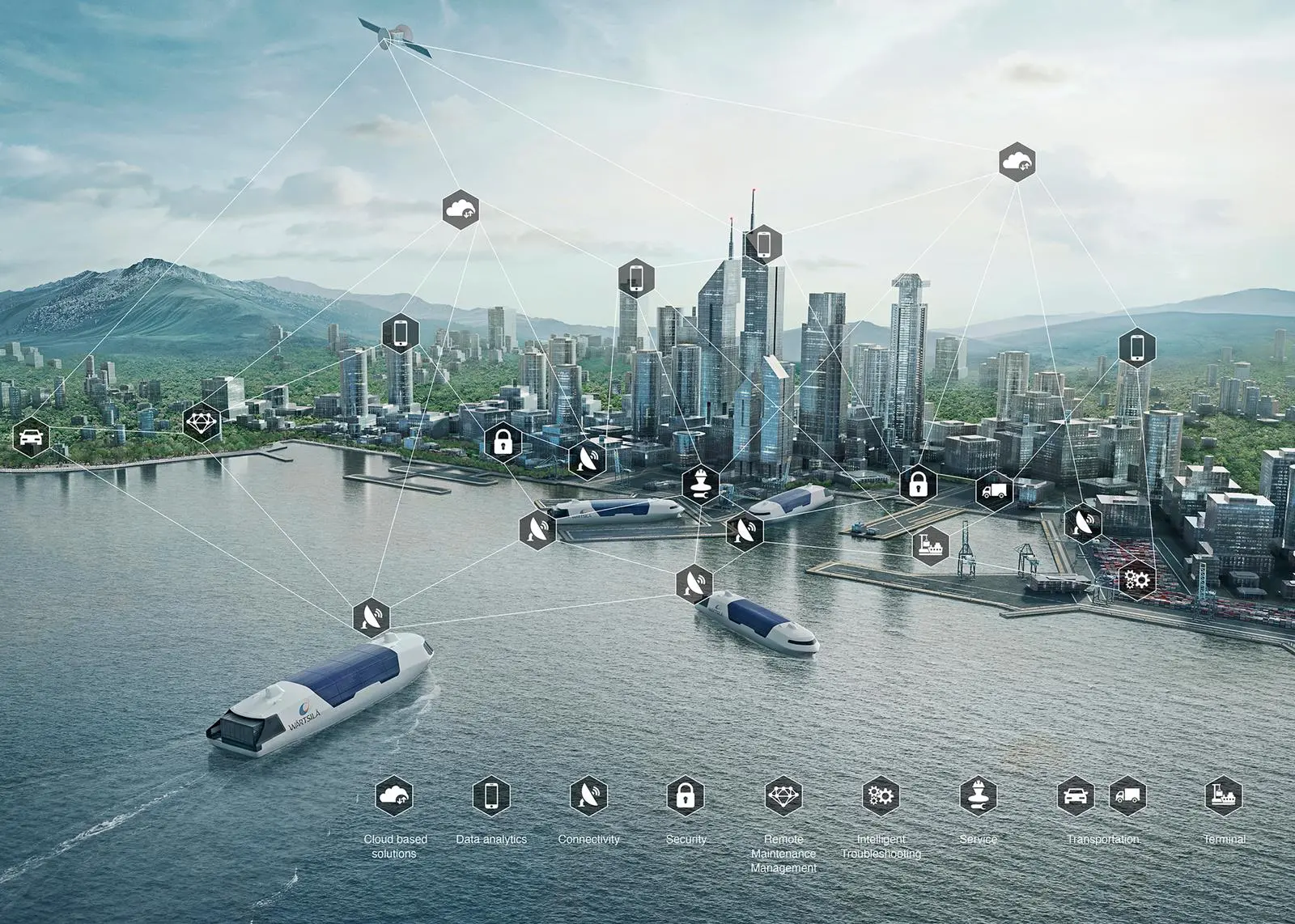
“Everything is possible now.” Those words from Roger Holm, vice president of Wärtsilä Marine Solutions, on the day that the company announced its acquisition of Transas, could not be more optimistic. They reflect the Finnish company’s zeal in laying out its vision of digitalisation in shipping and its belief that the software development expertise brought by the navigation systems specialist moves that vision many steps closer.
Wärtsilä announced its ‘smart marine ecosystem’ strategy for digitalisation in November last year, surely as the company’s top tiers knew that the Transas deal was close. The strategy envisions a hyper-connected industry in which inefficiencies – be they sub-optimal systems on ships or long waiting times at ports – are eliminated, resulting in lower costs, improved profit and better environmental performance across the system.
Holm explains: “Today every vessel is a silo, sailing independently and to a certain extent inefficiently in a disconnected operating environment. We see unnecessarily high emissions and fuel consumption, long waiting times, prescriptive maintenance models based only on scheduling and abundant safety risks. In short, we see inefficiency and its consequences.”
In a smarter, connected ecosystem, ports know exactly when ships will arrive and depart having tracked them across their voyages. Seen holistically, Holm notes, marine and port operations become a system in which “each element is able to perform more efficiently, more reliably and with less burden on the environment, thanks to its ability to connect with every other element in that system”.
The future according to Wärtsilä is an intelligent vessel, monitored remotely and probably incorporating a hybrid power solution, navigating with smart routing taking into account weather, other vessels and other factors. Combined with automated manoeuvring at sea, the result will be more efficient, less polluted and safer sailing. At port, real time visibility of ship arrival and departure times, as well as automated docking, will make waiting times a thing of the past.
SMART STEPS
And, as Holm’s opening statement boldly suggests, Wärtsilä believes it is already in a position to implement this ecosystem approach. The company’s recent acquisitions – in particular of Eniram and Guidance Marine (see table) – had already developed its abilities in the fields of digital insight and situational awareness respectively. They were “an important step adding greater connectivity… data collection and analysis to our offering, both onboard and ashore”.
The Transas deal – scheduled to be completed in the second quarter of the year (subject to regulatory clearance) and valued at €210 million – is expected to be even more transformational. The company is a global market leader in navigational solutions, with a unified cloud-based platform that uses machine learning and artificial intelligence to manage applications across the marine ecosystem.
Holm explains: “This is a monumental forward step in delivering our vision. With these elements and platform added to what is already the widest product portfolio in the marine industry, we are in a position to make the future of shipping a reality today.”
The UK-based company achieved net sales of around €140 million last year, with around 1,000 employees operating from 22 regional offices and a distribution network that spans more than 120 countries. That scale is reflected in its market presence. Transas is the leading supplier of electronic chart display and information systems (ECDIS), with installations on around 13,000 ships. More than 300 ports have installed its vessel traffic management systems, where it is again a leading supplier, and it has supplied 5,500 simulators in more than 100 countries, at institutions ranging from training schools to ship owners.
The company’s market reach and its platform are undoubtedly a key part of the attraction for Wärtsilä. But equally is important is Transas’ proven software development capability. The company has a big base of software engineers, representing about 30% of its total workforce. This base is what has enabled Transas to develop its digital platform, and Wärtsilä sees that software capability as critical to establishing leadership in the digitalisation of the marine industry.
FLEET OPERATIONS
The main deliverable for Wärtsilä – combining Transas’ digital platform, its existing products and its software capability with Wärtsilä’s own ship systems portfolio – is a fleet operations solution. This suite of services is intended to ensure safe and efficient navigation and operation, connect ships to shore operations and traffic control, and provides training to benefit both the smart marine ecosystem and the environment. This means using advanced technological tools to enhance decision support and training, and encompasses intelligent routing, manoeuvring, diagnostics, satellite services, remote maintenance and automated data delivery.
Holm adds: “The end result is both dramatic and far reaching – the transformation of data into value for our customers. Everything here, no matter how futuristic, is now possible. All this technology already exists today and Wartsila is already in a position to put this vision into practice. This is a huge step forward in delivering the smart marine ecosystem vision and we are able to lead and accelerate industry transformation.”
Selected Wärtsilä acquisitions, 2008-2018
|
Date |
Company |
Product |
Transaction value |
|
June 2008 |
Claus D. Christophel Mess- und Regeltechnik |
Automation systems |
Not disclosed; annual sales €2.1m (2007) |
|
September 2008 |
Navelec SAS |
Navigation, communications, electrical, control and automation |
Not disclosed; nnual sales €7m (2007) |
|
May 2015 |
L-3 Marine Systems International |
Automation, navigation. electrical systems, dynamic positioning, sonar, underwater communications |
€285m |
|
June 2016 |
Eniram |
Energy management, analytics |
€43m |
|
May 2017 |
Greensmith Energy Management Systems |
Energy storage technology |
US$170m |
|
October 2017 |
Guidance Marine |
Dynamic positioning, vessel control, sensor technology |
£14m |
|
March 2018 |
Transas |
Navigation, simulation, software development |
€210m |
Related Articles
 ALTERNATIVE FUELS & LUBRICANTS
 ALTERNATIVE FUELS & LUBRICANTS
 OPINION