



Looking ahead to renewable fuels
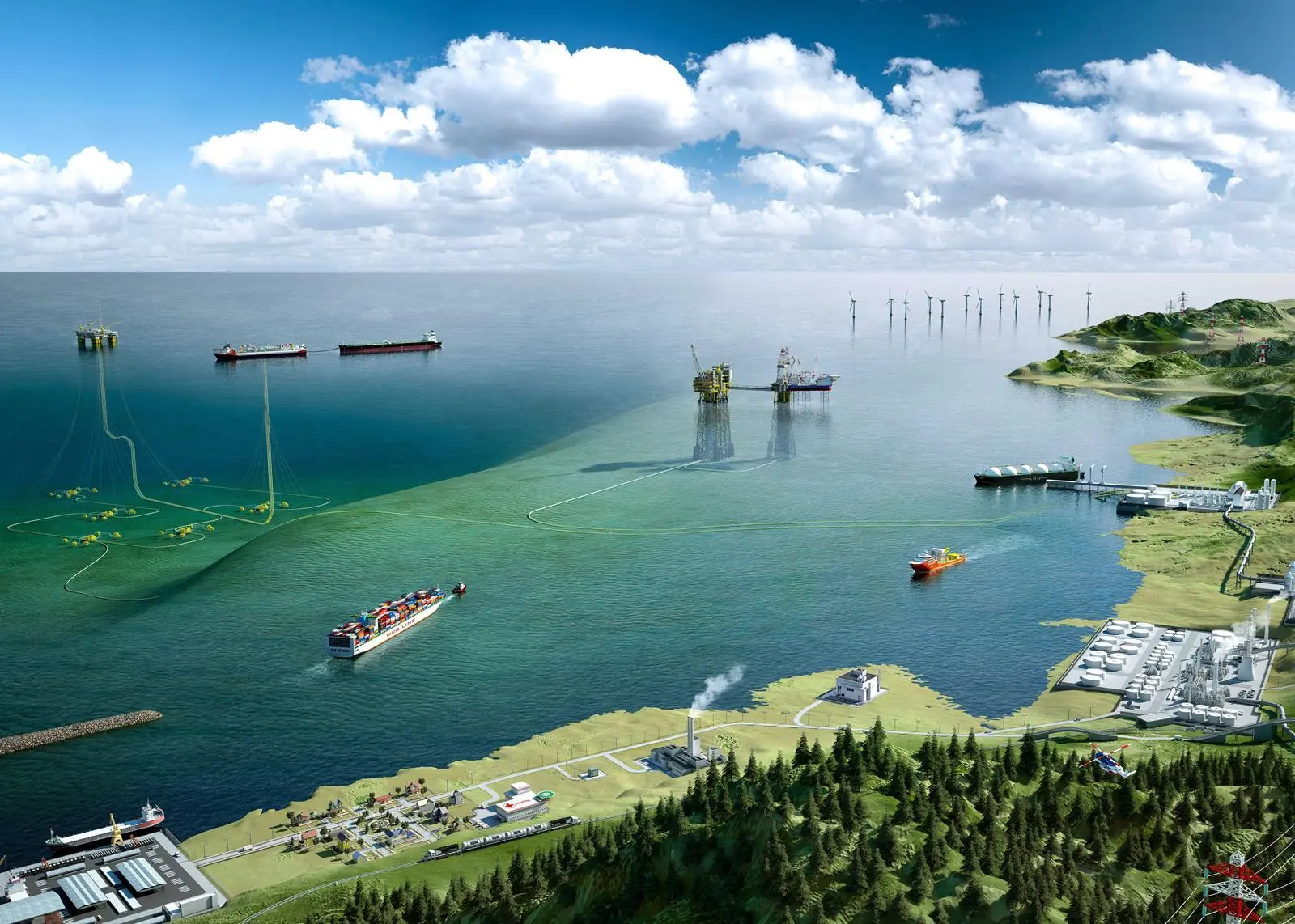
The IMO greenhouse gas target “has the potential to change the price of transport, and the shipping world”, says Gerd-Michael Würsig, business director alternative fuels, DNV GL. But how are we going to make it reality? Part of the solution hinges on the falling price and rising availability of renewable energy: in fact, output often outstrips demand, especially outside peak hours.
How can shipping make use of this excess clean energy? The first and most obvious route is to wirelessly recharge battery-driven ships on the spot, explains Teus van Beek, general manager market innovation, Wärtsilä. But although this is fine for shorter routes, he points out “we are nowhere near there yet” when it comes to big ship operations. While there are drivers, both for clean operations and simplification of some onboard technology, he estimates it would take batteries that are “between 10 and 20 times” more efficient than those available today.
Then there’s the option of creating hydrogen by electrolysis, but there are a couple of stumbling blocks, says van Beek. The first is the present high cost, but this is open to change: he advises “keeping an eye on the car industry” as it has the turnover to invest in making technology cheaper.
The other issue is more difficult to solve: while LNG requires two-and-a-half times the volume of diesel, liquefied hydrogen need four times the space. Accommodating it in ship design could prove challenging. However, van Beek has an intriguing suggestion: “If you need additional volume for fuel, you need more points to bunker. Maybe a distribution hub in the ocean might be the answer”.
Another option for harnessing renewable energy is to use emerging power-to-gas technologies to turn renewably generated electricity into clean, synthetic fuels. “[This] could mean combustion engines are part of our future,” says van Beek.
HIGH-DENSITY FUELS
Würsig expands on the point “Aeroplanes and shipping are two sectors that need high density fuels. Power-to-fuel technology could be the answer to producing carbon neutral synthetic fuels, such as ammonia, methanol, DME, and synthetic biofuel, provided a renewable power source such as solar or wind power is available.”
As an interesting sideline to this, Würsig notes that “when you liquefy synthetic methane that comes from CO2 and hydrogen sources, you can mix it directly with LNG, which lowers CO2 emissions”.
In the view of both experts, we are no longer looking at a ‘one-size-fits-all’ future, but different alternatives that could be run in conventional engines, dual-fuel engines or in hybrid propulsion arrangements paired with batteries. The number of possibilities is stunning. According to Würsig there are maybe a dozen or so different alternatives to explore.
“When you manufacture these synthetic fuels in a factory, you can tailor them to precisely meet your needs,” Würsig adds.
But clean energy, even if it’s surplus to requirement, still won’t be free. There needs to be investment in production plants and transportation, for example. Different studies estimate the cost of synthetic fuels at roughly US$1,800 per tonne equivalent to MGO, compared to today’s low-sulphur fuel price of US$700 per tonne. This is mainly related to the cost of electricity and processing. We would also need a lot of it: some 150 million tonnes in order to replace around 50% of the ship fuel used today.
DRIVING CHANGE
So, how is the industry to cover what is quite a hefty cost gap? As Würsig explains, if a ship owner tried to do this without support or incentives, “you’d start your ship in Hamburg and be bankrupt by the time you reach the end of the Elbe”. What happens next remains unclear. Politicians will have to create incentives, support and drivers for technologies and different types of fuel, synthetic or not and let ship owners themselves choose their options.
Finally, Würsig adds that although some have started to suggest that LNG is little more than an investment sinkhole, it is still the lowest carbon fossil-derived fuel available today, with the additional benefits of low NOx and zero SOx emissions. With potential solutions like synthetic and renewably produced liquefied methane (which is similar to LNG) on the horizon, “LNG infrastructure and technologies are definitely not stranded assets – in time we will be able to create the fuel as we want it – and we will be able to continue to use this existing technology”.
DNV GL and Wärtsilä are not alone in this view. Harnessing clean electricity to produce combustible fuels will be a ‘game changer’ as the industry strives to halve greenhouse gas emissions by 2050 according to Frank Starke, CEO of Caterpillar Motoren.
Speaking at the opening press conference of trade fair SMM, Starke noted that such technologies –could reduce shipping’s greenhouse emissions by between 80-100% depending on the electricity source.
Starke noted that power-to-X technologies are in development, with electricity potentially being used to produce hydrogen, synthetic natural gas or liquid fuels. But he warned that reliance on hydrogen – often touted as a shipping fuel of the future, would not be a magic solution.
NO MAGIC LEVER
“We have been working on hydrogen for a long time and while engines can burn it, the problems have been around logistics, storage and safety,” he said. “It will be part of the solution, but it will not be the one knob that switches us to our emissions targets.”
Efficiency improvements in engine technology will only be sufficient to offset the extra emissions caused by growth in shipping between now and 2050, said Starke. He noted that engine developers have been working on efficiency for a hundred years and that improvements only happen in small increments.
A move to gas fuels currently available would reduce emissions by around 20%, he said, while the use of existing gas supply infrastructure offers a potentially useful way to store and supply energy from other sources in the future.
In the long term, Starke predicted that wider electrification in shipping would reduce emissions. But he issued a warning about the speed at which new technologies would need to be developed. “We need solutions we can start to implement in ten years’ time,” he said. “Anything brought to market then will still be in operation in 2050.”
Creating new fuels from renewable electricity won’t necessarily provide the complete solution to hitting IMO’s ambitious emissions target. But with little realistic prospect of full electrification of the global merchant fleet – let alone the impossibility of providing all that power from renewable sources – power-to-X technologies offer one avenue of fruitful development.
Related Articles
 ALTERNATIVE FUELS & LUBRICANTS
 FUELS & LUBRICANTS