



Batteries, fuel cells and gas in 1969
Some of the ideas even now seem rather far-fetched. But our predecessors reminded the readers that not many years before a ‘super-tanker’ was 30,000dwt, 10,000bhp was considered a very large engine, and unmanned engine rooms were a flight of fancy – even the idea of a diesel engine burning heavy fuel was controversial.
So, what did we have to look forward in the 1970s? Container ships would be expected to travel at 24 knots-plus. Fuel cost was considered less important than reliability, which, combined with the high power requirement, indicated twin-screw power plants, likely to be medium-speed. Speed was seen to be of the essence, and surface effect ships capable of 100-150 knots were envisaged for Transatlantic freight. Such a ship would be powered by eight gas turbines of 25,000hp each.
It seemed that the two-stroke engine had reached the peak of development but marginal improvements in efficiency and reliability may be possible. The future, instead, lay with medium speed and gas turbine propulsion. The latter offered advantages of high power from light weight, and low requirement for on-board supervision and maintenance. Moreover, the gap between the cost of residual fuel and distillates was expected to decrease, and fuel costs would be less important than transit speed. The events of the last few years have shown that quite the opposite actually happened. One rather more accurate prediction was that hydrocarbon power plants would become obsolete in 100 years as no more fossil fuel would be available. Nuclear power plants looked attractive, but interestingly, it was considered that shore-generated power could be used by ships, with batteries or fuel cells providing the storage media. A final alternative would be gas engines powered by liquid hydrogen.
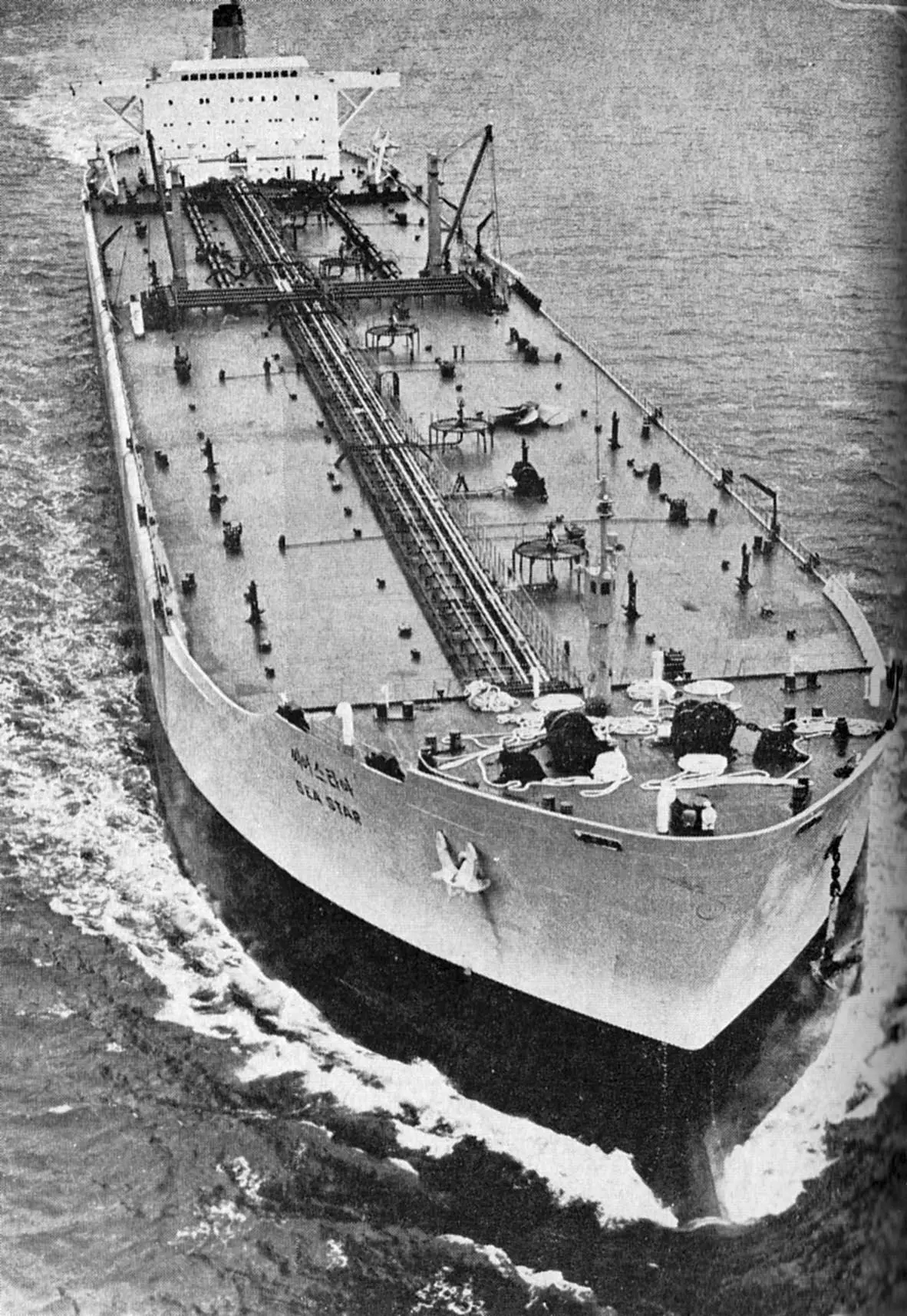
Coming back down to earth, it was seen that 1968 had been the year when containerisation really caught on with cellular container vessels representing a growing proportion of the global orderbook. Among the surveys of the past year, two new ships were described in detail. One was Sea Star, a 120,300dwt tanker for Korean owners. Not only would this be the largest ship in the Korean fleet, coming from the Arendal yard of Götaverken it was the largest vessel built in Sweden. It was powered by one of Götaverken’s own-design two-stroke diesel engines, an 11-cylinder 850mm bore unit developing 26,400bhp at 119rpm.
The other full ship description concerned a rather better-known vessel, the Queen Elizabeth 2 passenger liner which was about to enter service. Constructed on the Clyde for Cunard, at a build cost of £30 million, she was considered the most expensive merchant ship ever built for commercial service, as well as the most powerful twin-screw merchant vessel anywhere. Featuring innovations such as a bulbous bow, thought to save some 10,000bhp, twin sets of Denny-Brown folding fin stabilisers, twin six-bladed propellers and extensive use of aluminium for the superstructure. Some 10% of the cost was spent on providing an “elegant and simple background for the enjoyment of an international clientele.”
Despite these advances in design, she still relied on steam for propulsion, with twin Brown-Pametrada geared turbines, each capable of 55,000hp. Three Foster-Wheeler superheated boilers, with a new design burner, supplied the steam. The machinery installation was both lighter in weight and more fuel efficient than the quad-screw multi-boiler plants found in Queen Elizabeth 2’s predecessors.
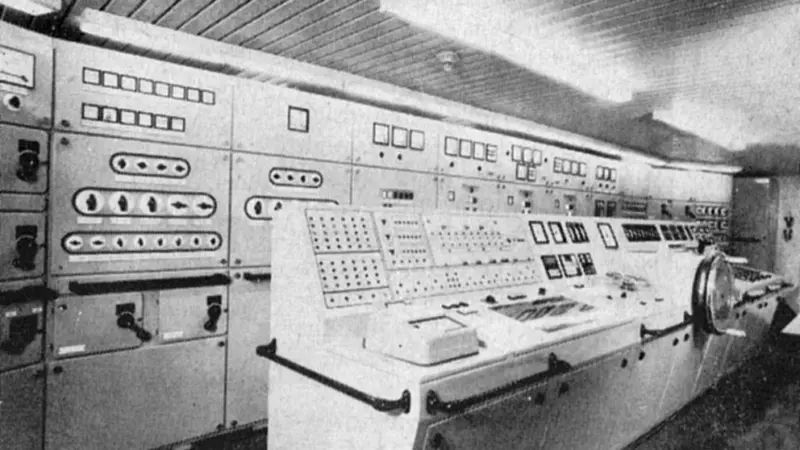
A notable innovation was the “most powerful computer system ever installed in a merchant ship”. The Ferranti Argus 400 computer was employed on technical, commercial and operational functions at sea.
Related Articles
 50 YEARS AGO
 50 YEARS AGO