



DNV GL signs first cyber security contract
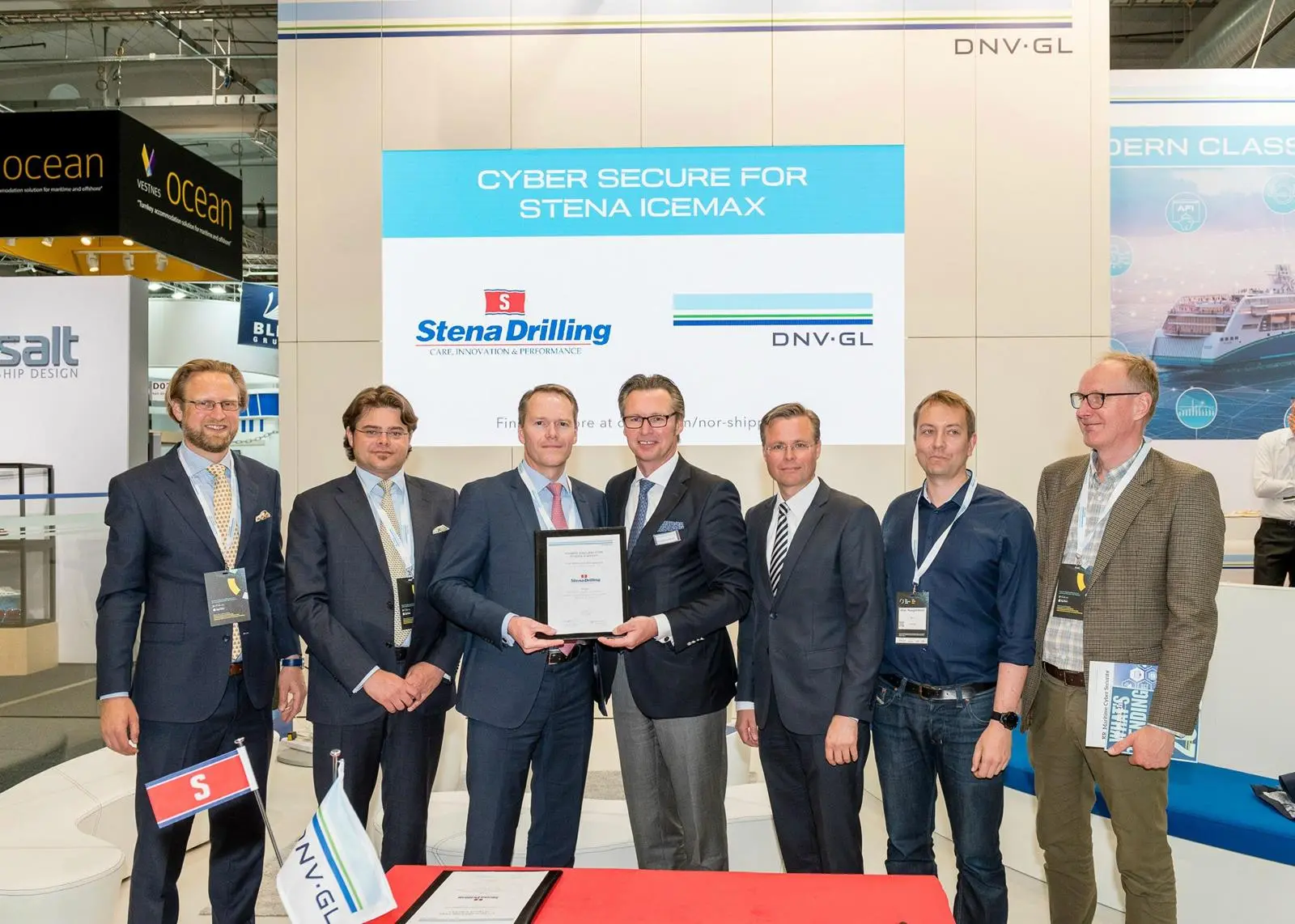
The contract covers the application of the ‘Basic+’ notation to the drillship Stena IceMAX and includes the vessel’s dynamic positioning, drilling, and blowout prevention systems. It will be integrated with Stena Drilling’s own safety management systems.
“The shipping industry needs to build resilience against cyber-attacks, which have proliferated over the past few years,” explained Knut Ørbeck-Nilssen, chief executive of DNV GL – Maritime. “This becomes even more critical as vessels develop higher degrees of autonomy. “I am very pleased that Stena Drilling chose us as the preferred classification partner for enhancing their asset’s cyber resilience with our Cyber Secure notation,” he added.
DNV GL’s Cyber Secure class notation establishes a baseline to identify cyber security levels for the main functions of a vessel and allows owners and operators to improve and demonstrate their cyber resilience. It gives owners and operators the flexibility to identify the threats and to assess and secure extra systems which are of particular importance to their operations.
The Cyber Secure class notations have three different qualifiers: ‘Basic’, ‘Advanced’ and ‘+’. Basic is primarily intended for ships in operation, while Advanced has been designed to be applied throughout the newbuilding process, with requirements for asset owners and operators, yards and equipment manufacturers.
Both qualifiers cover a number of essential systems, including propulsion, steering, navigation, and power generation whilst the third, ‘+’, is intended for systems that are not part of the default scope of Basic/Advanced.
Related Articles
 ENERGY SAVING DEVICES
 LNG
LNG
 ALTERNATIVE FUELS & LUBRICANTS