



Remote operation moves a step closer
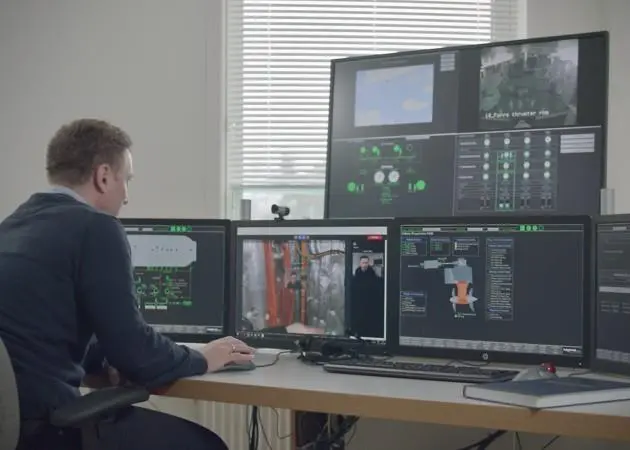
The key concept is to move the engine control room (ECR) from the ship to a shore-based engine control centre (ECC), where chief engineers can operate the propulsion and auxiliary machinery systems of a single ship, or a fleet of vessels.
“The overall goal of ROMAS is to provide improved operations and cost-efficiency while ensuring a safety level that is the same or better than today’s conventional operation,” said Steinar Låg, principal researcher on autonomous ships in DNV GL and ROMAS project manager.
“But transferring responsibilities, monitoring, and control facilities to shore also reduces the need for machinery engineers on board, which could make marine engineering jobs more attractive,” he added.
The testing took place in the first quarter of 2019, using the Fjord1 ferry Fannefjord, with the ECC established at Fjord1’s office in Molde. The Fannefjord is a DNV GL classed LNG/battery/diesel powered ro-ro ferry that operates on the 35-minute crossing in Moldefjorden between Molde and Vestnes.
ROMAS will continue to the end of 2019, supported by funding from the Norwegian Research Council. The long-term plan is to use the project’s findings to guide future operations including a ‘remote ready’ integrated automation system from Høglund, the applicable rules and AiP programmes from DNV GL, and regulations from the Norwegian Maritime Authority, to enable Fjord1 and other ship owners to consider commercial deployment.
Related Articles
 ENERGY SAVING DEVICES
 LNG
LNG
 ALTERNATIVE FUELS & LUBRICANTS