



J-ENG TARGETS MARCH 2021 FOR FIRST UEC42LSH DELIVERY
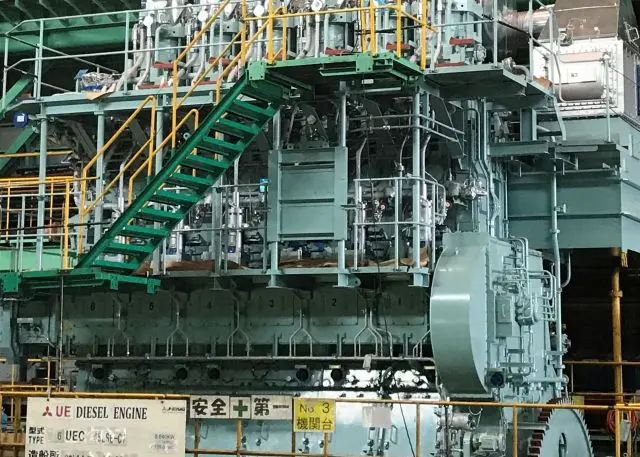
The new engine will be characterised by reduced fuel consumption, and the first delivery of the new engine is scheduled for March 2021 for UEC42LSH.
The company has also confirmed plans to develop an MGO mono-fuel version, UEC42LSJ. Development work on this project will follow after UEC42LSH, and the first delivery of the new engine is expected in March 2022.
The UEC42LSJ shares the same technology concept as J-ENG’s current 500mm bore UEC50LSJ engine – JUMP (J-ENG Unique Marine Power). By utilising MGO as the fuel, the ship owner can avoid the need to invest in an exhaust gas cleaning system to meet IMO SOx emission regulations. Meanwhile high fuel efficiency and a resilient operating system can deliver competitive operating costs. The engine also features stratified water injection to optimise fuel oil consumption and minimise NOx emissions.
No orders for either of the new engines have yet been confirmed, but the engine designer is holding discussions with interested parties about the UEC42LSH. The overall space requirements for the engine have been reduced, while the engine’s fuel efficiency at slower operating speeds has been improved.
The main market for the new engine is expected to be from the domestic Japanese market, where the preceding iteration, the UEC45LSE, was widely sold, although the high efficiency and brake mean effective pressure (BMEP) of the engine are also expected to attract interest in other East Asian markets. In Tier 2 operation, the new engine, UEC42LSH is expected to achieve a fuel consumption rate of 164 g/kWh at maximum rating. The mono-fuel UEC42LSJ variant is understood to reduce fuel consumption further, with a fuel consumption rate of 157 g/kWh at maximum rating.
The new engine features the same engine stroke as the UEC45LSE to simplify the manufacturing process for licensees.
The upgraded design is an extension of the existing engine range, and includes the same three- ring piston pack and chrome ceramic piston ring model. The existing combustion chamber design has been retained in the new engine.
The engine will also be tuned to optimise output and engine speeds at slower operating speeds, while the engine will be optimised to comply with EEDI requirements. A particular focus is being placed on improving the reliability of the engine. Managing sudden increases in speed requirements from de-rated engine installations whilst bearing down on fuel oil consumption and emissions is placing pressure on engine flexibility.
The existing Eco-Engine control system will be used in the new engine. However, J-ENG also announced plans to extend digitalization and introduce condition-based maintenance services across its wider engine portfolio at the UEC42LSH’s launch in Japan in May. While the introduction of the new engine is one of the main programmes being undertaken by J-ENG’s research and development team, it is also active in the development of Internet of Things (IoT) solutions.
PRINCIPAL PARTICULARS
|
Engine model |
6UEC42LSH-Eco-D3-EGR |
6UEC42LSJ-EGR |
6UEC45LSE-Eco-B2-EGR |
5UEC50LSH-Eco-C3-EGR |
|
Bore, mm |
420 |
420 |
450 |
500 |
|
Stroke, mm |
1,930 |
1,930 |
1,930 |
2,300 |
|
Stroke / bore |
4.6 |
4.6 |
4.3 |
4.6 |
|
Cylinder number |
5-8 |
5-8 |
5-8 |
5-8 |
|
Output (kW) |
7,560 |
7,560 |
8,280 |
8,900 |
|
Engine speed, RPM |
118 |
118 |
128 |
108 |
|
Pme, bar |
24.0 |
24.0 |
21.1 |
21.9 |
|
Piston speed, m/s |
7.6 |
7.6 |
8.2 |
8.3 |
|
SFOC, 100%, Tier2 mode, g/kWh |
164 |
157 |
169 |
164 |
|
SFOC, 100%, Tier3 mode, g/kWh |
165.6 |
158.6 |
170.7 |
165.6 |
Related Articles
 2-STROKE & 4-STROKE
 2-STROKE & 4-STROKE
 2-STROKE & 4-STROKE