



NEW SAGA FOR UK CRUISE FLEET
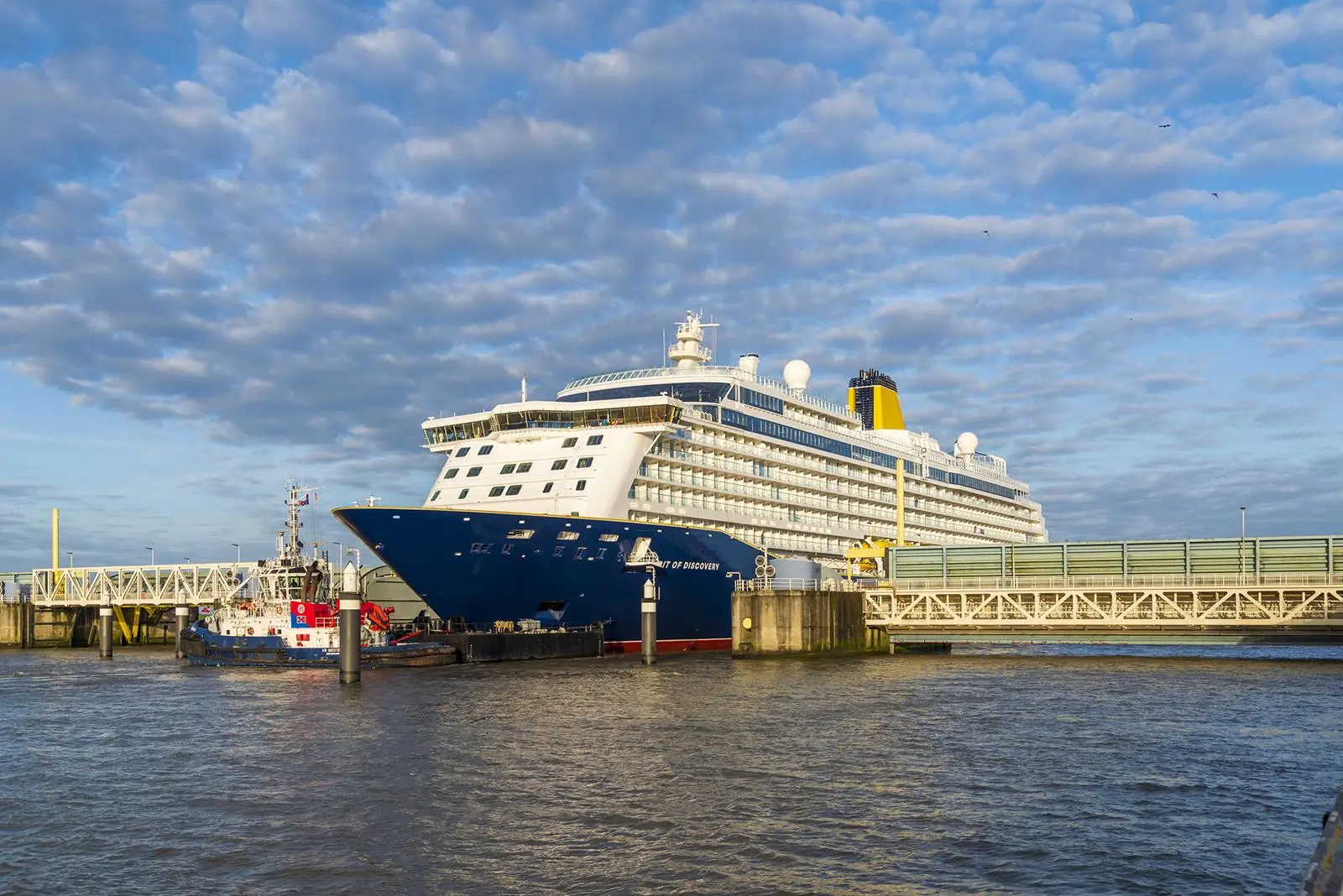
The vessel size and accommodation for approximately 1,000 passengers is modest by current industry standards, albeit bigger than Saga’s existing ships, creating a larger platform for more dining, entertainment and recreational options. One of the most significant aspects of the project is the extent and effect of energy-efficiency measures incorporated.
Although engaged in the business since 1997, the premium-brand company has until now progressively and successfully developed its fleet through secondhand purchases. It was only in 2015 that Saga Cruises implemented a new construction project for the first time, ordering the Spirit of Discovery and a sistership, to be delivered next year as the Spirit of Adventure, from Meyer Werft.
German engineering technology is strongly represented in the diesel-electric vessels, which afford an important reference for the latest podded propulsion system developed by Siemens.
In the two-year lead time before the start of production on the first vessel, Saga and the Papenburg yard collaborated to introduce a range of energy-saving measures which are expected to yield an overall reduction of 8.5% in fuel consumption compared to the initially formulated design.
Significant reductions have accordingly been achieved in ‘hotel’ electrical load, including that of the heating, ventilation and air conditioning (HVAC) system, a major consumer on any passengership. Through the use of multi-stage chillers, entailing a larger number of smaller compressor units than conventional designs, the team has achieved finer and more energy-efficient climate control. Ozone-neutral carbon dioxide is used for cold room refrigeration. Saga invested about EUR 600,000 (US$682,000) in technical modifications to the original design, which are expected to yield annual savings of about EUR 800,000 (US$909,200).
The power station-type plant is based on four gensets driven by nine-cylinder models of MAN’s L32/44CR medium-speed engine, each developing 5,400kW for a generator rating of 5,211ekW. Electronically-controlled common rail injection systems optimise fuel efficiency and minimise smoke emissions, while NOx abatement to IMO Tier III standard will be exercised through the use of selective catalytic reduction (SCR) technology. Yara Marine-supplied, hybrid scrubbers provide a further level of emissions control.
Waste heat recovery in various manifestations represents an important part of the energy saving strategy for the ship.
Azimuthing, podded electric propulsion thrusters offer a raft of benefits long-proven in cruiseship applications, not least as regards manoeuvring precision, power translation maximisation and energy effectiveness. For its newbuild tonnage, Saga Cruises nominated the SISHIP eSiPOD system developed by Siemens, claimed to provide the highest level of overall efficiency through the combination of a compact, hydrodynamic pod design and integral, permanent-excited synchronous electric motor. Siemens was entrusted with responsibility for the supply of the complete power and distribution installation in each ship.
Manoeuvring qualities are enhanced by a pair of Brunvoll tunnel thrusters in the foreship section. The twin, 360-degree rotating podded propulsion units obviate any need for tunnel thrusters at the stern.
London-based SMC Design was assigned all aspects of what is termed as ‘hospitality design’, encompassing the interiors of Spirit of Discovery as well as artwork procurement and onboard branding. For the second newbuild, Spirit of Adventure, another London company, AD Associates, has been appointed as architectural design contractor.
Spirit of Discovery was due to arrive at the port of Dover on 28 June, with the official naming ceremony to take place on 5 July, five days ahead of the scheduled commencement of her maiden service voyage, entailing calls at ports and anchorages around the British Isles.
PRINCIPAL PARTICULARS – Spirit of Discovery
|
Length overall |
236.71m |
|
Length bp |
211.90m |
|
Breadth |
31.20m |
|
Depth |
10.40m |
|
Draught |
7.60m |
|
Gross tonnage |
58,119t |
|
Propulsion system |
Diesel-electric |
|
Main generators |
4 x 5,211eKw |
|
Class |
DNV GL |
|
Flag |
UK |
Related Articles
 PROPULSION
 GENERAL NEWS
 HYDROGEN