



Pulling power: applying dynamic control to towing kite technology
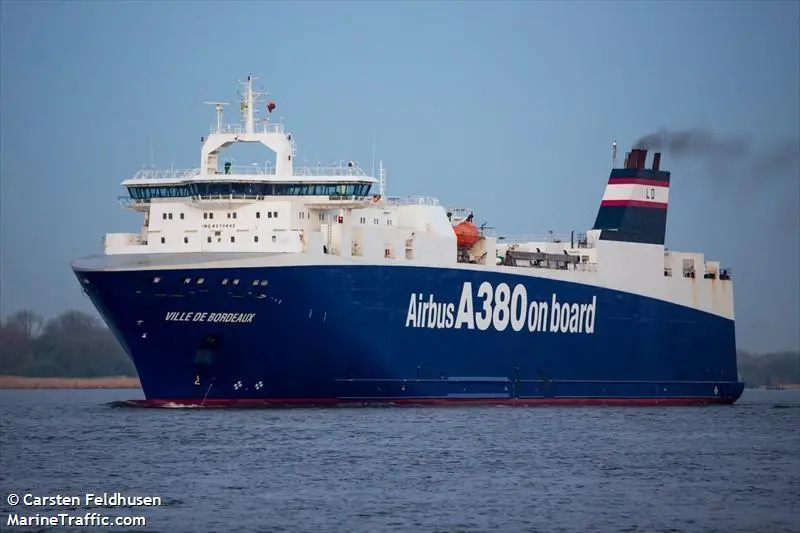
The first commercial installation aboard Louis Dreyfus Armateurs’ Ville de Bordeaux ro-ro is due to be undertaken in 2020.
Seawing performance
At the heart of the product lies a 1000m2 powered kite, which can be automatically controlled, deployed, managed and stowed from the bow of large vessels, thanks to Airseas’ unique aeronautical know-how.
The automated product optimises the operation of the kite, combining detailed meteorological data with route and vessel specific data to maximise energy efficiencies.
One of the particular features of the Seawing system is the way that the kite is managed to maximise the thrust from the air at its operational altitude of over 100 metres above sea level. Unlike some other kite products, the Seawing is able to apply dynamic control to the configuration of the kite.
“We are able to force the wing to fly in eight-shaped motions in the sky, using the same principle top kite surfers use to jump high in the air”, Luc Reinhard, business development director at Airseas, noted.
One of the advantages of the dynamic control method is that it maximises the propulsive force generated by a 1000m2 Seawing. “By keeping the wing out of its comfort zone, we can generate up to 110 tonnes/second.”
When the wind blows
The operating conditions for the kite are wind speeds of between 8 and 40 knots, while the kite itself is resistant to all but storm or hail weather conditions.
The system is able to take measures to protect itself from damage in case of wind surges: “it can be put at its zenith position to reduce its wind density to nearly zero, and then recover and store it until favourable wind conditions are back”, Reinhard said. .
The availability of the system is route dependent, but Reinhard noted that Airseas’ sophisticated modelling programme, which draws on highly detailed simulation methods based on its relationship with European aircraft manufacturer, Airbus, had derived availability of up to 65%.
In order to maximise the amount of wind propulsion generated, Vincent Bernatets noted that this might also require some route changes by up to a few tens of miles to maximise the energy efficiencies while keeping the same arrival time. The amount of wind generated on round trips is highly route specific, he noted.
While the company currently publicised fuel savings of 20% from its product, one suezmax vessel operating along trade routes at higher latitudes had achieved savings of 45%.
“One of our partners could achieve fuel savings of 45% on a suezmax vessel on a regular round-trip route at a northern latitude”, Bernatets noted.
Bernatets noted that the non-linear relationship between sail size and energy generation meant that the product was particularly well suited to larger vessels, even if the fuel efficiencies for a 400m-long, 200,000 dwt bulk carriers, for example, were proportionately lower than for lower ballast smaller vessels.
Even before the launch of the product, some companies have begun to look at developing innovative new ship designs to maximise the benefits of the product.
The company was currently focused on beginning commercial production of its current 1000m2 kite product, but there were several areas of focus, including extending the operational life of the kite wing itself beyond the current two years.
Meanwhile, Aireas continues to work closely with a number of other parties, including class society Bureau Veritas which already granted their Approval in Principle in October 2018.
“As a company with its roots in the aeronautical industry [Airbus remains a shareholder], we retain a strong focus in safety and risk analysis. These are key values that we share with Bureau Veritas”, Bernatets noted.
Retrofit interest
Reinhard noted that the first commercial installation, aboard Ville de Bordeaux, as well as the contract signed with Japanese ship owner and operator “K” Line (Kawasaki Kisen Kaisha Ltd.), concerned existing vessels.
However, the product itself is comparatively simple. “One of the strengths of the product is that it is a plug-and-play solution: it only needs to have enough space on the foredeck”, Reinhard noted.
The automated control system was also self-contained and could be integrated into existing voyage optimisation systems.
The potential energy savings Seawing, a 5th term technology, offers for larger vessels is particularly interesting as attention shifts to EEDI Phase 3 criteria. Bernatets was unequivocal: “we believe our product will be the cornerstone of future ship development”.
Related Articles
 ENERGY SAVING DEVICES
 ENERGY SAVING DEVICES
 AMMONIA