



IMO GHG targets drive propulsion revolution
IMO’s initial strategy links to the Paris agreement and is a major policy commitment to drastically reduce greenhouse gas emission from ships including at least a 50% cut by 2050.
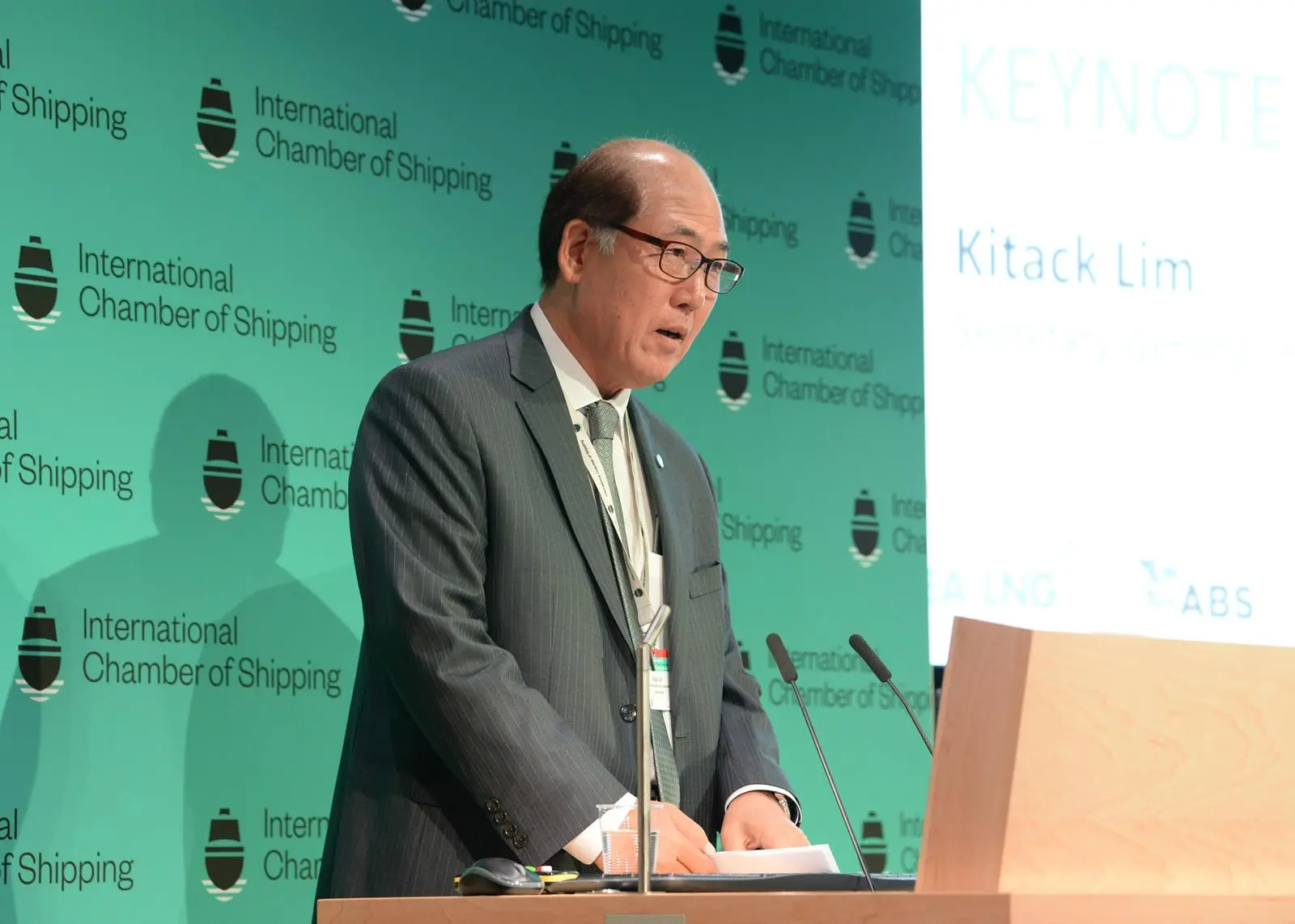
Speaking at London International Shipping Week, IMO Secretary-General Kitack Lim said, “The targets set out in the strategy will not be met using fossil fuels only, which is why this strategy is expected to drive a new propulsion revolution. So, as well as the regulatory imperative, there is a need to make zero-carbon ships more attractive and to direct investments towards innovative sustainable technologies and alternative low-carbon and zero-carbon fuels.
“There are already strong signs emerging that some sectors of the industry are really grasping this. Battery powered and hybrid ferries, ships trialling biofuels or hydrogen fuel cells, wind-assisted propulsion and several other ideas are now being actively explored. The IMO GHG strategy has sent a clear signal to innovators that this is the way forward. However, actions need to be accelerated if its goals are to be achieved.
“The decade 2020-2030 needs to be a decade of action and delivery on these goals.”
Sulphur 2020
Commenting on the IMO sulphur 2020 regulation, IMO Secretary-General Kitack Lim was confident that the implementation date of 1 January 2020 would go smoothly. “IMO has worked hard, with member states and the shipping and bunker supply industries, to support the implementation of this important, global, rule,” he said.
“Ultimately, compliance rests with the industry, while monitoring and enforcement are the responsibility of the IMO member states. I get a clear sense that the member states and the industry are taking this responsibility very seriously indeed,” he added.
Related Articles
 LNG
LNG
 LNG
LNG
 SHAFTS AND PROPELLERS