



Silent fuel cell revolution
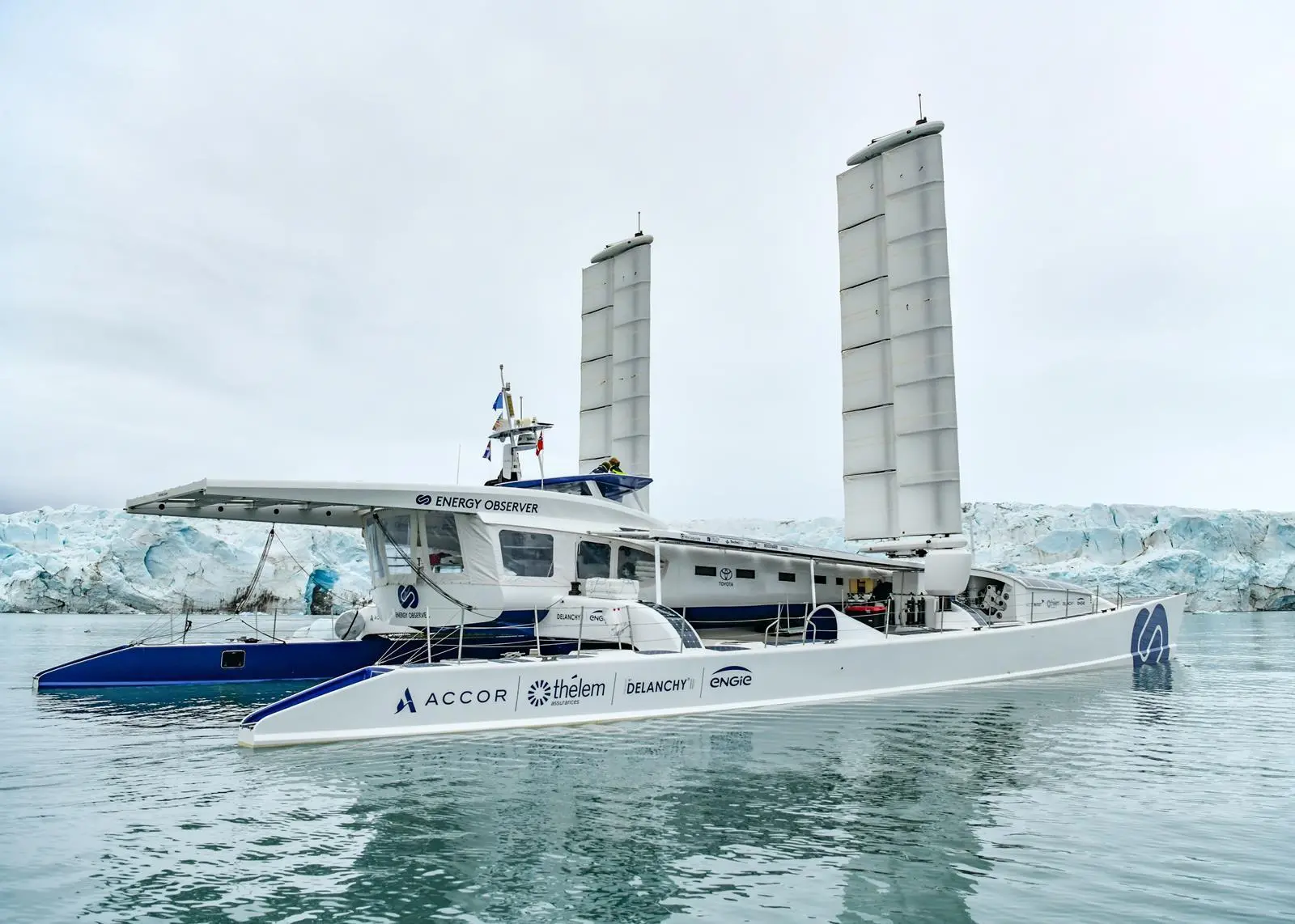
The vessel produces its own fuel while underway through energy recuperation using onboard electrolysis. The vessel uses solar power as a direct renewable. The excess energy produced will be captured and stored in batteries and then as hydrogen using proton exchange membrane (PEM) electrolysis, which will later generate electrical power for propulsion or hotel load.
Main power for the vessel comes from electricity generated by a 20kW fuel cell which drives a propeller while the vessel is fitted with a desalination plant and storage for 62kg of compressed hydrogen at 350 bar, that is produced by a proton exchange membrane (PEM) electrolyser, with a capacity to produce up to 4 Nm3/hour of pure hydrogen. Energy storage also comes in the form of two lithium ion battery packs, weighing 1.7 tonnes, totalling 100kW.
Electric motors drive the vessel at around 6knots, burning around 5k of hydrogen per day, and the top speed of the vessel is 15 knots, but at 6 knots the vessel operates at its most fuel-efficient speed.
Louis-Noël Viviès, managing director of the project told The Motorship that two sails added recently to the vessel have increased its efficiency, reducing fuel use by 40%.
The project has contributed direct experience of adapting systems to operating in marine environments. The electrolyser’s resistance to the saline and humid environment, and service life, were one area of attention, while a number of failures affected the compressor membranes during the initial stages of the project.
The technology has the potential to be scaled up, and is now the subject of a collaboration with French container operator CMA CGM, which is looking at the possibility of using hydrogen power for auxiliary engines for use during port calls, said Viviès.
Zero Emissions Technology
According to Madadh (pronounced Maddy) MacLaine, founder of the Zero Emissions Technology Association, which was established in 2018 to accelerate the transition from fossil fuels, vessels such as Energy Observer will change the way ships are designed.
The technology for zero emissions ships is already available and it could start making a difference immediately, according to MacLaine.
“This is the thing that really gets me. In terms of design, zero emissions ships have been possible for decades. The only thing that is preventing us from making the switch is cost. But that cost can be dealt with through regulation. It’s a very simple formula. If we put a price on carbon emissions, the cost of zero emissions technologies and the requisite designs begin to become competitive,” MacLaine added.
Cost estimates for hydrogen produced through electrolysis range from $3.50 to $8.30 per kilogram ($1,170 to $2,770/tonne of crude oil equivalent), averaging about $5.30 per kilogram ($1,770/tonne crude oil equivalent). This cost estimate includes production, compression, storage and transport, according to an industry study. As a reference, the price of oil at $70 per barrel is approximately $530 per tonne of fuel oil equivalent.
Viviès believes that a price for hydrogen of less that €7/kilo would be competitive with fossil fuels. “Currently the cost of installing a hydrogen system is three to four times higher than a diesel engine, but the total cost for diesel including maintenance and 5,000hours of running, can be cheaper with hydrogen, where the maintenance is just one air filter change per year.”
The cost of “dirty” hydrogen, produced from fossil fuels is almost nothing, said Viviès, but then you produce a lot of carbon, clean hydrogen can be produced at around €4-8/kilo, but if it is produced in a large scale facility that price can be as low as €3/kilo, he added.
Energy Observer will serve as the blueprint for the propulsion system design of a number of projects, including 15 passenger vessels of 70m each carrying up to 90 passengers according to Viviès.
The technology for zero emissions ships is already available and is now being implemented in some cases, but this technology will be scaled up for use in large commercial vessels, including container ships, tankers and bulk carriers within five years, said Viviès. With Energy Observer the silent revolution has already started to make a difference.
Related Articles
 ALTERNATIVE FUELS & LUBRICANTS
 ALTERNATIVE FUELS & LUBRICANTS
 ALTERNATIVE FUELS & LUBRICANTS