



Maersk tanker Rotor Sails trial a success
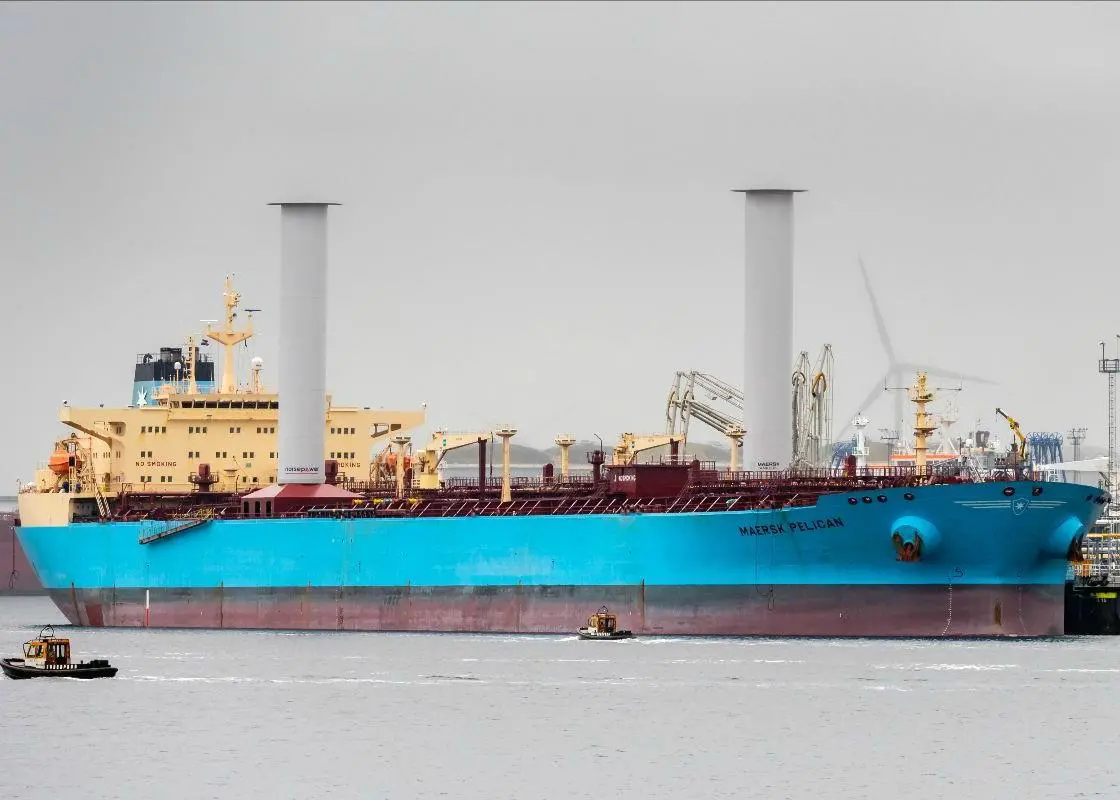
The Rotor Sails were installed on board Maersk Pelican in August 2018. Tests showed that fuel consumption was reduced by 8.2% over 12 months, equivalent to around 1,400 tonnes of CO2. Lloyd’s Register’s ship performance group has independently ratified the results.
“During the one-year trial period on Maersk Pelican, crew and operators have reported positively on the usability, safety and performance of the Rotor Sails in all conditions,” said Tommy Thomassen, chief technical officer at Maersk Tankers.
“We see wind technology as one of the technologies that can give us a real breakthrough in reducing CO2 and help us achieve our emission-reduction target of 30% by 2021 [and] have decided that Maersk Pelican will continue to sail with the Rotor Sails,” he added.
In a simulation model, Norsepower shows that the currently installed Rotor Sails yield a savings potential up to 12% on fuel and emissions. Based on the same simulation model, Norsepower estimates that applying Rotor Sail technology to the entire global tanker fleet would reduce annual CO2 emissions by more than 30 million tonnes, which corresponds to emissions of about 15 million passenger cars.
Related Articles
 ENERGY SAVING DEVICES
 ENERGY SAVING DEVICES
 AMMONIA