



Zero emissions in offshore construction
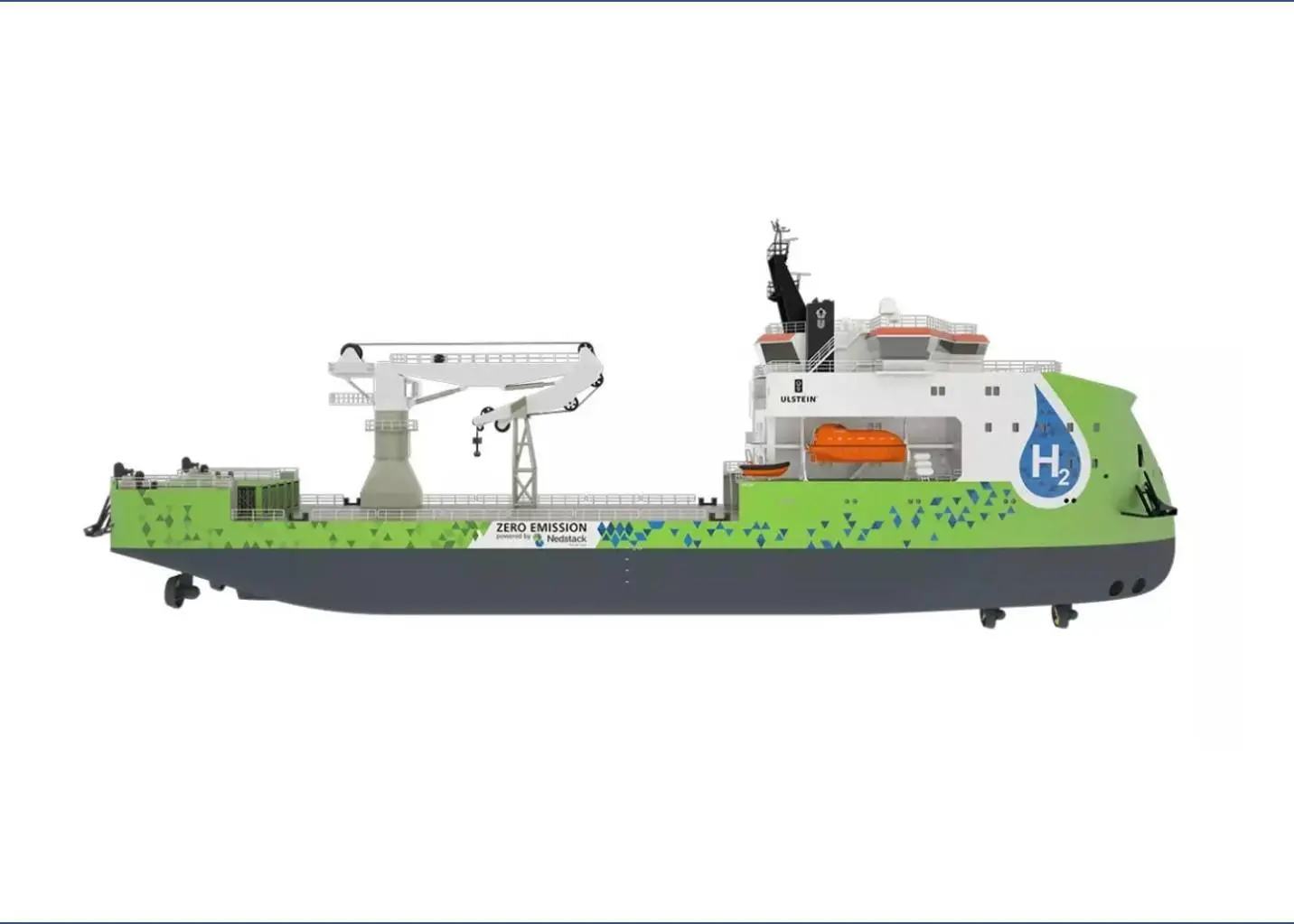
Through the use of proven technology, the Ulstein SX190 Zero Emission DP2 construction support vessel will enable cleaner shipping operations and reduce the environmental footprint of offshore projects. Sea trials are anticipated in 2022.
“The maritime industry needs to align and be ambitious in bringing green solutions forward for a sustainable future,” explained Tore Ulstein, deputy chief executive of Ulstein Group. “With this hydrogen-fuelled vessel we aim for future zero-emission operations of long endurance,” he added.
Based on Ulstein’s existing SX190 platform, the vessel has a total installed power of 7.5 MW of which 2 MW is generated by the Nedstack Proton Exchange Membrane (PEM) fuel cells, which are located in a separate engine room.
PEM fuel cells convert hydrogen and air into electric power, heat and water and produce no harmful emissions. The fuel cells used in the SX190 Zero Emission design are fuelled by hydrogen from containerised pressure vessels which can be loaded and unloaded by normal container handling operations and refilled at any hydrogen production site.
Using current technology, the SX190 design can operate for four days in zero-emission mode. However, with the rapid developments in hydrogen storage and fuel cell technologies, a future zero-emission endurance of up to two weeks is targeted. For extended missions the vessel can fall back on its more conventional diesel-electric system using low sulphur marine diesel oil.
Related Articles
 ALTERNATIVE FUELS & LUBRICANTS
 ALTERNATIVE FUELS & LUBRICANTS
 ALTERNATIVE FUELS & LUBRICANTS