



Operating with uncertainty: 2019 Motorship Propulsion and Future Fuels review
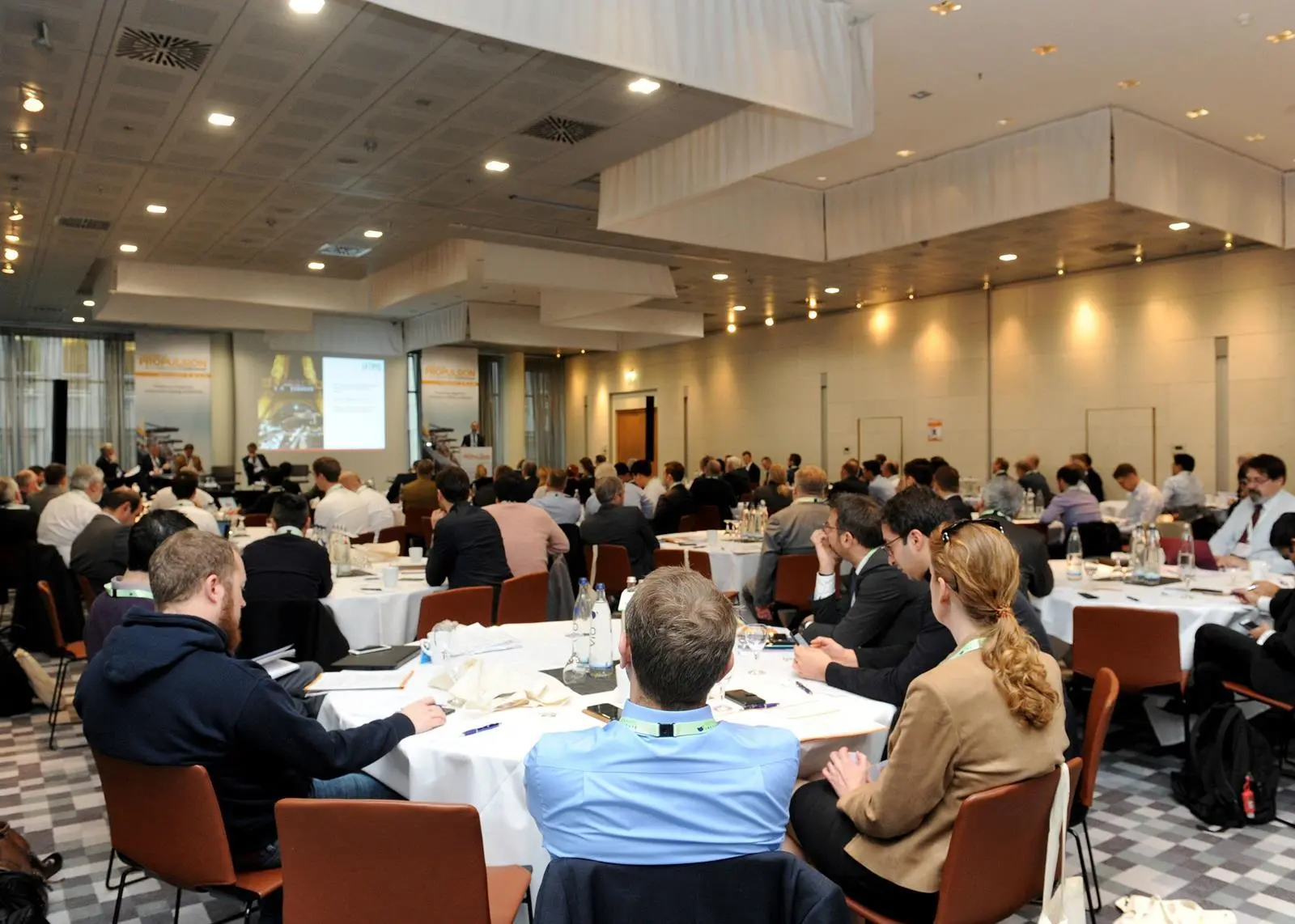
The conference included a strong focus on LNG and alternative fuels, and attracted a high calibre audience of ship owners, technical specialists and industry leaders.
The conference provided a number of authoritative perspectives on likely fuel evolution, but also revealed differing outlooks from different industry suppliers and participants, with synthetic LNG, ammonia and bio-fuels all receiving some support.
One of the conferences keynote speakers Jasper Faber of CE Delft laconically summarised the challenge for ship owners considering investment decisions: “Given the degree of uncertainty about the coming 12 to 18 months, long term forecasts must be even more uncertain”. His solution was to consider future-proofing vessels by preparing them to use a range of fuels, as there may be a “premium for flexibility” and it appears likely that the cost of fossil fuels will rise and alternative fuels will fall over the medium term.
LNG and alternative fuels
The main fuel or main fuels that are likely to be used by the shipping industry in 2050 remains unclear, and some decisions are likely to be influenced by public perception and non-rational factors, as with resistance to the proposed extension of nuclear-powered propulsion to the commercial sector. There was greater clarity about the main compliant fuel for vessels operating in 2030.
LNG was expected to grow in importance, as alternative fuels would be unlikely to be available in commercially viable volumes in time to meet the fuel demands of vessels operating in 2030. Expanding LNG supply to its current stage of development has taken 20 years, and the shipping industry does not have the time to delay, was repeated several times from the stage.
Underlying the choice of fuels that will be available to the industry lies views on future demand from aviation and road transportation, which may well remain higher premium destinations for synthetic fuel producers, and the costs of introducing shoreside infrastructure.
Dino Imhof, Head of Turbocharging Solutions at ABB Turbo, drew on this framework, and the cost advantage of producing ammonia over synthetic fuels from hydrogen. Mr Imhof added that the cost of producing a year’s worth of ammonia fuel for one ultra large container vessel from natural gas via the pyrolysis route (using carbon capture or sequestration) was less than half the price of producing ammonia from renewables. The pyrolysis and sequestration route appears the most cost-effective medium term solution until the cost of renewables route production declines.
He echoed other speakers in identifying decarbonisation of the deepsea market as the industry’s key priority as it accounts for over two-thirds of shipping’s emissions: a similar point was made more pithily by Gunnar Helmen, Sales Manager at Gasum who said that solutions that worked in a Norwegian context, such as hydrogen, were not a solution to challenges elsewhere.
Tom Strang, SVP, Maritime Affairs of Carnival, spoke eloquently about the lead times involved in designing and delivering vessels in the cruise industry. He identified zero-emission cruise vessels as prerequisites for meeting IMO 2050 targets. “Given cruise vessel newbuild lead times, we need to begin design work on ZEV cruise vessel today for them to enter service in the 2030s,” Mr Strang concluded.
Naomi Ages, Sustainability Manager at Norwegian ship operator Hurtigruten, noted that a key constraint on Hurtigruten expanding the scope of its conversion programme to operate coastal cruise vessels on drop-in liquefied bio-gas with LNG was the supply of LBG in Norway (derived from fish farm waste).
Hydrogen and ammonia
By comparison, the discussion of hydrogen identified a number of technical challenges that are still occupying the attention of class societies, flag authorities and technical experts.
Sebastiaan Bleunanus, General Manager of Research coordination at Wartsila, identified synthetic methane as the optimum energy carrier produced from hydrogen.
Sami Kanerva, Senior Principal Engineer of ABB Marine & Ports noted that directly consuming hydrogen in PEM fuel cells was the most convenient approach if the conversion costs incurred in transforming hydrogen into synthetic fuels were taken into account.
The session also included a number of experienced safety and regulatory experts, like Olav Hansen of Lloyd’s Register and Kolbjorn Berge of the NMA who discussed safety issues around compressed and liquid hydrogen containment vessels, and the regulatory environment, respectively. Olav Hansen noted that none of the challenges were insuperable with the correct precautions.
Kjeld Aabo, Director of New Technologies at MAN Energy Solutions discussed the technical challenges involved in adjusting MAN B&W dual fuel engines to operate on ammonia, while noting that “green” ammonia, produced from renewable energy sources, could represent a CO2 neutral energy vector.
Christos Chryssakis, Business Development Manager at DNV GL noted that a number of regulatory obstacles need to be overcome before ammonia can be adopted as a fuel. He noted that adopting LPG as a fuel might be a halfway house before subsequently shifting to ammonia, given similarities in containment vessel and engine design requirements between the two fuels.
Another technology that received some attention was the rapid progress of fuel cell technology. Sami Kanerva, Senior Principal Engineer of ABB Marine & Ports noted that directly consuming hydrogen in PEM fuel cells was the most convenient approach if the conversion costs incurred in transforming hydrogen into synthetic fuels were taken into account. A number of upcoming fuel cell installations on cruise vessels will see the technology progress, Kanerva noted.
Editor Award
The Motorship Editor’s award featured a number of innovative ship projects. Dario Bocchetti of Grimaldi Group presented details of its Grimaldi Green 5th Generation design, which incorporated existing energy storage, power management and air lubrication features on a larger scale than seen before. Naomi Ages of Hurtigruten shared the details of the ship owner’s retrofit project to propel its coastal cruise vessels with liquefied biogas derived from fish waste, offering dramatic reductions in GHG emissions. The project was as noteworthy for creating marine demand for LBG, which will help the sector to expand.
WE Tech’s collaboration with Wasaline on a new hybrid RoPax that will be capable of operating in Zero Emission Sailing Mode when manoeuvring in port also represents a significant step forward in reducing emissions from port.
The fourth submission was presented by UK-based propulsion specialist, Stone Marine Propulsion, outlining the operational results of a new open type ducted propeller concept, the Gate Rudder. The new design was selected as the winner of the Editor’s Award by delegates at the conference.
New technology
One of the most interesting sessions covered a range of other alternative fuels, all of which have seen a considerable acceleration in commercial interest in recent months.
Eelco Dekker of the Methanol Institute defended alcohols as a potential fuel source, identifying the growth in advanced bio-fuel production technologies, such as algae-derived Bio-LNG, as sources that do not divert arable land from growing crops for human consumption.
Gavin Allwright, Secretary General of the International Windship Association, provided detail on the rapid expansion of interest in wind assisted propulsion solutions seen in the last six months, and noted that some of the fuel savings offered wind propulsion solutions might ease the introduction of alternative fuels eventually. By combining the two solutions, it may be possible to reduce the size of the fuel tanks required, addressing some of the volumetric barriers to adopting alternative fuels on deep-sea routes, Allwright hypothesised.
Related Articles
 ALTERNATIVE FUELS & LUBRICANTS
 ALTERNATIVE FUELS & LUBRICANTS
 OPINION