



Hybrid schemes find new technologies for old concepts
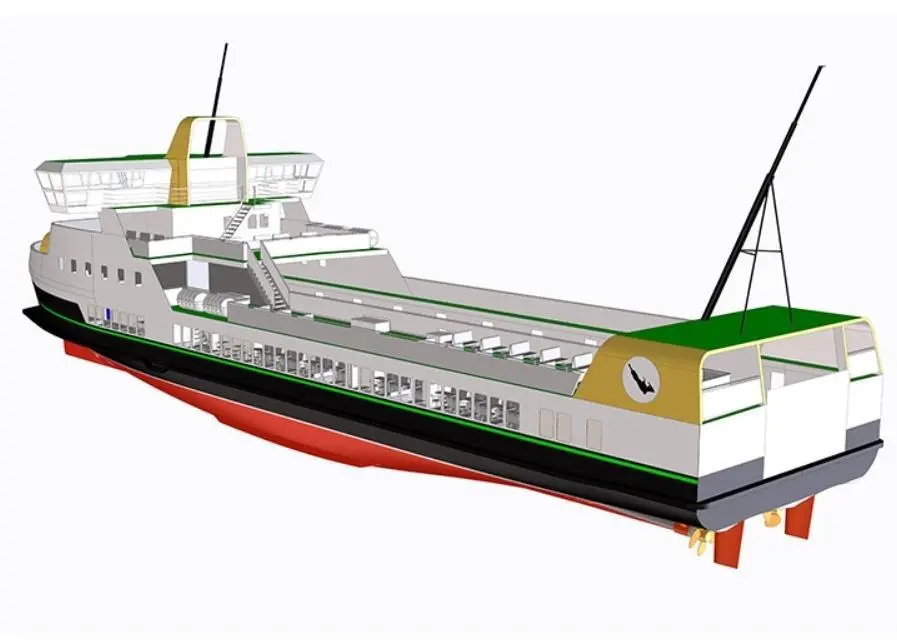
In fact, it used its steam engine for only a small portion of that time; the rest of its power came from its sails, making it a steam/windpower hybrid. It was not a commercial success and was converted to wind-only soon afterwards.
Nearly three decades later, in 1845, the SS Great Britain became the first iron-hulled screw-driven ship to cross the Atlantic. It, too, was a steam/windpower hybrid and was also eventually converted to sail power.
It took about 140 years for engine/windpower hybrids to establish themselves. Various sail-assisted ships traded in the 1980s and, more recently, with other systems, such as kites and Flettner rotors. That technology dates back to the 1920s and can now be seen on ships of many types and sizes, including the 9,700dwt ro-ro Estraden, the 57,565gt ferry Viking Grace and the 110,000dwt tanker Maersk Pelican.
A paper in 2013 called Future ship powering options, published by the UK’s Royal Academy of Engineering (RAE), gave a simple definition of hybrid propulsion. It is “an option where one or more modes of powering the ship can be utilised to optimise performance for economic, environmental or operational reasons.”
On that basis, many long-standing power configurations are hybrids, even though they may not have been called that at the time, particularly in naval vessels, where various combinations of diesel engines and gas turbines have been used for years. The ‘combined diesel and gas’ (CODAG) arrangement, for example, was pioneered in Germany’s Köln-class frigates in the late 1950s.
In particular, ‘battery’ power has almost become synonymous with ‘hybrid’ power, although battery-only vessels – such as the car ferries Ampere in Norway and Ellen in Denmark – are not hybrid ships according to the RAE’s definition, since only one mode of powering is involved.
Batteries are playing an increasingly important role in hybrid propulsion as their capacity goes up and their cost comes down, which benefitted one of the pioneers of battery hybrid propulsion, Norwegian cruise/ferry operator Hurtigruten.
The first of a pair of new expedition vessels, Roald Amundsen, went into service in July 2019, followed by its sister, Fridtjof Nansen, in March 2020. Such was the pace of battery development between the two vessels that the price per MWh of battery capacity halved during development, allowing the second ship to have at least four times as much battery capacity as the first. This will give it considerably longer ‘silent running’ periods during Arctic cruises and it will be able to use its batteries in port, rather than run its engines or rely on shore power.
The next generation of hybrid battery installations will be paired with hydrogen fuel cells. A conversion project inspired by Norwegian shipyard and supported by Norway’s ‘Pilot-E’ technology accelerator programme funded by the Research Council of Norway is planning to have a zero-emissions passenger ship operating on a domestic route by the end of 2020.
A few months later, an EU-funded project called Flagships, will result in two newbuildings using hydrogen fuel cells: a push-boat that will be operated in France by Compagnie Fluvial de Transport and a vehicle ferry for Norwegian operator Norled, which operates Ampere.
Unlike those electric-propulsion ships, diesel-battery hybrids use power-take-in (PTI) motor and gearbox arrangement. In most cases, the same unit serves as both motor and as the power-take-off (PTO) generator to provide power to electrical consumers around the vessel or to charge the batteries when the engines would otherwise be operating at less-than-optimum loads – a process called peak shaving.
Like hybrid propulsion, PTO arrangements have a long history, beginning in the agricultural sector so that a single tractor could power other machinery. An important imperative for its adoption in the marine sector was the differential in fuel price between MDO – the only fuel that many auxiliary engines could use in times past – and HSFO. As well as the fuel cost benefit, the auxiliaries could be stopped during voyages, reducing maintenance costs.
Now, with hybrid-related applications for PTO/PTI arrangements becoming common, OEMs offer bespoke systems offering a range of refinements for different combinations of the primary and hybrid power sources.
How hybrid systems will develop in the future may emerge from an EU-funded project, Implementation of ship hybridisation. It is aimed at increasing the adoption of low-carbon technologies. It has 15 partners and 45 observer organisations from across Europe and began in February 2019. It will finish in June 2022 and its expected outputs have a strong hydrogen-related theme, including demonstrating the feasibility of hydrogen bunkering facilities in ports.
Related Articles
 INTERVIEWS
 CONVENTIONAL FUELS & OILS
 GENERAL NEWS