



Wärtsilä advances ammonia and hydrogen research
In a significant expansion of its future fuel testing programme, Kaj Portin, General Manager, Fuel & Operational Flexibility, Wärtsilä Marine, confirmed that Wärtsilä Marine had successfully tested the addition of ammonia (NH3) into a combustion research unit earlier in 2020.
The next step will be to study the combustion of NH3 in a compression ignition dual-fuel test engine: Portin hopes that tests on the 6-cylinder test engine in Vaasa could begin as soon as the end of the year. The company intends to begin field tests with ship owners as soon as 2022.
“Significant interest” in ammonia
The research into ammonia combustion expands the range of future fuels into which Wärtsilä is conducting research. While Wärtsilä had conducted early stage ‘Blue Sky’ research into a number of alternative fuels, such as synthetic methane, hydrogen and methanol, ammonia was not among the initial fuels studied by Wärtsilä.
A number of technical developments in recent years have altered the technical challenges of combusting ammonia. No less importantly, commercial interest in ammonia as a fuel has risen significantly in the last 12-18 months.
The rapid expansion of offshore wind production capacity, both in Europe and North America and East Asia, is leading to interest in energy storage solutions that can absorb intermittency issues in energy generation. Estimates of wind energy generated and lost varies up to 5% of output in Europe, but more flexible solutions may be required as offshore wind power begins to account for larger proportions of production. Denmark represents an interesting test case, as offshore wind generation can exceed 50% of total energy generation at times. This is driving interest in power-to-X solutions.
Meanwhile, advances in electrolysis technology is driving significant interest in hydrogen vectors as potential zero-emission energy sources, although conversion efficiencies remain lower than conventional steam reformation, which accounts for most ammonia produced outside China.
“We have seen a significant increase in interest in ammonia as a fuel in the last few months,” Portin confirmed.
Meanwhile, research into ammonia is also being stimulated as the technical difficulties of liquefied hydrogen transportation, cargo handling and combustion raise questions about the economic case for commercial liquefied hydrogen transportation. The Motorship noted that the first liquefied hydrogen carrier, which was launched by Kawasaki Heavy Industries in late 2019, has required significant innovations in containment to withstand the gas’s cryogenic requirements (-253° C).
Hydrogen
Wärtsilä has made significant progress with developing engines that can operate on hydrogen, as reported in 2019. Kaj Portin confirmed that the research into hydrogen engines has continued in parallel with research into ammonia.
“We have developed a detailed understanding of how hydrogen behaves at different concentrations and have developed a number of concepts.” Wärtsilä had successfully tested its engines with hydrogen concentrations of up to 60%, blended with 40% natural gas, in 2019. “We have advanced further with our hydrogen research,” Portin added. Wärtsilä is developing a combustion process in its gas engines to enable them to burn 100% hydrogen fuel, the company announced.
Further progress with bringing hydrogen engines to market, for the marine business at least, is likely to depend on fuel availability and commercial interest from customers, Portin noted.
Ammonia combustion
In certain respects, ammonia represents a mirror image of hydrogen combustion, with a completely different set of technical challenges. “Whereas with hydrogen you have high combustability, and fast flame speeds at stoichiometric ratios, ammonia does not burn very well and slows down the combustion process at higher concentrations.”
The long quenching distance also leads to incomplete combustion and the formation of unburnt ammonia in combustion chamber crevices.
Portin noted that Wärtsilä was focusing on testing ammonia on dual-fuel engines, rather than looking at spark-ignition. “We think ammonia needs to be blended with another fuel,” Portin noted, adding that the fuel mixes with concentrations of up to 40% ammonia will be tested first.
Previous academic research into ammonia as a fuel in Japan noted that higher concentrations of ammonia posed a particular challenge, with incomplete combustion resulting in unburnt NH3 emissions (ammonia slip) and also the production of nitrous oxide (N2O).
Portin noted that fuel injection was one of the areas that Wärtsilä was assessing. “One of the solutions would be to modify the fuel injection system in response to the properties of the fuel itself, reversing some of the techniques we use for hydrogen.”
The Motorship notes that the injection of hydrogen into ammonia-fuelled compression ignition engines at concentrations of up to 5% has successfully increased combustion and decreased emissions.
Such a solution is far from impractical. Existing stationary applications that crack ammonia (or produce hydrogen from ammonia) could be marinized without the need for expensive cryogenic hydrogen storage facilities.
Another complementary approach would be to employ a more sophisticated fuel injection system, with a combination of precisely modulated fuel injections before and after TDC. The application of a multiple injection strategy can both reduce NH3 (ammonia) emissions and reduce N2O emissions, The Motorship notes.
Another area of research for Portin is optimising the timing of gas admission and valve overlap duration to meet the requirement of turbochargers. “This is one of the things that we are planning to test when we run the test engine,” Portin said.
The modification of variable valve timing solutions to meet the requirements of hydrogen combustion was a complex area of research, and ammonia was likely to have different requirements.
Some previous research has noted that ammonia’s corrosive properties can affect the combustion chamber if exhaust gases are not completely removed over time.
Portin noted that research for ammonia was continuing into this area.
Ammonia’s corrosive properties would also have an impact of some of the component and material choices for the system.
The gas is incompatible with copper, nickel or nickel alloys, which means that some components in existing LPG systems would need to be replaced with alternatives.
By contrast, the lubrication requirements of ammonia-fuelled engines are well understood. The first ammonia-fuelled internal combustion engines were designed and operated in the 1960s. “Ammonia has a very low viscosity and requires lubricants with similar properties to those required for methanol,” Portin noted. Lubricant producers were aware of the requirements and development work was underway, he noted.
Despite the challenges of developing an engine to operate on ammonia, given ammonia’s combustion properties, Portin expects to develop an engine that will fit within Wärtsilä’s engine portfolio.
“When we design an engine, if it cannot meet certain minimum efficiencies, our engine cannot operate well. The [ammonia] engine is likely to be somewhat less efficient than our existing engines but it will be very close – it will definitely be in the same ballpark,” Portin said.
The emissions profile of an ammonia-fuelled engine was likely to be similar to that of the main fuel with which ammonia is blended from a NOx perspective, depending on the type of aftertreatment employed. The CO2 emissions would reflect the emissions from the secondary fuel type, as “green ammonia” itself would be a zero-carbon fuel.
Safety and LFSS
Portin noted that ammonia’s toxicity was a separate issue, and that research into the safety issues in the engine room and venting solutions were likely to an area of focus in any ammonia focused project.
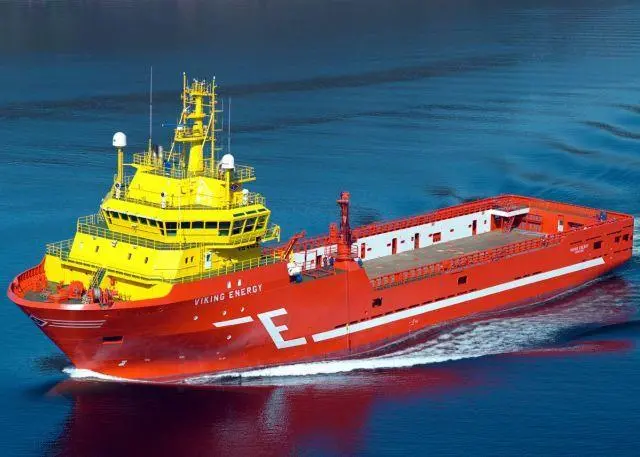
Fortunately, Wärtsilä is developing direct experience of such issues in its involvement in a Norwegian ammonia project. Wärtsilä is supplying a power technology and ammonia storage and distribution system for the conversion of Eidesvik’s offshore supply vessel Viking Energy to operate on a 2MW direct ammonia solid oxide fuel cell (SOFC).
Related Articles
 ALTERNATIVE FUELS & LUBRICANTS
 ALTERNATIVE FUELS & LUBRICANTS
 ALTERNATIVE FUELS & LUBRICANTS