



BELFAST YARD TEAMS WITH SPANISH BUILDER
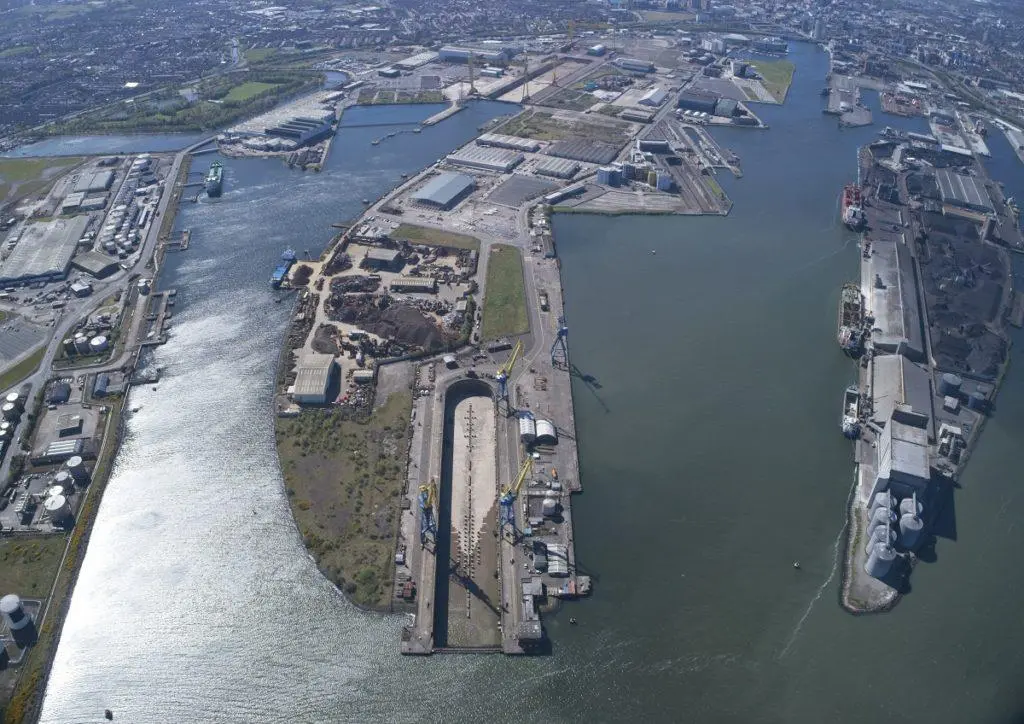
The initial objective of the collaboration is to attract the order for two naval auxiliary vessels planned by the UK Ministry of Defence. The partnership, to operate under the name Team Resolute, will also pursue other opportunities within the UK defence sector, including modernisation and retrofit projects.
The long-mooted, future two Fleet Solid Support Ships are intended as replacements for two ageing vessels deployed by the Royal Fleet Auxiliary, the 23,400 tonne-displacement RFA Fort Rosalie and RFA Fort Austin. These logistic support ships were commissioned in 1978 and 1979, respectively, from the former Scott Lithgow yard on the lower Clyde.
The Fleet Solid Support (FSS) programme was announced over two years ago, and carries the possibility of a third vessel as an option to the envisaged two-ship contract. In November 2018, the list of UK and overseas bidders was unveiled, and this included Navantia. The UK government subsequently held back on any ordering decision, but is now expected to release tender details under the reopened contest in the coming months.
The role of the vessels will be the transport and supply of dry stores such as ammunition, explosives and food to Royal Navy Ships at sea. They will be powered to sustain a laden speed of at least 18 knots, incorporating the replenishment-at-sea wherewithal for transferring non-bulk logistic material while underway and making 12 knots.
Under the Team Resolute business approach, the FSS programme delivery would be shared by Harland & Wolff (H&W) and Navantia, with a key focus on UK build and UK design. As set out in the UK National Shipbuilding Strategy, the UK government has indicated that it is seeking to strengthen the country’s sovereign shipbuilding capability, while driving cost and production efficiencies.
London-based energy group InfraStrata saved H&W from closure last year, purchasing its principal assets after the yard went into administration in August following the bankruptcy of its Norwegian owner. Having completed the acquisition in December, InfraStrata immediately put a new management team in place at Belfast.
Although the shipyard completed its last commercial vessel newbuild in 2003, it subsequently maintained a presence in heavy engineering, steel fabrication, renewables, shiprepair and refurbishment. A key part of the pact with Navantia will be the latter’s provision of technology and know-how transfer to H&W, including upskilling of the Belfast workforce through training and acquisition of skills at Navantia’s Spanish yards.
Navantia has invested heavily in the latest production technology, and its digital Shipyard 4.0 methodology will be shared with the H&W and the downstream UK supply chain, to help raise efficiency by up to 20%. The Spanish group’s expertise extends beyond design and fabrication to systems integration, main engine assembly, weapons manufacture, and through-life support. The company has shown its mettle in the international market over recent years through export and technology transfer contracts involving both warships and naval auxiliaries.
Navantia and UK technology group BMT earlier linked in the design proposal for the FSS tonnage, and BMT would participate in the Navantia/H&W teaming agreement as an exclusive subcontractor. BMT’s recent track record includes design involvement with the new generation of Tide-class replenishment tankers built by Daewoo for the Royal Fleet Auxiliary.
Related Articles
 PROPULSION
 GENERAL NEWS
 HYDROGEN