



Storm brews over EEDI minimum power requirements
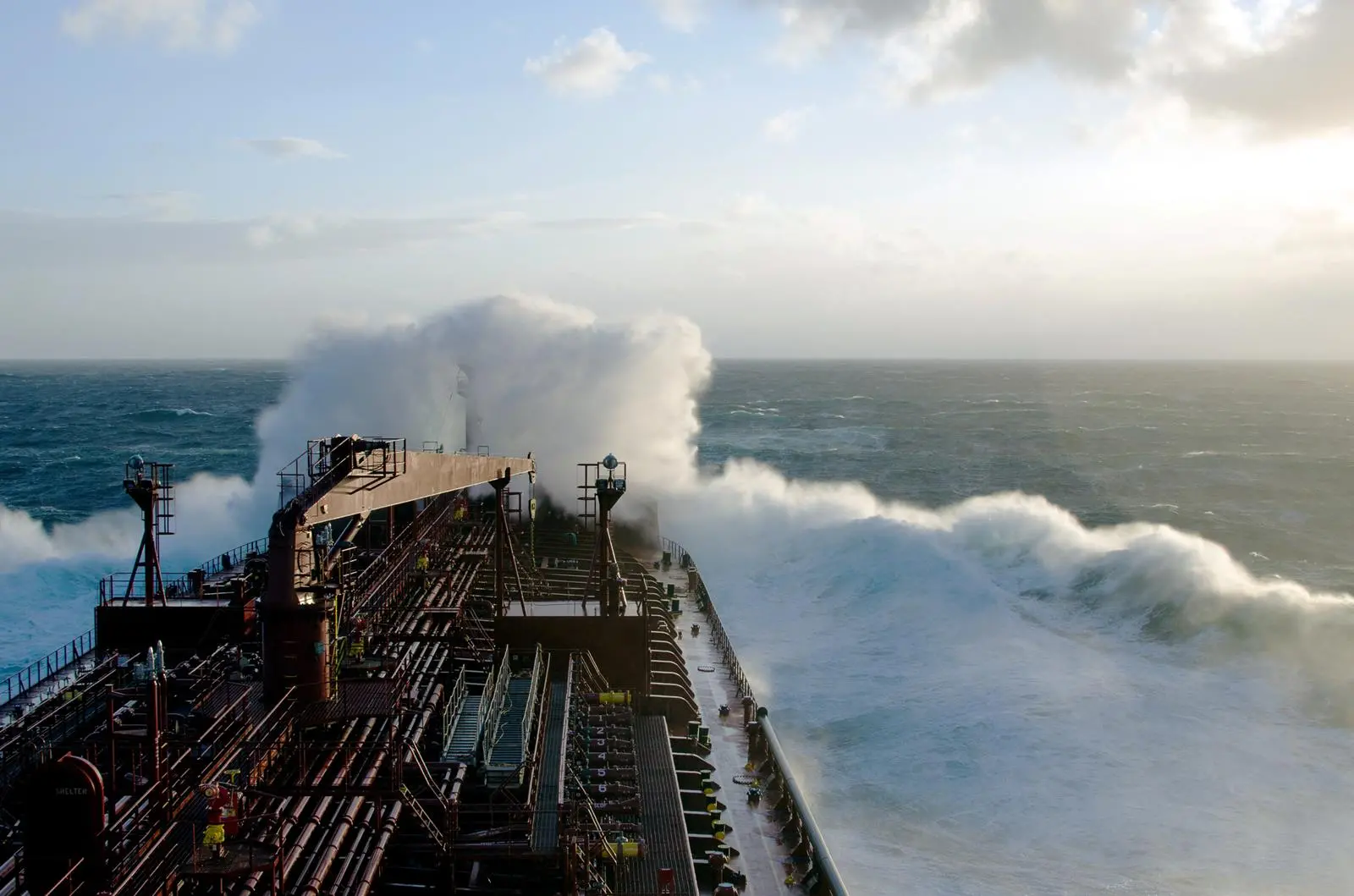
Speaking to The Motorship, he said that before EEDI was proposed, this was not a concern because sufficient power for heavy seas would have been installed, but shipowners are worried about “what will actually happen when EEDI effectively reduces the [ship’s] power.”
He referred to an IMO circular, MEPC.1/Circ.850/Rev.2, that was issued in August 2017, which sets out interim guidelines for determining minimum propulsion power to maintain manoeuvrability of ships in adverse conditions. It refers specifically to bulk carriers, tankers and combination carriers and Mr Holt drew attention to its data for ships less than 200m long, for which it identifies a wind speed of 15.7m/sec as representing the ‘adverse conditions’ that should be designed for.
This equates to Force 7 on the Beaufort scale and designers will specify a ship’s propulsion and propeller to provide a minimum of four knots in those conditions. In more severe conditions, the ship will achieve less than this – perhaps 1.5-2.0 knots in a Force 8 “and you will just be lying still in Force 9”, he said. Anything less than 4 knots will not generate steerage from the rudder, he said.
Mr Holt also suggested that the guideline’s emphasis on minimum power focuses on the wrong parameter; “it’s more a question of minimum torque,” he said, with “adequate torque reserve in the engine design … [and] adequate propeller light running margins.”
The guideline is up for review, however, and was on the agenda for the delayed MEPC 75 that was to be held in early April. Two proposals were up for discussion and he welcomed that opportunity to update the interim guideline and to make it permanent.
Concerns such as these led MAN Energy Solutions to develop what it calls adverse weather condition (AWC) functionality for its diesel engines and it published a paper on its website in mid-June called Adverse weather condition functionality and minimum propulsion power.
It introduction says that AWC will extend an engine’s load diagram for as long as required in an emergency to increase the engine’s heavy running capability. This, it says, will increase the ship’s minimum forward speed without requiring an increase in the engine power installed.
When vessels powered by two-stroke engines and fixed-pitch propellers experience added resistance in adverse weather, the torque required to maintain rpm increases; the paper compares it with a cyclist encountering a hill. In harsh situations, this torque can increase beyond the engine’s limits, the paper says.
AWC builds on MAN Energy Solutions’ existing Dynamic Limiter Function (DLF) which enables a derated engine to accelerate through its barred speed range, which was otherwise a challenge for EEDI-optimised svessels because shipyards were fitting larger and heavier propellers and thus increasing engine torque.
DLF allows the engine and propeller to follow their bollard pull curve without waiting for the vessel itself to accelerate, Mr Holt explained, and this same effect is used in the AWC. The paper says that it “enables the engine to follow the bollard pull curve up to 80% power and 80% rpm, working at 100% mean effective pressure in this point.” It explains that “this ensures that 80% of the SMCR [specified maximum continuous rating] power is available during encounters of adverse weather conditions.”
The paper is aimed at shipyards, Mr Holt said. Although its licensees are responsible for producing its engines, it is shipyards, along with shipowners, who select which engine will be installed in a newbuilding and MAN Energy Solutions believes that an engine using its AWC can help a vessel with less power to be safe when manoeuvring in harsh weather, making it an attractive choice.
Speaking to The Motorship in mid-July, Mr Holt said that, of all the papers he had released over the years, this one has prompted the most questions in the first four weeks of its publication. This is because, he said, it addresses the challenge he outlined at the start of this article: that having reduced engine power, “if you don’t do anything else, you might have a problem maintaining adequate speed in adverse weather.”
The paper is available here.
This interview forms part of a series of articles focused on EEDI Phase 3 in the September issue of The Motorship
Related Articles
 LNG
LNG
 LNG
LNG
 SHAFTS AND PROPELLERS