



Short-haul Ropax operators eye battery efficiencies
However, the business case for battery hybridisation was not yet conclusive for larger ferries operating overnight crossings.
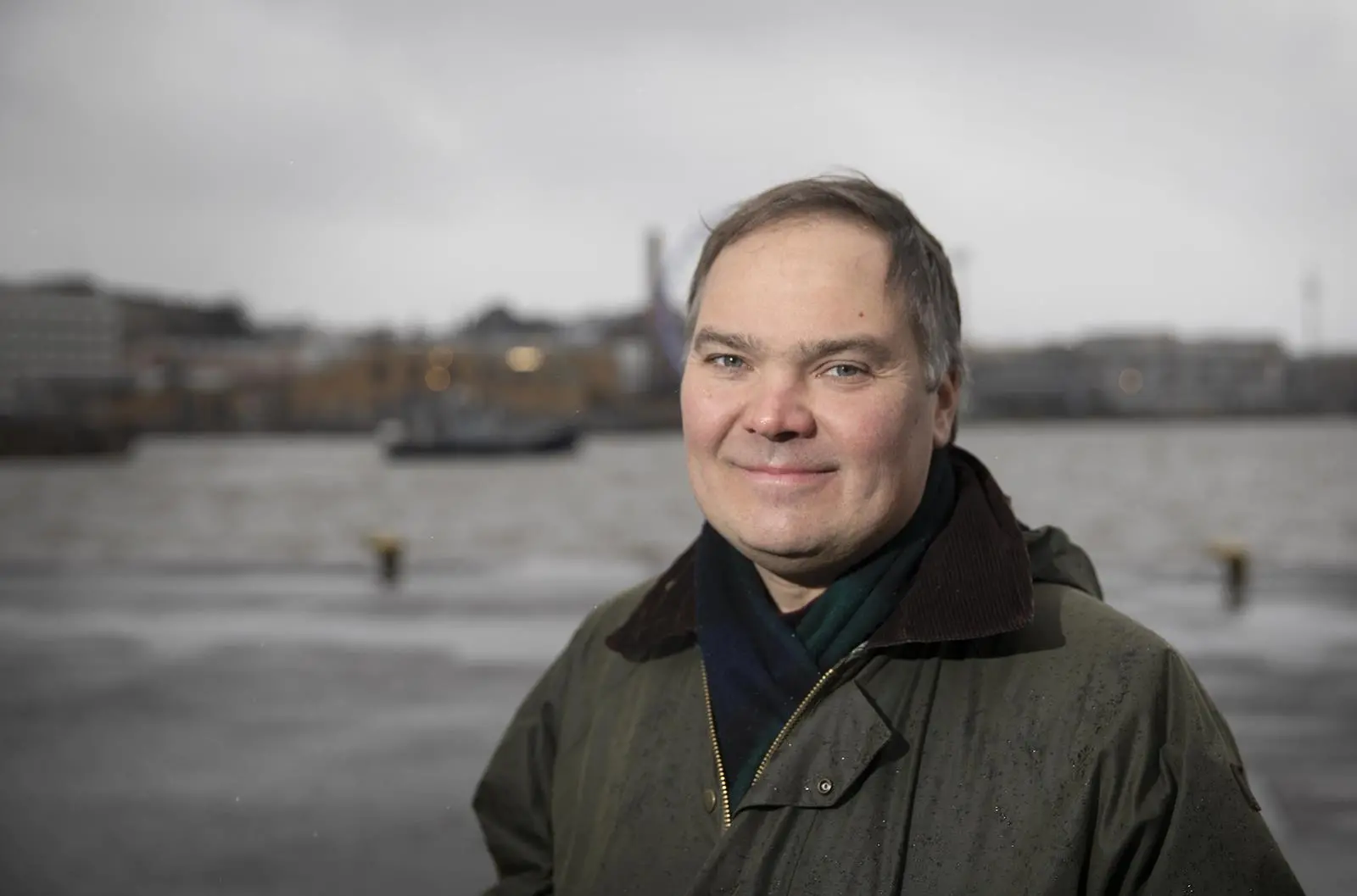
This partly reflected the fact that the economic advantages of hybrid solutions are maximised when vessels are operating at slower speeds, manoeuvring and while they are loading in port. These operations apply for a smaller proportion of longer crossings, said Vesa Marttinen, Development Executive at MarineCycles Oy, a Finnish consulting company.
A separate consideration is the greater hotel loads larger vessels require, owing to larger public areas and a greater number of cabins. This also mitigated the advantages of battery hybridisation somewhat, although technological advances were likely in this area too, Marttinen noted.
By comparison, the economic case for adopting hybrid technology onboard short-haul Ropax vessels is evolving very quickly. “These solutions will become standard quite quickly,” Marttinen predicted.
The rise in demand for battery hybrid systems is confirmed by Corvus Energy, the leading maritime battery supplier. Lars Ole Valoen, chief technical officer, also cited rising demand in countries that do not offer subsidies as a sign that the market is going well. “This tells us that our energy storage systems are commercially viable and competitive,” Valoen added.
Color Line
The aptly named Color Hybrid that Ulstein Verft delivered to Color Line last year is the largest hybrid ferry currently in service. The hybrid power plant of Color Hybrid, which is based on a combination of diesel generators and batteries, is designed to allow the expansion of the battery pack by 50 percent in the future.
Robin Tomren, SVP Marine & Technical at Color Line emphasised the company chose the hybrid propulsion system on commercial considerations. As other operators compete on the service between Sandefjord and Stromstad, the company could not operate an uneconomical vessel, no matter how environmentally friendly.
“Conversion to full battery power may be possible at some point in the future,” Tomren said, adding that the company had no such plans at the moment.
Scandlines
Scandlines, the Danish ferry company that operates two services to Germany using a total of eight ships, was an early adopter of hybrid power. When its two 22,319 gross ton ferries, Copenhagen and Berlin, were introduced in 2016, they were the largest hybrid ferries in the world.
The two ferries, which operate on the Gedser-Rostock service, were built with three 4,500 kW diesel generators, each with a weight of 100 tons, and two main engines of 4,500 KW. In the design provision was made to gradually replace the generators with battery packs. These weigh only 50 tons and fit into the space vacated by the diesel generators, avoiding engine room space issues and resulting in a slight increase in the ships’ deadweight. It stood at 5,088 dwt at 6.0 m design draught as built.
Scandlines aims to reach zero emissions from its vessels in the near future and views shore power connections as an attractive option. However, there is a practical challenge in this – price. It is not only based on commercial considerations such as differentials against benchmark oil references, but also taxation rules. Nevertheless, hybrid and electric solutions enjoy significantly lower maintenance costs than conventional ferry power plants.
When the project for the two vessels was initiated in 2013, the choice of supplier of battery pack was limited, recalls Fini A. Hansen, Superintendent at Scandlines. But this has changed, and more suppliers are likely to follow. “It looks good for the future: the batteries continue to improve, and we can see the same evolution [in marine batteries] that we are seeing in car batteries,” he said.
Valoen of Corvus Energy confirmed that the prices of battery hybrid systems have fallen by more than 50 percent over the past five years, mostly thanks to a “step change” that happened three to four years ago. Since then, the prices have continued a steady, slow fall. Valoen noted that Corvus Energy was developing a range of diverse battery systems that were tailored to the requirements of various marine clients.
Stena Line
Stena Line, the Swedish ferry company, launched a three-stage programmer in 2018 to gradually convert the 29,691 gross ton Stena Jutlandica ropax ferry that operates between Gothenburg and Fredrikshavn to full battery power.
At the first stage, a pack of 180 batteries totalling 1MWh in a container were hoisted on the ship to power the thrusters and shave peak loads of auxiliaries, said Carl Martensson, head of corporate communications at Stena Line in Gothenburg. This cut fuel consumption by 500 tonnes per year and CO2 emissions by 1,500 tonnes – the last figure is equal to annual emissions of 600 cars.
At the second stage, battery packs totaling 20MWh will complement two of the four main engines and allow the vessel to sail for 10 miles on batteries – enough to take it in and out of port through the Gothenburg archipelago, for example. The third stage should see the battery pack upgraded to 50MWh the ship to cover the entire 50-mile crossing on batteries.
Stena has taken the decision to future proof the second batch of its E-Flexer newbuildings from CMI Jingling Weihai shipyard in China: the two ships will have a length of 239.7 m instead of 214.5 m of the first six vessels and they have been designed for battery installations in the future.
Martensson noted that the development of electricity storage and charging of batteries are both areas were major work needs to be done to improve efficiency and bring down the cost. Stena Line has teamed up with Stena Recycling, another company in the Stena sphere of companies, to look at the possible reuse of batteries from recycled cars, lorries and buses to store electricity.
Further in the future lies a concept design called Stena Elektra. Martensson said its lightweight construction is based on experience gained from the large High Speed Sea Service (HSS) catamaran ferries Stena Line built in the late 1990s and it should be able to sail 50 miles on battery power.
DFDS
By contrast, DFDS in Copenhagen is a bit more cautious: the hybrid technology offers exciting prospects, but the price of energy per kilowatt hour remains a big issue despite progress that has been made in the recent past.
“We do see hybrid as a viable solution on newbuildings but with limited battery packages due to the high cost of the batteries, low capacity and short lifetime,” Jacob Mygind Pedersen, Head of Projects & Implementation at DFDS, told The Motorship.
Battery costs, capacity constraints and operational lifespans are all expected to improve over the coming four to five years, Pedersen added. “What you need is what Tesla is promising to deliver in cars – super batteries. You should reduce the cost and increase the amount of energy that can be stored in a battery significantly,” Pedersen added.
However, the economics of hybridisation remain unsupportive at present, “partly because conventional propulsion systems are so highly efficient,” Pedersen continued. Retrofitting of an existing vessel is not an option for DFDS: the trade-off between lower operating costs and higher capital expenditure is not yet convincing. And as matters stand for now, this applies even to newbuildings.
The company operates large cruise ferries between Copenhagen and Oslo plus Newcastle and IJmuiden and large car ferries in the English Channel out of Dover. It is likely that newbuildings will replace these within the next ten years. The adaptability to change forms an important part of the thinking of the technology in the projected vessels.
Looking ahead, Pedersen sees the short services from Dover are more likely to have greater benefits from hybridisation in the short term than the two longer, overnight cruise ferry services. On the shorter routes, it could be possible to store a battery pack in a container and offload it in port for recharging and bring a recharged pack onboard.
“The vessels will likely be diesel electric. The combustion engines could run on ammonia. The electric current could come from gensets or from batteries or from a combination of both,” he said.
“But then comes the question that such an arrangement could take up cargo space,” Pedersen pointed out. In addition, this would also increase the capital cost of the installation. Consequently, technology that would allow faster charging of the battery packs from ashore is another area where major development would be welcome.
Related Articles
 BATTERIES, SUPERCAPACITORS, FUEL CELLS AND OTHER ENERGY STORAGE TECHNOLOGY
 BATTERY HYBRIDS & FULL-ELECTRIC VESSELS
 BATTERY HYBRIDS & FULL-ELECTRIC VESSELS