



Full-electric tankers for operation in Tokyo Bay
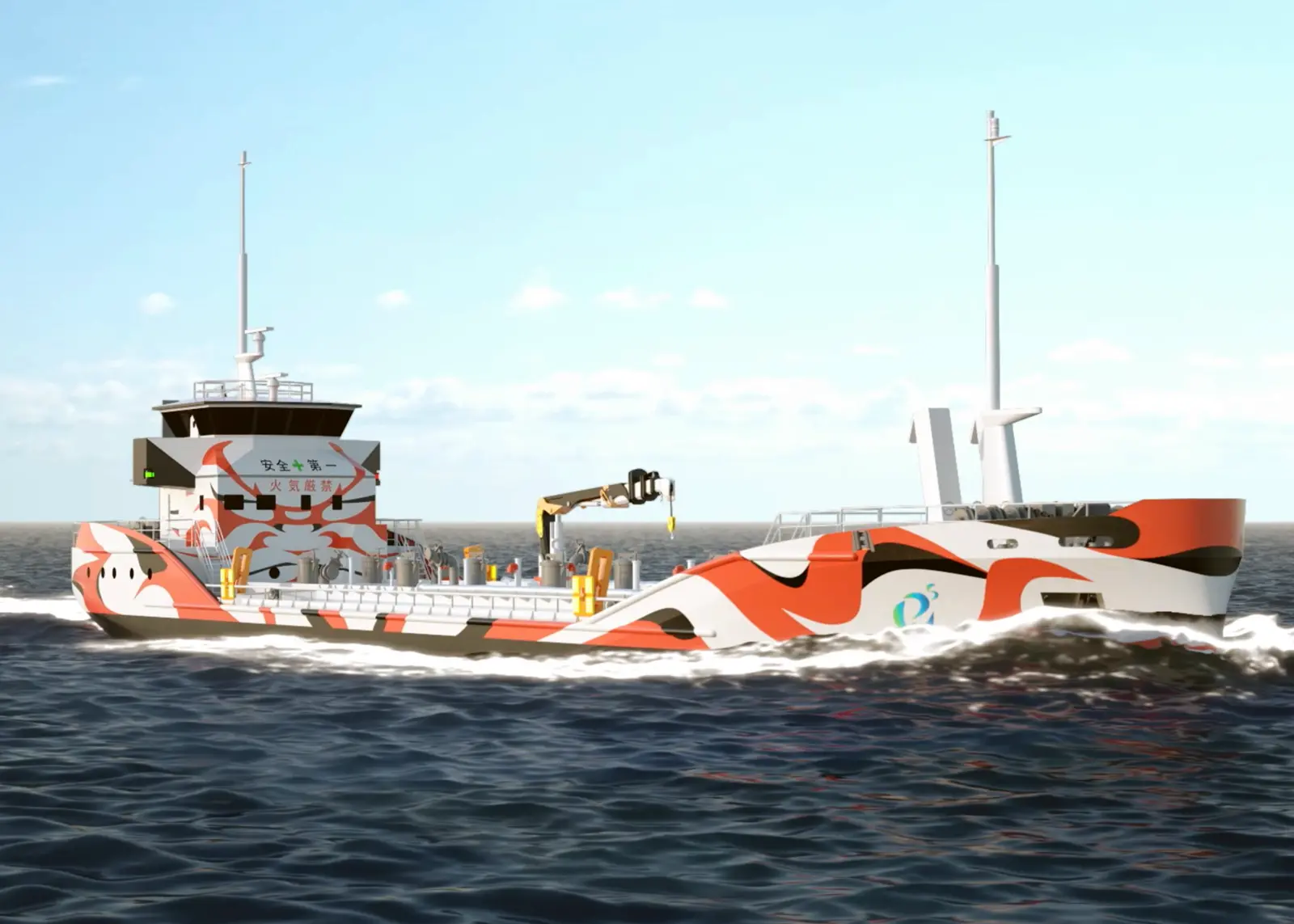
Kawaski Heavy Industries has been appointed the system integrator for the project, which will see the first vessel built at Koa Sangyou shipyard and the second at Imura Zosen KK.
The first vessel is slated for delivery in March 2022, while the second will be delivered in March 2023.
Full-electric design
The order for the two vessels was first announced in March 2020, and was reconfirmed by Asahi Tanker last week. The two tankers are based on the initial e5 tanker design developed by Groot Ship Design in conjunction with e5 Lab, although the vessel designs have been lengthened slightly since the concept design was presented in 2019. The 130kW bow thruster has been replaced by two 68kW bow tunnel thrusters.
The DC electric power and drive system will be powered by an electrical storage system consisting of 3,480kWh of Li-Ion batteries. Propulsion will be achieved using two azimuth thrusters of 300kW apiece in the stern, each connected to a large-capacity permanent magnet (PM) motor. Each of the azimuth thrusters can be independently rotated through 360°.
The vessel will achieve zero-emission operation while operating in Tokyo Bay, while its operational speed of 10 knots and sailing range will be comparable with vessels currently in service.
e5 Consortium
After Asahi Tanker and ship broker Exeno-Yamamizu announced the concept design in January 2019, the two partners were joined by a further five partners in the e5 Consortium: Idemitsu Kosan Co., Ltd; Mitsui O.S.K. Lines, Ltd; Tokio Marine & Nichido Fire Insurance Co., Ltd; Tokyo Electric Power Company (TEPCO); and Mitsubishi Corporation.
Coastal vessel design
The consortium announced in August that it had developed designs for both 499 gt and 749 gt electric vessels. The consortium also announced it was willing to share its electric vessel powertrain concept with interested shipyards and shipowners. The standard designs feature diesel-powered generators and are intended to cost less than 5% more than comparable conventional vessels.
Related Articles
 BATTERIES, SUPERCAPACITORS, FUEL CELLS AND OTHER ENERGY STORAGE TECHNOLOGY
 BATTERY HYBRIDS & FULL-ELECTRIC VESSELS
 BATTERY HYBRIDS & FULL-ELECTRIC VESSELS