



Time to pull together: Knut Ørbeck-Nilssen calls for collaboration not fragmentation
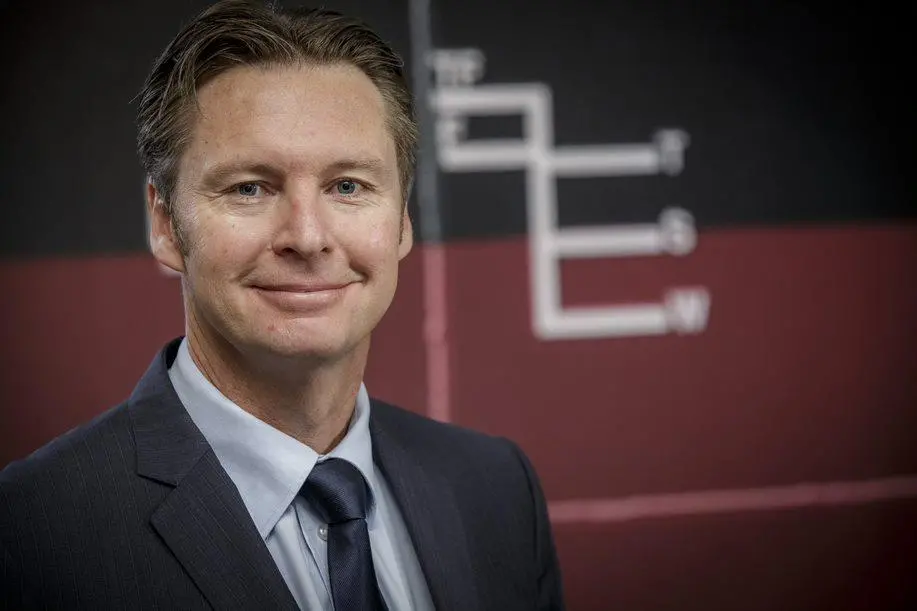
Speaking on the fringes of the launch of DNV GL’s Maritime Forecast to 2050, Knut Ørbeck-Nilssen, CEO of DNV GL – Maritime, quoted Voltaire’s saying, “Perfect is the enemy of the good”, warning that the stakeholders of the maritime industry needed to come together to develop solutions to the challenges facing the industry.
If not, there was a risk that solutions could be introduced that imposed excessive costs on the industry, or that failed to meet the minimum standards of fuel availability and infrastructure required for a realistic alternative to the current diesel-based paradigm.
“Any new fuel that will be introduced over the coming decades will face the challenges of availability, infrastructure and the price point. For that reason, we are confident that LNG will be the best fuel for vessels for the next 1-2 vessel generations.”
Ørbeck-Nilssen’s key takeaway echoed one of the main takeaways from this year’s report, which introduced 30 different scenarios, modelling different combinations of regulation, policy measures, price differentials against diesel and availability.
Tore Longva, principal consultant at DNV GL and the report’s author, added that predicting whether ammonia, methanol or even environmentally electro-LNG or bio-LNG would gain traction after 2030 depended upon the prices and availability of primary energy sources. If supplies of sustainable second or third generational biomass can be secured, bio-methanol may gain market share. By contrast, plentiful renewable electricity (for example, from offshore wind) might lead the market to adopt green ammonia. A third alternative envisages the emergence of low-cost carbon capture and storage transforming the economics of ‘blue’ ammonia.
The report forecasts an expansion in the market share of LNG until 2030 or 2040. Bio-MGO, e-MGO, bio-LNG and e-LNG emerge as drop-in fuels for existing ships. By contrast, hydrogen is unlikely to gain significant traction in the market, except as a feedstock for some hydrogen-based vectors, such as ammonia, Longva concluded.
DNV GL’s comparatively conservative forecast for the future penetration of fuel cells and batteries is also noteworthy, given the class society’s acknowledged expertise in both areas, The Motorship notes.
Ørbeck-Nilssen warned that the development of regional regulations or taxes could disrupt the development of a consistent set of rules at a global level, in the IMO.
“I believe that creating an international patchwork of regional shipping regulations is detrimental to the development of global rules at the IMO level,” Ørbeck-Nilssen said, commenting on the European Parliament’s decision to approve a proposal to extend the EU Emissions Trading System (ETS) to cover shipping from 2022.
The detrimental impact of local initiatives had already been seen in other areas, such as washwater regulations or defouling.
While some members of the EU might be seeking to push the IMO to go further and faster, the EU might be better advised to set the environmental agenda by funding technological research.
“The EU has a real opportunity to contribute towards the development of solutions,” Ørbeck-Nilssen said, noting that Europe contained leading OEMs, as well as ship owners, yards and ship finance institutions. If the EU were to provide financial support to the European maritime cluster, along the lines of the Green Deal, it could incubate and accelerate the commercialisation of energy-efficient solutions for the maritime sector.
DNV GL can vouch for the transformative potential of officially-funded schemes, having participated in previous collaborations between ship owners, technology developers, academia and class societies in Norway, such as the Green Shipping Programme.
“Battery hybridisation, which is increasingly gaining acceptance aboard vessels with fluctuating power requirements such as dredgers, is an example of such a technology,” he added.
Striking a more upbeat note, Ørbeck-Nilssen discussed how shipping had become more receptive to new ideas while weathering the disruptive effects of the Covid-19 pandemic.
“The entire mentality of the maritime industry has become much more open to new ideas,” Ørbeck-Nilssen said, adding that the uptake of digitalisation within the industry had advanced “half a decade” in a year.
One way of accelerating the development of solutions to decarbonisation might be to widen participation in development projects from the traditional ship owner, shipyard and class society triumvirate to bring in finance, charterers and technology providers.
Charterers were increasingly exposed to environmental criteria through supply chain emissions reporting requirements, Longva added, concluding that DNV GL’s Maritime Forecast to 2050 discussed the potential long-term implications of fuel choices on vessel profitability.
Related Articles
 INTERVIEWS
 CONVENTIONAL FUELS & OILS
 GENERAL NEWS