



KICK START FOR NEW CLEAN ENERGY TRADE
Forty years on from its pioneering role in delivering the first Asian-built LNG carrier, Kawasaki Heavy Industries (KHI) is in the vanguard of a new advance in gas shipping technology through the construction of a liquefied hydrogen (LH2) tanker.
The 9,000dwt Suiso Frontier, by providing 1,250m3 of cryogenic cargo containment within a hull length of 116m, will serve as a test platform and demonstrator for a major scheme to transport Australian-produced hydrogen to Japan. The plan ultimately calls for a flotilla of LH2 carriers, fitted with four spherical tanks and comparable in size at 160,000m3 to the latest generation of LNG tankers, dedicated to maintaining the supply line.
Many elements of the ship reflect KHI’s long experience in LNG carrier production and technology, as the Asian pioneer in the construction of such vessels, starting with the 129,000m3 Golar Spirit in 1981. It has maintained a presence in the LNGC market notwithstanding the intensity of the competition from South Korea and emergence of Chinese shipbuilding contenders.
Attuned to the wider national aspirations and endeavours, and possessed of a wide range of cryogenic engineering competences besides those relevant to the marine field, KHI is part of an industrial consortium focused on technological developments aimed at building an energy supply chain that will enable economic and reliable sourcing of hydrogen in large volumes from Australia.
The Hydrogen Energy Supply Chain Technology Research Association (HySTRA), in which KHI is partnered by the Iwatani Corp, Shell Japan, and Electric Power Development Co (J-Power), has the objective of ultimately making hydrogen as common a fuel source as petroleum and natural gas. Suiso Frontier has been built for the Hydrogen Energy Supply Chain (HESC) project which HySTRA will coordinate.
The initiative is being promoted and supported by Japan’s New Energy & Industrial Technological Development Organisation (NEDO). Non-polluting hydrogen is regarded as a fuel of the future and a potentially important element in Japan’s drive to achieve the country’s newly-minted target of ‘carbon neutrality’ by 2050.
Hydrogen will be produced and liquefied in Australia. The raw material for the production will be brown coal mined in Victoria’s Latrobe Valley. As combustion of brown coal, or lignite, can be heavily polluting, coal processing at the hydrogen plant will utilise carbon capture technology and subsequent undersea storage.
Suiso Frontier was launched at KHI’s Kobe yard last December and installation of the cargo tank was carried out at the company’s Harima works in March 2020, with the vessel returning to Kobe for the completion of piping systems and other outfitting. Handover is imminent, this autumn.
Following operational tests in Japanese waters, ranging from tank cool-down to cargo handling at a pilot LH2 receiving terminal newly-built at Kobe, the ship is expected to make her first voyage to load in Australia during early 2021. Thereafter, she will undertake a round-trip every few months. The pilot phase is due to span one year. The decision as to whether or not to proceed to the commercial phase will be made once all reviews have been completed, with the target of full-scale operations in the 2030s. This could see a first contract for high-capacity LH2 carrier newbuilds in 2025-2026.
KHI is also party to a Japanese-Australian consortium that has obtained funding from the Australian government and the State of Victoria to establish the gasification and gas refining facility in the Latrobe Valley, and a liquefaction plant and loading terminal for LH2 carriers at Hastings.
LH2 transport poses major challenges, not least the extremely low carriage temperature of minus 253degC at atmospheric pressure, the wide flammability range and exceptionally high upper explosive level.
Nitrogen cannot be used in the barrier or annular spaces, as is the case aboard LNG carriers, because nitrogen becomes liquid at minus 196degC and would therefore condense when in contact with surfaces at the LH2 containment temperature. Similarly, liquid oxygen could form if oxygen or air were to be used in the barrier space, as oxygen has a boiling point of minus 192degC. LH2 also has a very high permeability compared to LNG due to hydrogen’s extremely small molecular size, which leads to a propensity for easier leakage through the tiniest gaps.
The low minimum ignition energy of hydrogen gas/air mixture creates additional challenges for leak prevention and detection and for ignition protection, notably that concerning electrical equipment. The low luminosity of visibility of a hydrogen flame is of itself potentially problematic from a fire detection standpoint, and the high flame velocity can lead to detonation.
The particular properties of hydrogen and the design, construction and operation of a prototype ship such as Suiso Frontier calls for comprehensive risk assessment and adoption of suitable risk mitigation measures in close association with classification societies.
Nippon Kaiji Kyokai (ClassNK) has been proactive in setting out guidelines for LH2 transportation by sea. The guidelines consist of safety requirements applicable to LH2 carriers based on the IMO Interim Recommendations for Carriage of Liquefied Hydrogen in Bulk, and various international standards, as well as additional criteria taking specific hazards arising from the handling of LH2 into consideration. For the Suiso Frontier newbuild, the society was engaged to undertake the requisite verification and validation in accordance with its updated guidelines and rules.
The stainless steel cargo tank has been designed to ensure safe, long-distance transportation of liquefied hydrogen at 1/800th of its original gas state volume, cooled to minus 253degC, far below the temperature (minus 163degC) that has to be maintained for LNG containment.
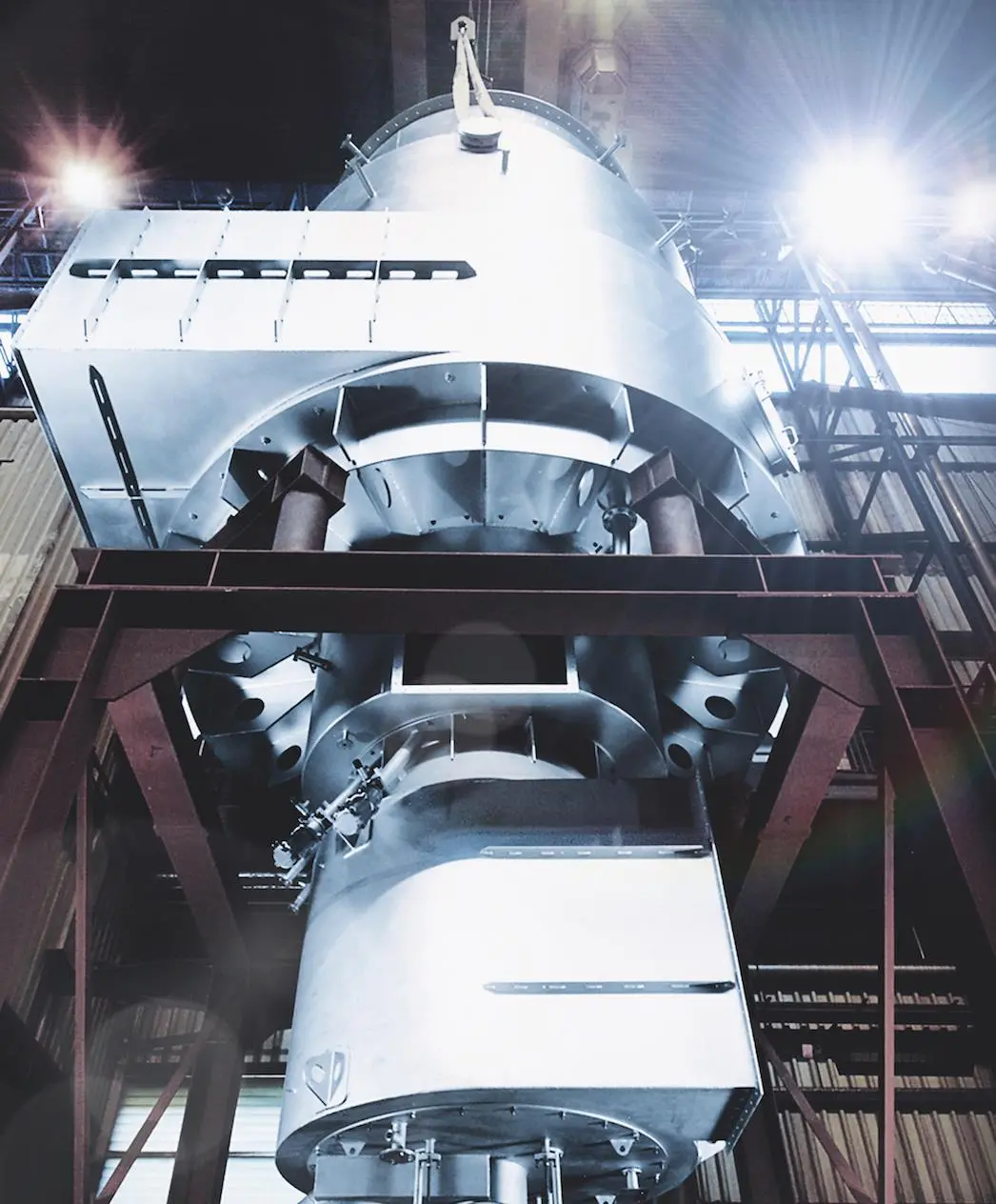
LH2 evaporates at a rate 10 times greater than LNG. To accommodate this, Suiso Frontier employs a cargo containment system of double-shell structure for vacuum insulation and properties that suppress thermal conduction. The tank support structure has been made using glass fibre reinforced polymers, which are poor conductors of heat but extremely strong. So as to achieve the requisite ultra-high thermal insulation performance demanded in this innovative project, KHI brought to bear its particular know-how in onshore LH2 and LNG holding tanks, complementing its expertise in LNG carriers.
In addition to the management of boil-off through the pressure containment exercised by the Type-C cargo tank, Suiso Frontier is equipped with a gas combustion unit (GCU) provided by the German firing technology specialist Saacke.
The effectiveness of the patented, hydrogen-compatible GCU and the proprietary SSBG hydrogen burner is a vital factor in ensuring safety in seaborne transportation. Testing and acceptance of the equipment took place in northern Germany last October, providing the endorsement that LH2 can be carried at sea as safely as LNG.
In Saacke’s 100% free-flow solution, the boil-off gas is completely combusted without a compressor and at a pressure of just 0.15 bar. The absence of compressors from the process dispenses with the risk of compressor failure and the attendant safety implications of resulting increased pressure in the tank.
The diesel-electric plant in Suiso Frontier comprises three generators driven by Daihatsu six-cylinder DE-23 engines each turning out 1,320kW at 900rpm. The electrical energy so derived feeds two 1,360kW propulsion motors delivering propulsive effect through a twin-input/single-output gearbox to a controllable pitch propeller.
So as to meet IMO Tier III NOx standard, the Daihatsu medium-speed diesels incorporate selective catalytic reduction (SCR) technology.
For the envisaged generation of high-intake LH2 carriers, construction in Japan would be the province of the larger of KHI’s domestic yards, the Sakaide complex on Shikoku. The group also has substantial shipbuilding capacity in China, by way of its shareholdings in the joint venture companies Dalian COSCO KHI Ship Engineering (DACKS) and Nantong COSCO KHI Ship Engineering (NACKS). A second building dock was opened at DACKS this year.
CHARACTERISTICS of HYDROGEN COMBUSTION
· The H-atom is the lightest and smallest element of the Periodic Table
· H2 is colourless, odourless and tasteless
· H2 is 8 times lighter than natural gas
· The calorific value is lower by a factor of 3-3.5 than most commercially available natural gases
· The flame burns about 8 times faster than natural gas
· The flammability range is extremely wide (4%-77% by volume compared to 4%-16% by volume for natural gas)
· 15 times less spark energy required for hydrogen ignition than natural gas
Credit: Saacke
PRINCIPAL PARTICULARS – Suiso Frontier
|
Length overall |
116.0m |
|
Length bp |
109.0m |
|
Breadth, moulded |
19.0m |
|
Depth, moulded |
10.6m |
|
Draught |
4.5m |
|
Gross tonnage |
c.8,000gt |
|
Cargo tank capacity |
1,250m3 |
|
Propulsion system |
Diesel-electric |
|
Main gensets |
3 x 1,320kW |
|
Propulsion motors |
2 x 1,360kW |
|
Speed |
c.13kts |
|
Class |
ClassNK |
|
Complement |
25 |
|
Operator |
HySTRA |
Related Articles
 ALTERNATIVE FUELS & LUBRICANTS
 ALTERNATIVE FUELS & LUBRICANTS
 ALTERNATIVE FUELS & LUBRICANTS