



NORDIC ICEBREAKER INVESTMENT IN THE OFFING
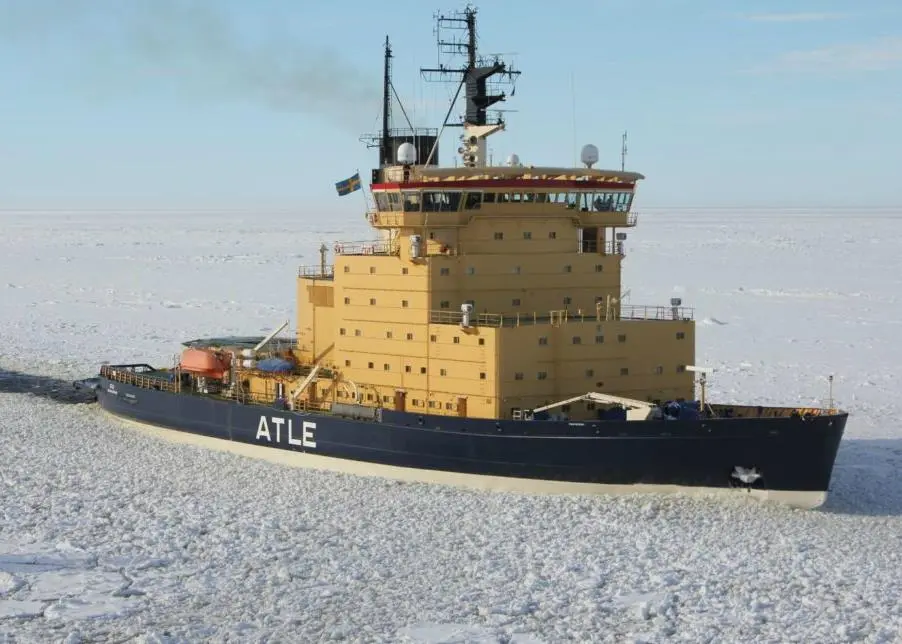
A design development contract was awarded last week to Helsinki-based Aker Arctic Technology by the Swedish Maritime Administration (SMA) and the Finnish Transport Infrastructure Agency (FTIA).
Icebreaking is essential to the maintenance of trade to and from Finland and northern Sweden during the winter months. While the average size of ships using Baltic ports is growing, increasing environmental requirements have had the effect of limiting engine power, weakening commercial vessels’ ice-going abilities. Against the backcloth of a heightened need for icebreaker assistance, the Swedish fleet in particular is of advanced age as are many of the Finnish icebreakers.
The design project, understood to be worth in the region of EUR3m-4m (US$3.5m-4.7m), signals the implementation of the joint procurement initiative. The process will begin with research into, and evaluation of, various icebreaker concepts. The new design must have the capability to keep fairways open and assist ships up to 32 metres in beam through ice masses in the most difficult conditions and areas, notably the Gulf of Bothnia, while offering cost-efficient performance and upkeep throughout the life-cycle.
Over-and-above the expectation of reduced CO2 emissions, the design must accommodate national environmental agendas calling for a transition to fossil-free fuel by 2030.
The most suitable conceptual design is due to be selected in March next year, with an initial construction cost estimate. Subsequently, a detailed design and technical specification will be drawn up for shipyard tendering purposes, contingent on the timing of a decision to build the icebreakers.
Aker Arctic’s managing director Reko-Antti Suojanen stated: “The goals of this project are ambitious, and even though we have just designed icebreakers capable of reaching the North Pole, we consider this new icebreaker to be the most challenging design task we have ever faced.”
Diesel-electric power and propulsion has long been favoured for icebreakers, as best suited to an operating profile characterised by considerable and rapid variations in energy demand. The most recent addition to Nordic operations, Finland’s 110-metre Polaris, employs a dual-fuel electric installation, founded on five Wartsila medium-speed DF engines and three Azipod propulsion units, two at the stern and one at the bow.
Built by Arctech Helsinki Shipyard in 2016, Polaris marries potent ice-forcing and ice-going escort capacity with scope for offshore oil and gas industry assignments outside the winter season. Such dual-role operating capability has been championed by Finland in previous stages of fleet development.
Some engineers consider that dual-fuel engines running in gas mode have limited capacity to respond to sudden load variations, necessitating oversized electric propulsion motors with additional torque. Significantly, Aker Arctic has been investigating the benefits of using batteries in icebreakers, not only in the interests of emissions abatement but also so as to enhance operational capability.
Year-round security of supply is elemental to the Finnish economy, while Swedish industry is dependent on icebreakers in the Baltic up to 130 days per year. Sweden currently has five active icebreakers and Finland has nine.
About the same time as Polaris was taking shape, the SMA had commissioned consultancy SSPA to provide assistance in a pre-study for the renewal of Sweden’s icebreaker fleet.
Related Articles
 PROPULSION
 GENERAL NEWS
 HYDROGEN