



ØRSTED PLANS FIFTH LARGE-SCALE HYDROGEN PROJECT IN EUROPE
At 500MW, it would exceed most existing large-scale hydrogen projects that Ørsted is involved in including the Sluiskil project in the Netherlands (100MW), the Westküste 100 project in Germany (30MW), the Copenhagen project in Denmark (250MW-1.3GW) and the Gigastack project in the UK (100MW).
Each project targets the production of green hydrogen – produced using renewable energy – in different applications. At BP’s Lingen Refinery, the hydrogen produced will initially be used to replace about 20% of the grey hydrogen – produced by reforming natural gas – already used at the refinery which produces fuels, heating oil and chemical feedstocks. The electrolyser is expected to produce one tonne of green hydrogen an hour, almost 9,000 tonnes a year. Once production is scaled up to 500MW, excess hydrogen will provide feedstock for potential future synthetic fuels, and electrolyser by-products oxygen and low-grade heat will also potentially be put to use.
“Heavy industries such as refineries use large quantities of hydrogen in their manufacturing processes,” says Martin Neubert, executive vice president and CEO of offshore wind for Ørsted. “Replacing the current fossil-based hydrogen with hydrogen produced from renewable energy can help these industries dramatically lower their CO2 footprint. But first, renewable hydrogen has to become cost competitive with fossil-based hydrogen, and for that we need projects such as this.”
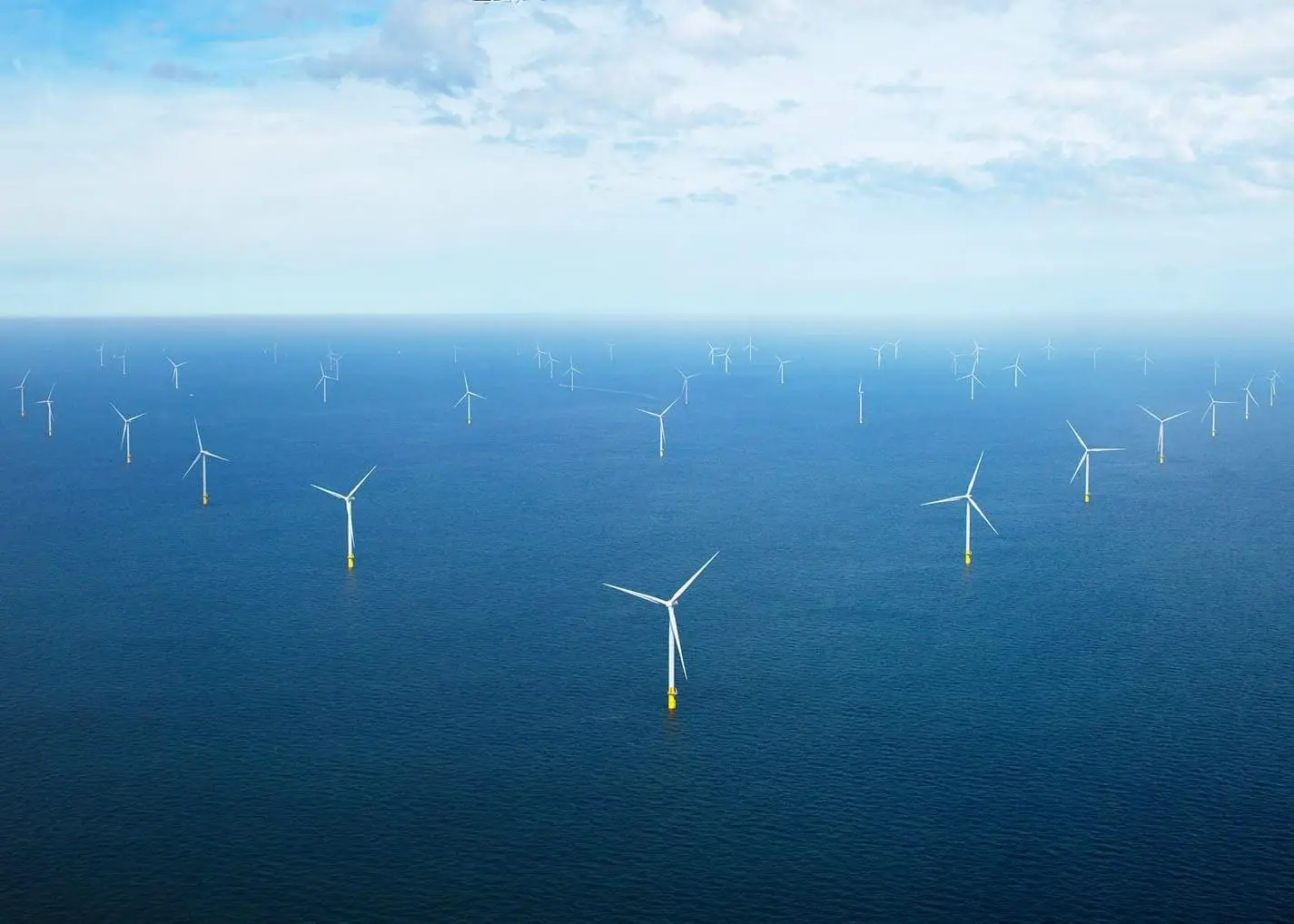
Ørsted has installed 1.4GW of wind power in the German North Sea and has a further 1.2GW planned. The power could come from one these offshore wind farms for what is BP’s first full-scale green hydrogen project. Final investment decision is expected to be taken early in 2022, and the project could be operational by 2024.
In October, Ørsted and fertiliser company Yara announced a project to use green hydrogen in the production of ammonia using a 100MW wind powered electrolyser at Yara’s Sluiskil plant, located in the Dutch province of Zeeland. The renewable hydrogen would generate around 75,000 tons of green ammonia per year, approximately 10% of the capacity of one of the ammonia plants in Sluiskil. It will be used in the production of carbon neutral fertilizers and potentially as a shipping fuel. Final investment decision is expected to be taken by early 2022.
In August, the Westküste 100 project received approval for a grant from the German government to produce green hydrogen for industrial processes (including the production of methanol), aviation, construction and heating. The project will model a regional hydrogen economy at an industrial scale including pipeline transportation of hydrogen and its use in new and existing infrastructure around Heide in northern Germany. The consortium will also expand the concept design to incorporate a 700MW electrolyser system.
The Copenhagen project, announced in May 2020, will use offshore wind energy to produce green hydrogen and other decarbonised fuels for land, air and sea transport. Partnering with end users including A.P. Moller-Maersk, the project will initially use a 10MW electrolyser to generate green hydrogen for buses and trucks. Power will come from the Danish island of Bornholm, around which Ørsted hopes to develop a 5GW offshore wind cluster. A final investment decision on phase one could be made next year. The second phase, targeting completion in 2027, expands electrolyser capacity up to 250MW. A third and final stage would see 1.3GW of electrolyser capacity installed by 2030.
UK government funding was awarded for the second stage of the Gigastack project in February 2020. An initial 5MW electrolyser was designed in 2019, and business models for 100MW electrolysers were explored. Now the project partners, including Ørsted, ITM Power, Phillips 66 Limited and Element Energy, will conduct a front-end engineering design study on a 100MW electrolyser system using staged installations with a nominal capacity of 20MW. The renewable hydrogen will be supplied to Phillips 66 Limited’s Humber Refinery. ITM Power will also evaluate the semi-automated manufacturing machines required for large-scale and high-volume manufacture of their new large low-cost electrolyser stacks.
Related Articles
 ALTERNATIVE FUELS & LUBRICANTS
 ALTERNATIVE FUELS & LUBRICANTS
 ALTERNATIVE FUELS & LUBRICANTS