



The big hybrid conundrum – more or less than the sum of its parts?

What is a well-established engine manufacturer doing by getting involved in ship integration?
The answer lies really in the technology – and the fact that it’s “no longer about individual components”, says Stefan Goranov of WinGD.
Troublingly, while recent advances – such as the huge jump in fit-for-marine battery developments – can yield substantial savings, they can also leave ship owners with a higher fuel bill and potentially worse off than before.
For example, power-take-off (PTO) devices “are a low hanging fruit” says Goranov, as it’s already been demonstrated for decades that the big two-stroke engines can provide power for auxiliary systems without starting up the four-stroke gensets at sea.
However, he adds that simply coupling the main engine to a power take-off and battery without an accurate control strategy, including precise accounting of conversion losses, “and there is a good chance that the ship will burn more fuel than it did before”.
In Goranov’s view, the main engine is still “the beating heart of the ship”… but to stretch the analogy, it’s now apparent it needs both circulatory and nervous systems to handle elements such as fast-switching electronics, marine DC networks and of course, the range of potential battery chemistries and alternative configurations.
However, it would be a far tougher call if there hadn’t also been an exponential growth in available data, along with new methods of embedding it in a connected system.
Certainly, WinGD’s relatively recent investment in advanced computing hardware has paid off, by allowing the company’s digital control system, WiCE, to evolve “from an engine control and data collection system to a system-wide hybrid control platform”, says Goranov.
It’s a pretty steep climb that indicates how fast things are changing: WiCE itself was only released a year ago. “But now,” he says, “We can do more than put our engines on it, we can securely interface other components: the ship’s power management system, the PTO/PTI, batteries and so on.”
It should prove extremely useful. First of all, “there’s a narrow band” for sizing various onboard elements, points out Goranov. For example, hybridising a typical DF ship by applying a PTO and a battery pack to the main engine and dropping one of the auxiliary gensets could give you a bit of a rise in the main engine’s LNG, rationalizing the gensets action. Overall, both fuel and GHG emissions (CO2 equivalent) reduce “because the main engines are better at handling methane slip and are generally more efficient”, he adds.
But getting as much bang for your buck as possible is a tricky business. Increasing, even doubling battery capacity might not automatically confer much of an advantage if not aligned with the operational requirements, while a fractional increase in shaft generator scale could potentially – in certain situations – raise fuel savings of the ship as a whole by several percent in exchange for just a little more consumption from the main engine.
Although correct sizing can lead to significant CAPEX savings, simulation analysis has arguably more impact on the control strategy. “Considering that there are conversion losses at each stage, you should be able to tell when you’d be better off raising the load and transferring the extra energy to a battery for future use, and when it’s more effective to allow partial loading of the generator,” explains Goranov. That applies doubly when spikes and troughs in demand are pitched against spinning reserve: for example while manoeuvring using the bow thrusters. Ideally, he adds, integration “in most cases should result in safe, no-auxiliary operation for ocean transits and optimal energy production including auxiliary gensets for manoeuvring”.
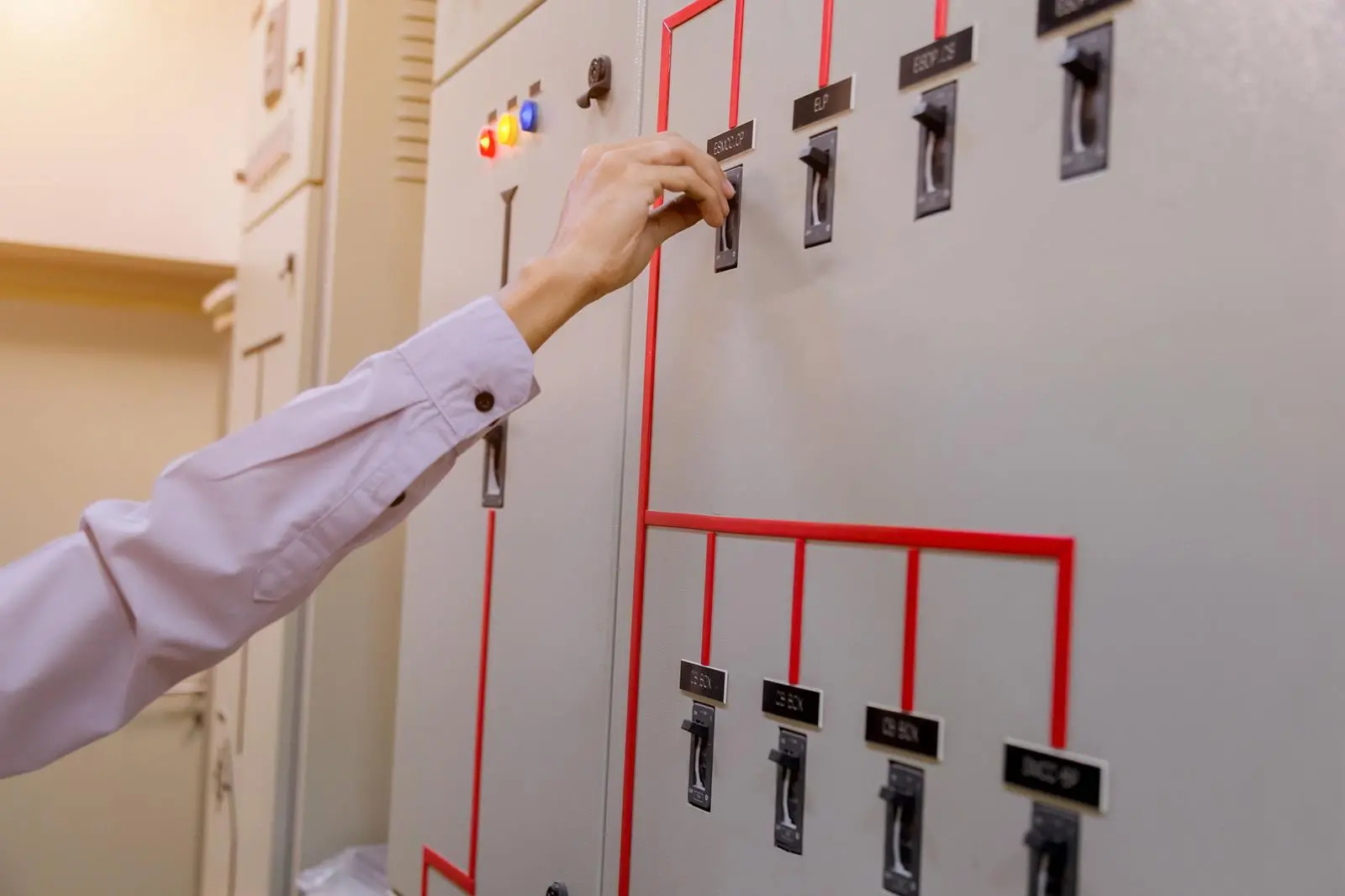
It’s also essential for getting the most out of an integrated system. For example, a solution currently being supported by Goranov and his team promises greater efficiency for peak shaving applications – a reasonably common engine support mode that sadly often suffers from inefficient implementation. “This is built upon additional data exchange and handshake signals which will tell the system when peak shaving is appropriate and to what extent,” says Goranov, adding: “We’re very keen to see the results.”
Interestingly, WinGD’s new simulation capacity can also fill in the information gap commonly suffered by newbuilds. If the power demand profiles used as an input aren’t available, “we can now construct them by scaling from a differently sized ship with a similar trading pattern”, explains Goranov.
Sim-based testing doesn’t stop there. Following the modelling and running the virtual system, “we emulate the mechanical side of the system components and put the controller hardware in the loop to see how it behaves”, he says. To make sure there’s nothing lost through reproduction, “these PLCs are the very same ones we install onboard”.
Importantly, it should give WinGD confidence in their installation, delivering predictability and robust safety margins right across the operational range for the owners. “We can really push the boundaries, testing how the system behaves in not just several, but hundreds or thousands of conditions,” he adds.
NOT WORLD DOMINATION
Given the creation of WinGD’s new digital and hybrid team (with strengths in both thermodynamic modelling and control analysis), it might be assumed the organisation is set for taking on the world fleet single-handed… but that’s not the aim.
Given IMO targets, environmental and cost pressures, merchant ship hybridisation “needs to step up but we’ve all been struggling with the pace – it simply isn’t as fast as it should be”, says Goranov. Therefore the idea “isn’t to do everything”, he says: “We’re open to collaborating to increase that pace.”
Therefore the new offerings are arranged “on a flexible model, from advisory analysis and reports right through to procurement and full system integration”, he explains. The philosophy is to share the new, detailed information – albeit under the appropriate licence – but surprisingly, there don’t appear to be many, if any, hard-line boundaries, even for erstwhile competitors.
So, if someone else gets the carrot, no hard feelings. WinGD’s team is “component agnostic” he underlines, adding: “We’ll work with other systems integrators, and provide all the interfaces and logic that they need to implement our engines in their eco-system.” In fact, selected WinGD data is even about to be made available to academia which typically has a tough time getting hold of accurate models. Is it really just an altruistic act? Perhaps not, as this move could potentially allow the company to benefit from future work by postgraduate and doctoral students… and, he points out, “spreading the word” about the realisable benefits resulting from hybridising two-stroke main engines.
WinGD’s move into integration is a big deal, and the company is gathering assets for a significant roll-out… both here and on the other side of the world. While the bulk of the development team is staying in Switzerland, the company is looking to embed its hybridisation resources in Asia. “We have strong support in China, and we are already building up a team close to both the yards and end customers there,” he says.
Despite all this, Goranov admits that the lack of references might be an issue “as although we’re established engine manufacturers, we haven’t proved our capability in the integration arena,” he points out: “We are only just starting.” However, he believes that situation won’t last long: “We’re already in discussions with a couple of customers,” he says, predicting the company will break into the integration space next year.
TOMORROW
So, what’s next? It seems that operational development isn’t being left behind. “For a given ship design today, you’ll get the best propulsion system – but tomorrow, we see there’ll be potential for dynamically adapting the power strategy to various conditions,” adds Goranov.
This promises to take WinGD even further from its straightforward engine OEM roots.
“We’re looking to adapt the system operation to boundary conditions, such as cargo capacity utilisation and hull and propeller condition, but going further including actual weather condition and area of sailing; it makes a difference if you are transiting the Suez Canal or moving through the Bay of Biscay in winter,” he explains. “So, at the moment, we are conceptualizing predictive algorithms and model-based control.”
He concludes: “The technologies are already here, we just need to combine them appropriately. ”
Related Articles
 2-STROKE & 4-STROKE
 2-STROKE & 4-STROKE
 2-STROKE & 4-STROKE