



Current Direct project to investigate modular EaaS model
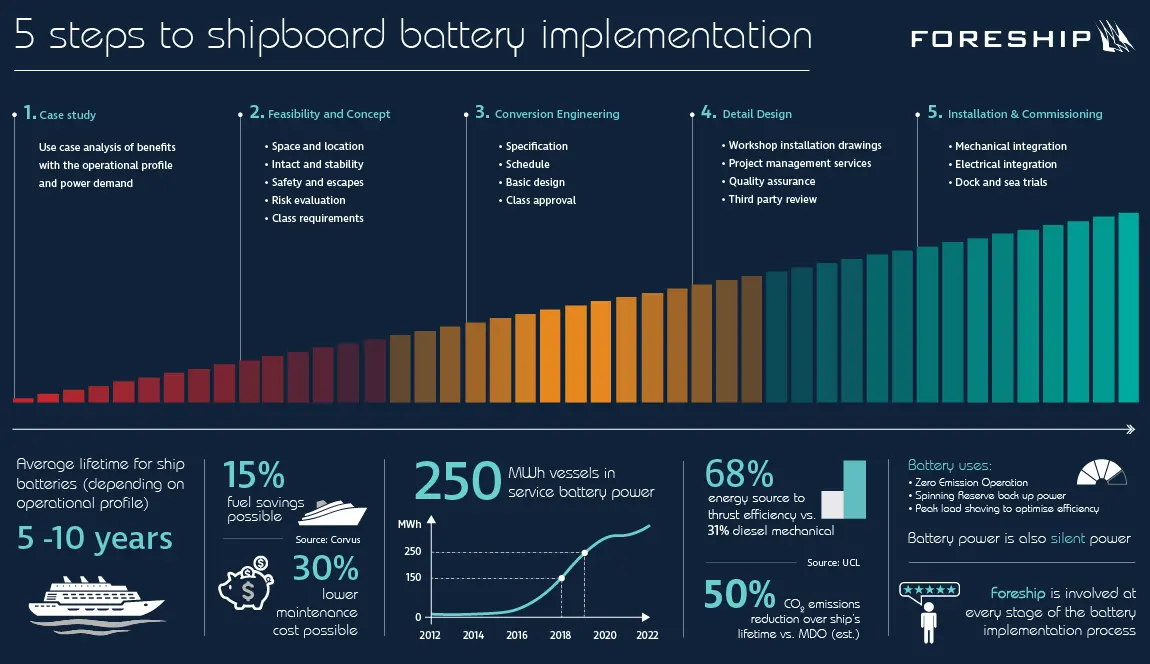
By using novel manufacturing techniques, the project expects to lower the cost of marine battery electric drivetrains by 50 percent, compared with current systems. One of the objectives of the project is to increase the energy density of battery cells.
Additionally, a swappable containerised energy storage system optimized for cost and operation in the waterborne transport industry will be developed. This will be combined with an innovative Energy as a Service platform, which will further reduce barriers to adoption by reducing the upfront Capex cost of installing marine battery electric drivetrains. The EU notes that these upfront costs are regarded as one of the barriers to wider adoption. The project hopes to enable rapid adoption to reduce greenhouse gas emissions by “482,000 MT of CO2 equivalents per year”.
This will also create new business opportunities for shipyards and local entrepreneurs.
The overarching aim of the Current Direct project is to develop and demonstrate an innovative interchangeable waterborne transport battery system and Energy-as-a-Service (EaaS) Platform in an operational environment at the Port of Rotterdam that facilitates fast charging of vessels, fleet optimisation and novel business models.
The kick-off meeting of the three year project was held earlier this week. The physical testing of the battery system is expected to take place in the final year of the project.
Project participants
Current Direct brings together thirteen dynamic partners from across Europe’s marine electrification value chain. The project is led by Spear Power Systems, makers of the world’s lightest, most flexible marine batteries certified to the most stringent international safety standards. Blackstone Technology is lowering the cost of manufacturing tomorrow’s 3D printed lithium-ion cells using state of the art active materials from Umicore.
The University of Hasselt will use its electrochemical expertise to develop physics-based models of the Current Direct cells that will help optimize the life and return on investment of battery systems deployed across Europe as part of the Current Direct Energy as a Service platform developed by the accomplished engineers and data scientists at Rhoé Urban Technologies and Aviloo.
Naval architecture and marine engineering company Foreship will lend its expertise to EDP CNET’s in depth knowledge of electrical markets to ensure the Current Direct platform targets optimal vessels and locations maximizing reductions in emissions. VUB’s material science experts are creating low-cost composites to improve the safety of battery packs that are designed for recyclability and feature VITO’s smart cell monitoring electronics.
Wärtsilä will develop modular battery containers and charging infrastructure that will be certified to innovative standards by Lloyd’s Register. The project will culminate in a demonstration of the Current Direct battery, shore charging, and asset management platform by Kotug in Rotterdam.
Related Articles
 BATTERIES, SUPERCAPACITORS, FUEL CELLS AND OTHER ENERGY STORAGE TECHNOLOGY
 BATTERY HYBRIDS & FULL-ELECTRIC VESSELS
 BATTERY HYBRIDS & FULL-ELECTRIC VESSELS