



Alfa Laval and Haldor Topsoe join Danish ammonia SOFC development project
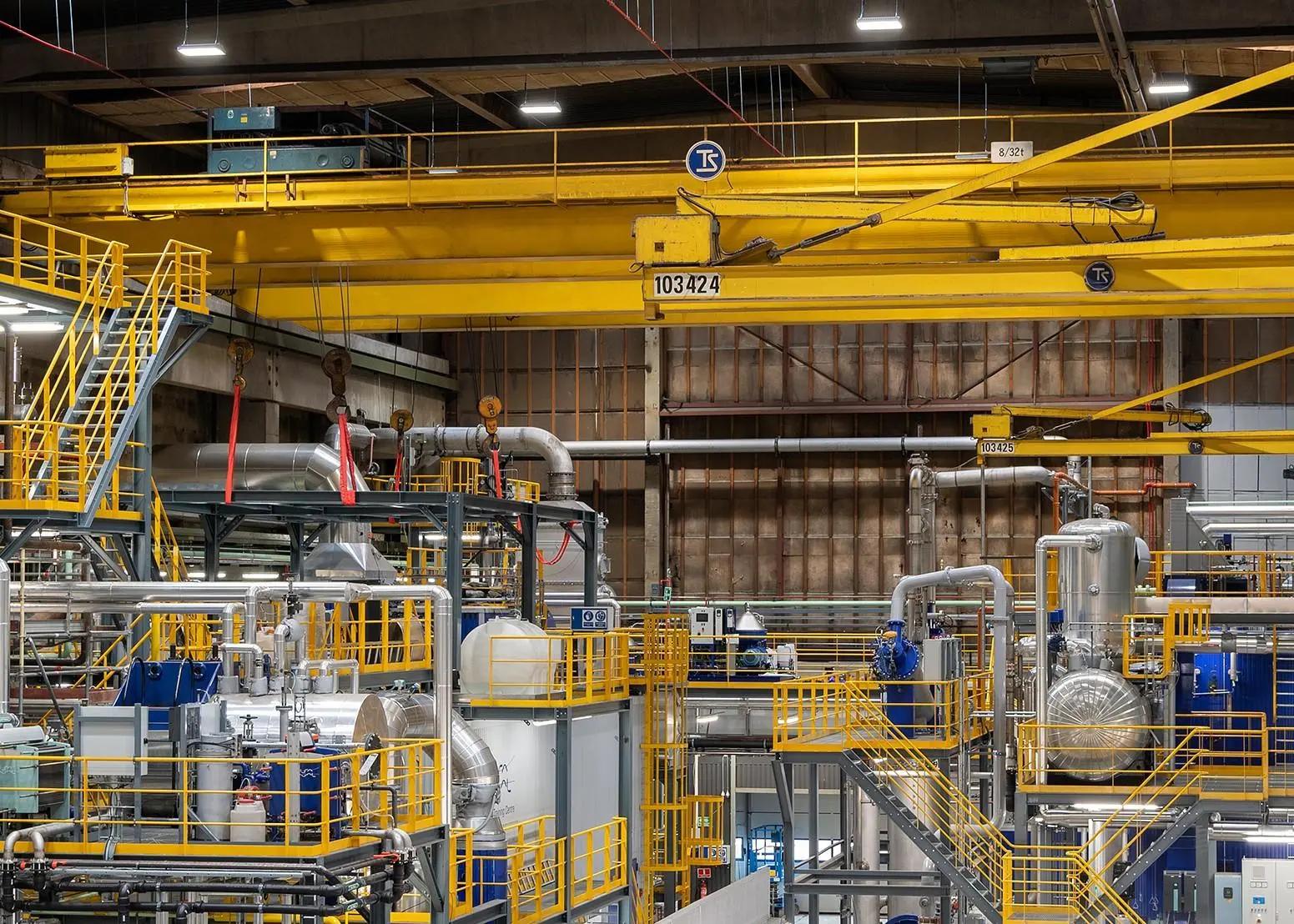
The project is being funded by a grant from Denmark’s EUDP (Energy Technology Development and Demonstration Program). The partners will pursue a high-efficiency solution with the scalability to support marine industry decarbonization.
The project, SOFC4Maritime, will target optimal utilization of future green fuels via application of SOFCs for power production on marine vessels. When based on fuels such as ammonia, hydrogen or bio-methane, SOFCs hold great promise as a replacement for today’s fossil fuels. Such alternatives are needed in the maritime industry, which must transition to greener power over just a few decades.
By electrochemically converting fuel into electricity, SOFCs can potentially produce power with higher efficiency than internal combustion engines running on the same fuel – without creating polluting emissions or particulates. Ammonia-based SOFCs are especially attractive, since ammonia can be produced in large scale using renewable electricity and no biomass resource. As such, the initial focus of the research will be ammonia-based SOFCs.
Alfa Laval, a marine supplier with more than a century of expertise, will head the development initiative. Haldor Topsoe will provide the underlying SOFC stack technology, while DTU Energy will support in system layout and component testing. Svitzer will bring a shipowner perspective and the Mærsk McKinney Møller Center for Zero Carbon Shipping will ensure a broad industry overview, end-to-end analysis of various energy pathways and a detailed techno-economic analysis.
“Addressing shipping’s environmental challenges – and climate change in particular – will require a diverse range of strong technologies. By partnering with fellow marine industry experts, we can investigate the possibilities and bring them to fruition in time to make a difference.” Sameer Kalra, President, Alfa Laval Marine Division.
“We are eager to pursue this project, which will provide essential information and enhance the feasibility of future pathways to zero carbon shipping based on SOFCs.” Bo Cerup-Simonsen, CEO, Mærsk Mc-Kinney Møller Center for Zero Carbon Shipping.
Related Articles
 ALTERNATIVE FUELS & LUBRICANTS
 ALTERNATIVE FUELS & LUBRICANTS
 ALTERNATIVE FUELS & LUBRICANTS