



MAN ES eyes ME-LGIP opportunities beyond LPG newbuild market
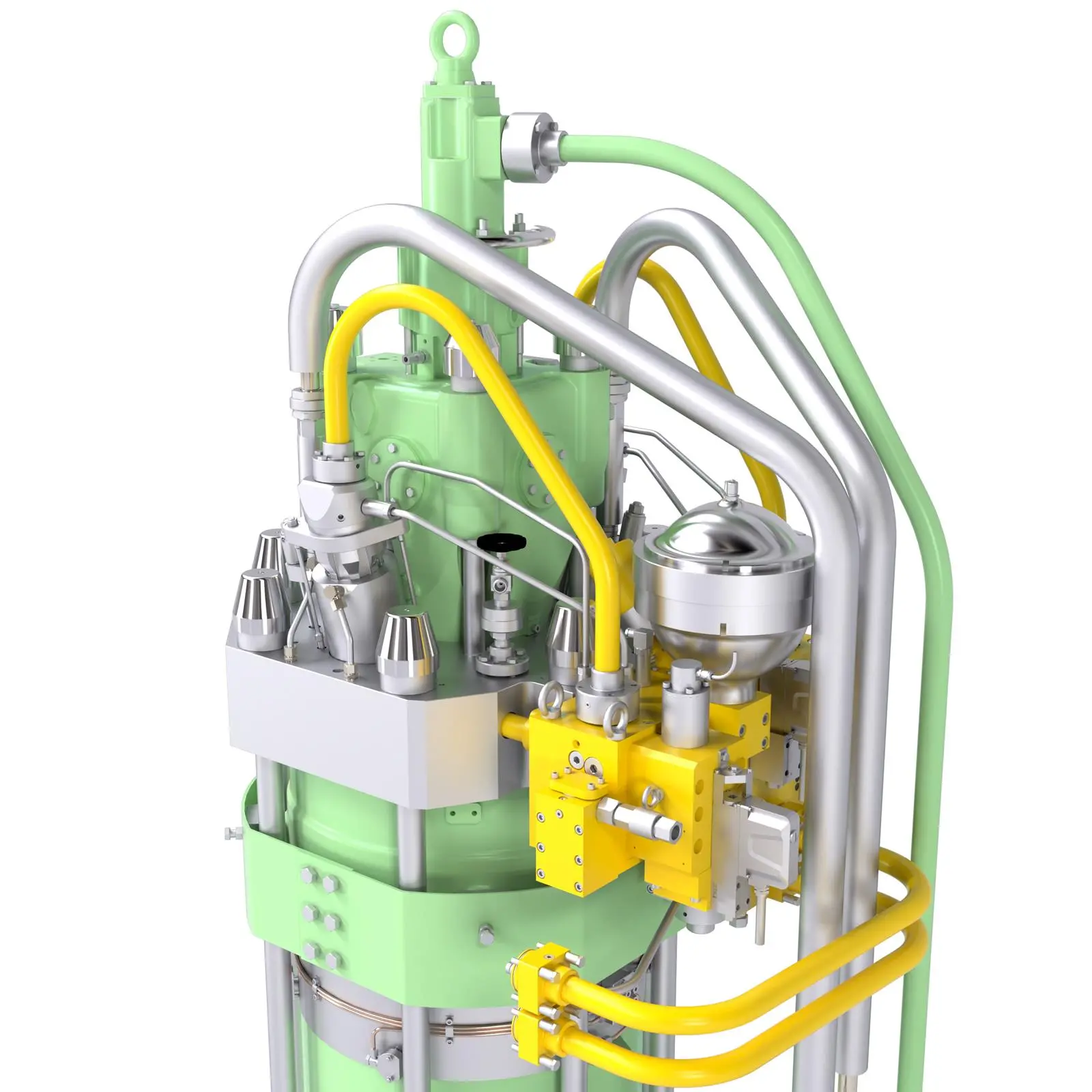
The pace of adoption of the LPG-fuelled ME-LGIP engine since its launch at MAN ES’ two-stroke research center in Copenhagen in September 2018 has exceeded the company’s own expectations.
“Of course, when we launch technology like this, we are always concerned about the timing. But I think we actually got the timing right with [the ME-LGIP], because it has really attracted a lot of interest since Day One,” Foldager reflected.
As of 14 January, 66 ME-LGIP engines have been ordered or delivered, as the dual-fuel technology is proving a popular choice for shipowners keen to explore a more sustainable propulsion solution.
In fact, the engine has become the industry standard for newbuildings destined for the butane and propane trade. In 2020, 97% of all the LPG tankers that were ordered were ordered with the ME-LGIP engine. “The market uptake has exceeded even our [pre-launch] best case scenarios,” Foldager noted.
Much of the interest has been driven by the operational benefits of running dual-fuel engines. “The orders have not been limited to just one type of ship: we’ve received orders for everything from the large gas carriers to medium size carriers, but also smaller gas carriers, down to 5,000cbm ships.”
Japanese and future ammonia markets
Foldager identified two potentially significant developments for the ME-LGIP engine that occurred in the last months of 2020.
The first has been the emergence of significant shipowner interest in ME-LGIP engines for vessels engaged in coastal trades in Japan. The interest in LPG is not being driven by the gas carrier market. In Japan, LPG is seen as an interesting alternative fuel for commercial shipping.
“There is growing interest in smaller sizes of ME-LGIP for ships trading around the coast of Japan. The infrastructure is there, the fuel is readily available and, you know, capex-wise, it’s quite competitive,” Foldager explains. “The ME-LGIP is not only seen as an environmentally-friendly solution, but it also turns out to be quite competitive and can give a competitive advantage.”
Foldager notes that this had resulted in the first orders for coastal vessels. “We have received the first orders from… some of these smaller entities for coastal ships.”
The emergence of demand for LPG-fuelled engines from outside the gas carrier market represents an interesting market development. The fuel was identified as a readily available potential alternative to LNG for vessels engaged in tramp trades before the ME-LGIP was launched.
“Outside the gas carrier market, it’s fair to say it is still early days,” Foldager commented, noting that new designs for ME-LGIP powered vessels were continuing to be delivered.
However, Foldager envisages the ME-LGIP playing a wider role in the energy transition.
Foldager noted that the ME-LGIP engine shares the same Diesel combustion principle as the ME-C, and as the upcoming AEngine. “The top of the ME-LGIP engine with the valves and the injection looks a little bit different from a normal engine, but it’s not a completely new engine. In fact, we only need to change relatively few things regarding the injection components to enable LPG combustion.”
Retrofits
The second development has been the completion of the first retrofit conversion of an ME engine to ME-LGIP on BW LPG’s BW Gemini in 2020. The vessel’s MAN B&W 6G60ME-C9.2 prime mover converted to a 6G60ME-C9.5-LGIP LPG-propelled dual-fuel engine in October.
“The first ship [BW Gemini] that was converted completed its maiden voyage, if we can say that about a five-year-old vessel, across the Pacific, through the Panama Canal to Houston loaded, running on LPG bunkers at the same time, and it’s now on the latest voyage. According to the feedback we have received from the engineers, it’s running extremely well.”
Meanwhile, the second conversion for BW LPG has been completed, and the third conversion is undergoing sea trials in China at Yui Lian Shipyard.
Foldager notes that enquiries about retrofits has risen following the success of the first retrofit.
“The fact that we have now completed a successful retrofit makes an enormous difference. BW LPG in Singapore has signed off on retrofits for their 15 vessels in total to be upgraded or converted to LPG.”
“I think the interest in converting existing vessels to be able to operate on LPG in the future is being driven by the fuel’s environmental benefits, but also because it offers competitive advantages.”
Foldager noted that each of the BW LPG upgrades are expected to deliver CO2 emission reductions of around 3,000 tonnes per year. The fuel offers wider environmental benefits, with sulphur emissions lowered by over 90%, and NOx emissions reduced by 10-15%, and CO2 between 13 and 18%.
Fuelling a very large gas carrier (VLGC) with LPG instead of HSFO offers operational savings of US$4,000 per day, Foldager said, citing the ceo of Singapore-based shipowner and operator BW LPG.
“These savings include fuel direct fuel cost savings from a more efficient engine, because when they upgrade the ships, they have also been upgraded to the latest standard of engine.”
Underlying everything, shipowners and their finance providers are taking an increasingly close interest in future-proofing investments.
New regulations at the IMO are also fuelling interest. “The likely introduction of EEXI requirements for existing ships by the IMO will make it even more beneficial to convert your ships into a more environmentally friendly solution. There is no doubt the ME-LGIP would offer a higher EEXI rating.”
Related Articles
 2-STROKE & 4-STROKE
 2-STROKE & 4-STROKE
 2-STROKE & 4-STROKE