



US COMPANIES TEAM UP TO STANDARDISE HYDROGEN SOLUTIONS
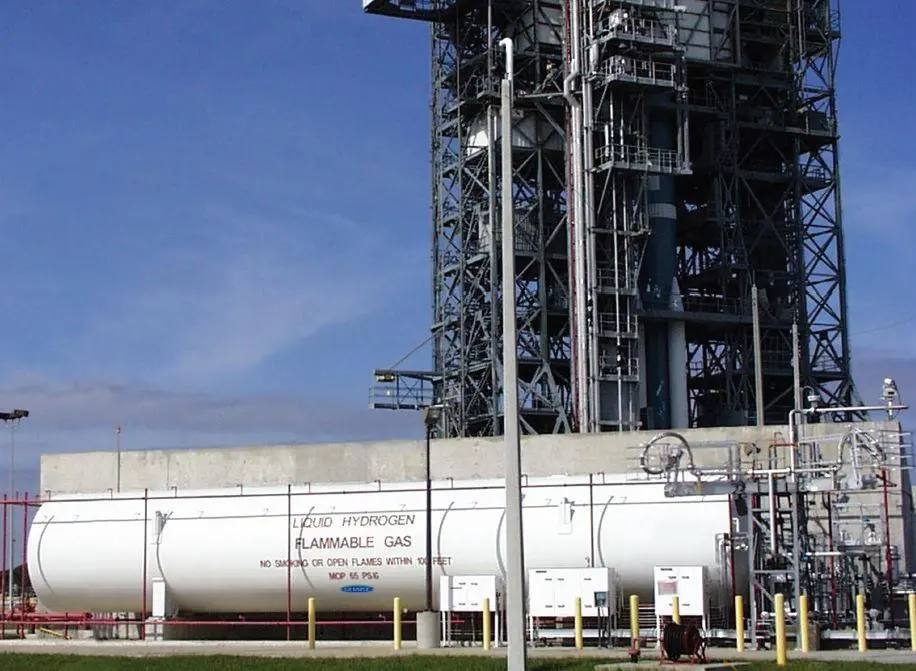
The MOU includes hydrogen liquefaction plants, fuelling stations, plant expansions, storage expansion, spaceship fuelling and other hydrogen-related facilities. Interestingly, the agreement also covered marine bunkering.
Chart Industries is a diversified global manufacturer with equipment and process expertise, and the company has seen a rapid increase in order activity. Chart’s hydrogen equipment orders for 2020 were over $38 million, with 60% of the orders received in the fourth quarter including a first of a kind order for custom vacuum insulated pipe for multiple liquid hydrogen storage systems. “With 164 customers working with Chart to serve their hydrogen equipment needs (up from 30 at the beginning of 2020), this collaboration with Matrix will be another way for our customers to achieve their small-scale hydrogen requirements,” said the company in a statement.
Chart’s standard hydrogen offering in the MOU includes liquefaction process and equipment, storage vessels, truck loading, vacuum insulated piping and plant controls. Matrix Service Company focuses on process integration, facility design, site works, fabrication, electrical works and installation. Together the companies are working to provide more cost competitive and scalable ways to increase hydrogen, and the MOU furthers that effort by having a standardized, price competitive offering for turnkey design, equipment supply and construction across North America.
Chart Industries has announced a string of new business deals relating to its hydrogen business. Most recently, it acquired 15% ownership of HTEC Hydrogen Technology & Energy Corporation in December 2020. HTEC designs, builds and operates hydrogen fuel supply solutions to support the deployment of hydrogen fuel cell electric cars and has significant experience in the Canadian market.
In October last year, Chart Industries announced its participation in a U.S. Department of Energy project, H2@Scale in Texas and Beyond, which intends to show that renewable hydrogen can be a cost-effective fuel for multiple end-use applications including fuel cell electric vehicles, when coupled with large, baseload consumers that use hydrogen for clean, reliable stationary power. Part of the project will involve conducting a feasibility study for scaling up hydrogen production and use at the Port of Houston. The project partners will assess available resources, prospective hydrogen users and delivery infrastructure.
H2@Scale is a concept that explores the potential for wide-scale hydrogen production and utilization in the US including for applications such as energy for transportation (either directly, as a feedstock for synthetic fuels or to upgrade oil and biomass), as a feedstock for industry (e.g. for ammonia production and metals refining), as heat for industry and buildings and for electricity storage.
Ten million metric tons of hydrogen are currently produced in the US annually, mostly by natural gas reformation. The hydrogen is used in the oil refining and ammonia industries, but emerging applications include fuel cell vehicles, metals refining and synthetic natural gas production. A report released by the Department of Energy in October last year estimated that hydrogen’s economic potential could reach be 22–41 million metric tons annually by 2050.
Related Articles
 ALTERNATIVE FUELS & LUBRICANTS
 ALTERNATIVE FUELS & LUBRICANTS
 ALTERNATIVE FUELS & LUBRICANTS