



NIMBLE TANKER FOR DRYING BERTHS
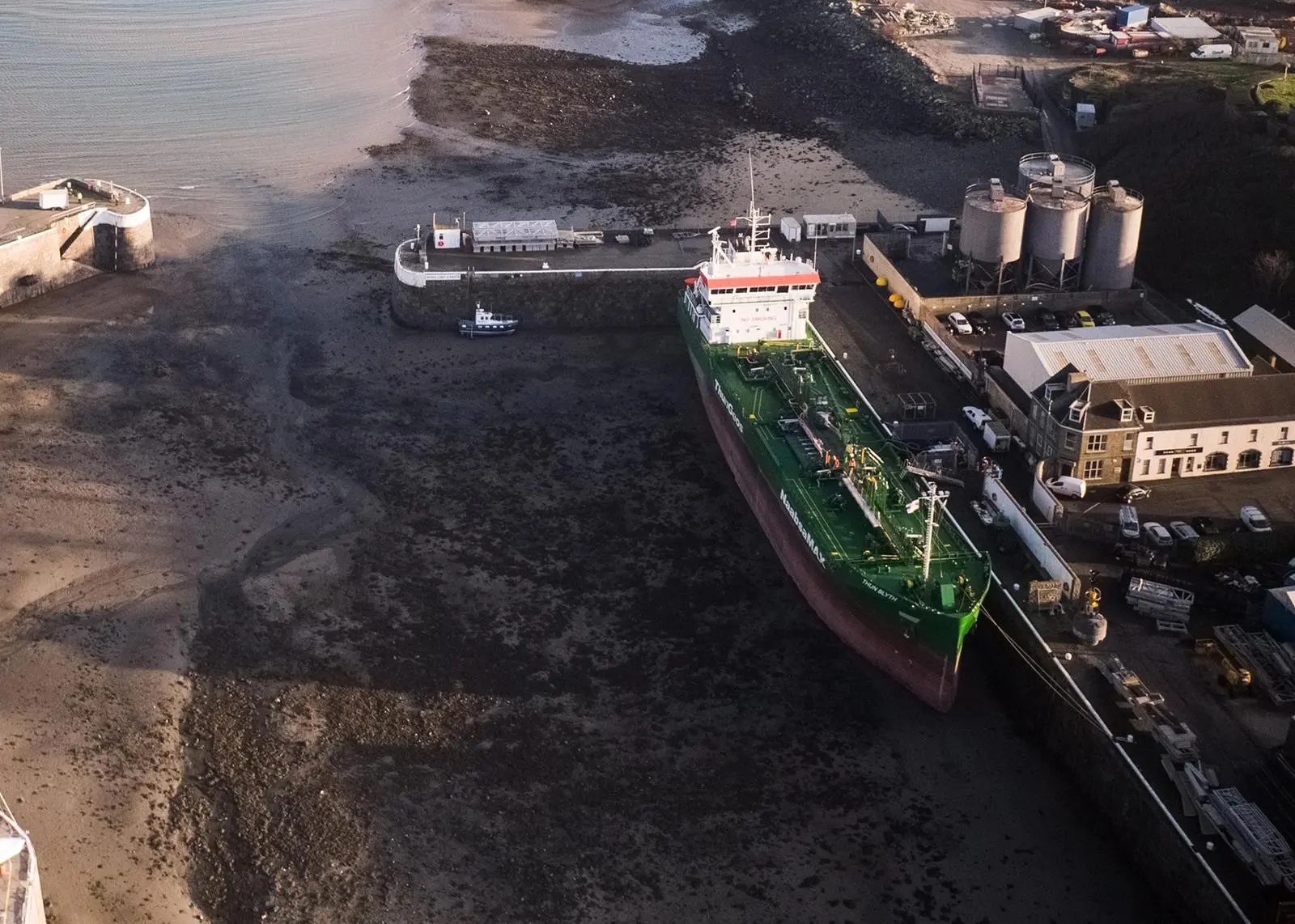
Built to serve the trade into small tidal ports and river berths, including those where it is necessary for coasters to lie aground at low water, the vessel embodies a NAABSA design capability, strengthened and fitted to be “Not always afloat, but safely aground.”
The sector of the European coastal and short-sea tanker fleet able to comply with the NAABSA charter party clause has been in numerical decline for many years. However, the 4,250dwt Thun Blyth brings a renewed commitment to the niche segment, backed by a long-term agreement with UK-based independent marine fuel supplier Geos Group.
The Netherlands is a leading light in the technology, construction and operation of the smaller classes of mercantile vessel, and Thun is a member of that cluster through its Dutch arm Thun Tankers BV, to which Thun Blyth has been assigned. Moreover, the group has a longstanding connection with Dutch shipbuilding contractor Ferus Smit, the supplier of much of the Swedish group’s dry cargo and tanker tonnage, and producer of the latest type, dubbed the NaabsaMAX.
Construction of Thun Blyth was entrusted by Ferus Smit to its German affiliate at Leer, in Ostfriesland, where a second such newbuild is to be laid down for completion during the spring of 2022.
Resource efficiency and maximisation of cargo intake within the dimensional constraints for access to space- and depth-restricted delivery points, coupled with regulatory compliance and an environmental agenda have been key tenets of the design development project. The high degree of cargo section compartmentalisation, into eight tanks of 4,800m3 total volume, is complemented by the flexibility to carry IMO Type 2 chemicals as well as refined oil products.
The tanks have been treated throughout using the Jotun Tankguard Flexline coating, enabling the wider range of product transportation, affording protection over time from the more aggressive cargoes, while facilitating cleaning and turnarounds. The design also offers scope for direct ship-to-ship bunkering.
After sea trials and return to the Dutch coastal harbour of Eemshaven, Thun Blyth made her maiden voyage to load product at her namesake port in Northumberland where one of the Geos Group’s fuel terminals is located. She sailed north to discharge at Aberdeen, and subsequently ran back down the east coast to re-load at Immingham’s Phillips 66 terminal on Humberside. Since then, the vessel has shown her versatility by visiting many small ports and harbours around the British Isles.
The Geos Group has grown steadily over the past three decades, developing an integrated operation embracing transport, storage, and delivery by road and sea, and encompassing port depots at Aberdeen, Blyth, Heysham, Lerwick, Lowestoft, Peterhead and Scalloway. Indicative of the Geos business drive, a larger vessel currently chartered from Thun by the UK firm, the 6,535dwt Thun Grace, revived the bulk oil shipment trade into Lowestoft last August after a 16-year break in the traffic. The cargo was delivered to the Suffolk port’s new bunkering facility.
Thun Blyth is managed from Farmsum, near Delfzijl, by the Dutch company MF Shipping, which husbands other units of the Thun Tankers fleet besides various Dutch-owned cargo vessels.
In addition to the second NaabsaMAX unit, the production programme at Ferus Smit’s Leer yard includes the third and fourth newbuilds in the 7,999dwt Thun Eos class, powered by Wartsila LNG dual-fuel machinery.
PRINCIPAL PARTICULARS – Thun Blyth
|
Length overall |
79.9m |
|
Breadth |
15.0m |
|
Draught, summer |
5.5m |
|
Deadweight |
4,250t |
|
Cargo tanks |
8 |
|
Cargo capacity(98%) |
4,800m3 |
|
Main engine power |
1,950kW |
|
Ice class |
1C |
|
Flag |
Dutch |
Related Articles
 PROPULSION
 GENERAL NEWS
 HYDROGEN