



Germans,Dutch plan Rhine hydrogen ships
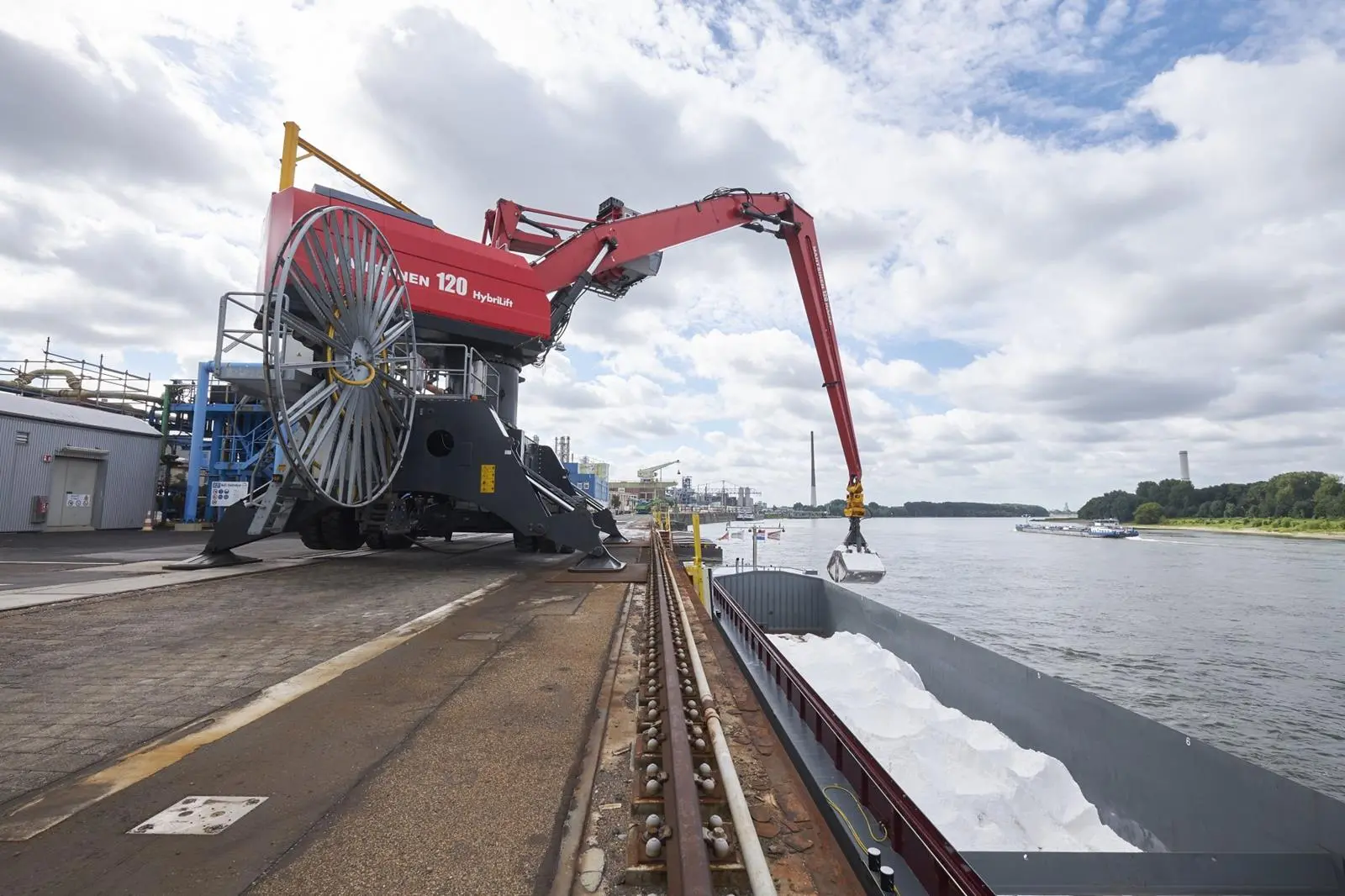
Polymer supplier Covestro and NPRC, a leading Dutch logistics company, said the first two low-draught , zero-emission ships with hydrogen propulsion are due to enter service in 2024 between the Netherlands and Covestro’s three Lower Rhine sites with two more ships to follow.
The project is designed to convert Rhine salt transport to hydrogen propulsion in stages. That’s because, in terms of transport volume, salt is the most important raw material for Covestro in the region.
Covestro spokesman Przemyslaw Jedrysik told The Motorship that design specifications for the ships were currently prone to change. But they were expected to be completed by the end of this year, he added.
There was no indication where the ships might be built or who would supply their hydrogen propulsion systems. However drawings would also be available at the end of 2021, Jedrysik said.
A main feature of the Rhine ships however had already been fixed, he said. “One important aim for us in the design of the ships will be to enable operation when water levels are low. So the ships will be built with a flat hull for unloading”, he said.
In a statement Covestro and NPRC also said that since the initial focus was on project technical and economic feasibility, part of this would be an optimised hull design so that the ships could be used during low water – a regular occurrence on the Rhine.
They also revealed that the feasibility of using green hydrogen from Covestro’s own chlorine electrolysis work to refuel the inland waterway vessels was being examined.
The project is part of a Rhine Hydrogen Integration Network (RH2INE) initiated by the German state of North Rhine Westphalia and the neighbouring Dutch provinces of South Holland and Gelderland.
Supporters also include the Rhine ports of Duisburg, Neuss/Düsseldorf and Cologne along with Europe’s biggest seaport, Rotterdam, and other logistics and industrial companies.
The overall aim, according to Covestro and NPRC, is to establish a climate-neutral transport route on the Rhine-Alpine corridor, which will contribute to the implementation of the European “Green Deal”. To help accomplish this, they said they were supporting the development of hydrogen infrastructures at ports and loading stations along the Rhine.
NPCR CEO Femke Brenninkmeijer said “this form of shared responsibility for the supply chain is the future for innovation in logistics”. The firm says it uses about 200 ships every day to transport 12 million tons of bulk goods, containers and breakbulk on European inland waters.
Covestro’s Chief Technology Officer Klaus Schäfer said “the logistics sector is particularly relevant here. This is because transport is the only sector in the European Union where emissions have risen rather than fallen since 1990.”
Related Articles
 ALTERNATIVE FUELS & LUBRICANTS
 ALTERNATIVE FUELS & LUBRICANTS
 ALTERNATIVE FUELS & LUBRICANTS