



ABS PRODUCES METHANOL AS A MARINE FUEL GUIDANCE
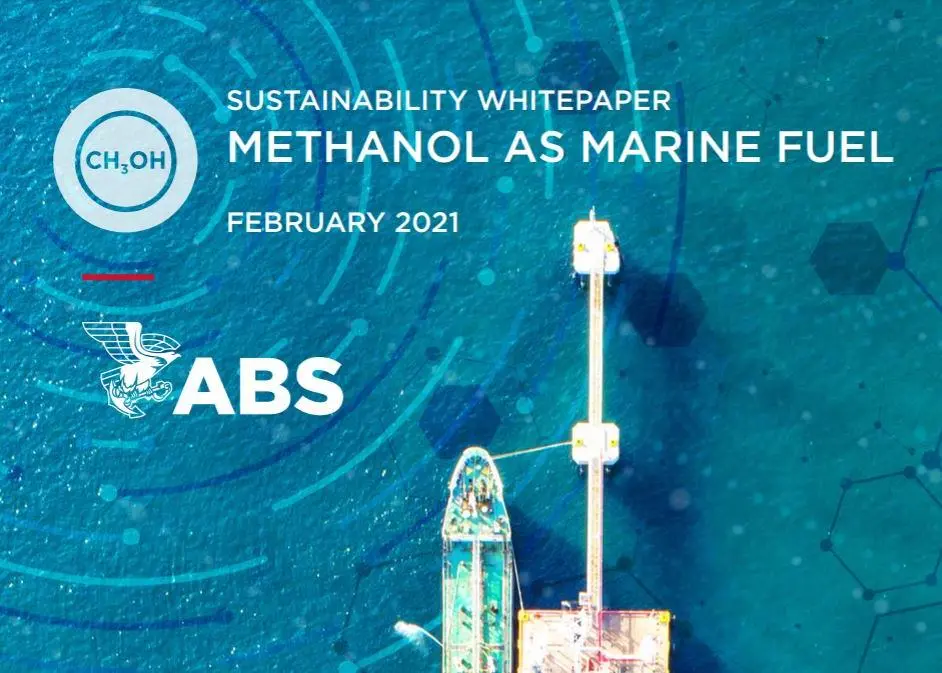
The latest in an ongoing series of ABS sustainability focused whitepapers examining different fuel options for the marine industry, Methanol as Marine Fuel provides information for shipowners considering ammonia as an option in both the near-term and long-term.
The white paper discusses safety considerations, as well as the comparative maturity of methanol production, supply chain and bunkering technology compared with other future fuels. While methanol is a liquid at ambient temperature, and onboard containment of methanol is easier than LNG, the liquid fuel has a lower volumetric density than LNG, necessitating comparatively larger containment tanks.
In November 2020, the Maritime Safety Committee of the IMO adopted interim guidelines on the use of methanol as a marine fuel, making ethyl and methyl alcohols options for shipowners and operators. Twelve methanol powered ships are already in operation, with another 10 on order.
“Due to its potential to reduce the CO2 footprint of marine operations, applications of methanol are drawing a wider interest from owners of oceangoing vessels, short sea shippers, ferries, cruises, and inland waterway vessels. While methanol’s uptake and application as a marine fuel is only beginning, ABS is committed to ensuring owners, operators, shipbuilders and original equipment manufacturers are fully informed about its potential as they develop their decarbonization strategies,” said Georgios Plevrakis, ABS Director, Global Sustainability.
The white paper can be downloaded here.
Related Articles
 ALTERNATIVE FUELS & LUBRICANTS
 ALTERNATIVE FUELS & LUBRICANTS
 ALTERNATIVE FUELS & LUBRICANTS