



Commercial solutions dominate the shortlist for 2021 Motorship Award
The Motorship Award covers collaborative projects that address industry-wide challenges, and are also selected for their potential wider applicability. This year almost every shortlisted project offers significant reductions in GHG emissions, with most offering lower fuel consumption, and lower capital and operating expenditure.
This year’s shortlist of eight nominees have been selected with a focus on innovative projects that will be on the water, or close to commercial production, by November 2021. While this excluded a number of interesting technologies and projects, we do believe that either fuel cell technology nor hydrogen fuelled combustion engines represent viable solutions for our wider audience as of April 2021.
We have included two exceptions to the focus on commercial developments or projects. The Mærsk Mc-Kinney Møller Center for Zero Carbon Shipping is an ambitious collaborative project that has a wider scope, extending from ship technology through to financing. The second is a British concept design that envisages ultimately delivering a zero-emission bulker while operating on IMO 2020 compliant fuels.
As ever, the winning project will be selected by delegates attending The Motorship’s Propulsion & Future Fuels Conference, which will be held in Hamburg in November. The shortlisted nominees will present their projects in a special session held during the event, while the winner will be determined by a vote from conference delegates.
The Mærsk Mc-Kinney Møller Center for Zero Carbon Shipping (MCZCS)
The first of our nominees, the Mærsk Mc-Kinney Møller Center for Zero Carbon Shipping, is a new research centre designed to support shipping’s decarbonization ambitions. The Copenhagen-based centre, which was launched in June 2020, is intended to contribute to the achievement of zero-carbon shipping.
Successfully achieving the transformation of shipping will require significant investment from outside the industry, the development of new fuels and powering solutions, as well as the correct alignment of regulatory and commercial incentives. While many are working to address these challenges separately, the centre is unique in its scope, and plans to make a contribution across each of these areas.
The centre is making an important contribution by bringing together many important members of the industry. Greater collaboration among industry participants is another prerequisite if shipping is to meet the decarbonisation challenge, and the Mærsk Mc-Kinney Møller Center for Zero Carbon Shipping brought together major players from the beginning, including ABS, A.P. Moller-Maersk, Cargill, MAN Energy Solutions, Mitsubishi Heavy Industries, NYK Line and Siemens.
iCER system addresses methane slip
The second nominee for the award is a step-change in emissions reduction technology for Otto Cycle low speed engine technology. In June 2020 WinGD unveiled a new technology designed to slash methane emissions and cut fuel consumption in its X-DF dual-fuel engines. The launch of Intelligent Control by Exhaust Recycling (iCER) is the first development to be introduced as part of X-DF2.0, WinGD’s second-generation dual-fuel engine platform.
The X-DF2.0 technologies will enable improved engine performance with both LNG and future carbon-neutral fuels. The iCER system delivers enhanced combustion control through the use of inert gas. The result is a reduction in methane slip emissions of up to 50% when using LNG and a significant reduction of fuel consumption, of 3% in gas mode and 5g/kW in diesel mode.
The compound effect of using less gas fuel and reducing methane slip is an improvement in overall GHG emissions of nearly 10% in gas mode compared to first-generation X-DF engines and nearly 25% compared to engines burning HFO.
X-DF2.0 tackles one of the biggest obstacles to uptake of LNG – methane slip. By lowering this barrier, WinGD hopes that a wider range of shipowners will adopt gas as fuel and take advantage of the immediate emission benefits, as well as the transition it offers to future clean fuels. By reducing the fuel consumption these engines require, iCER technology will also make X-DF engines more energy efficient when later running on clean fuels such as biogas or synthetic methane.
Berg Propulsion’s Twin Fin solution
Our third nominee for the award is for Berg Propulsion’s Twin Fin direct electric drive propulsion system.The solution offers particular advantages for operations in Arctic conditions, which is an area where marine traffic is expected to increase.
The solution has been selected for a 26,000dwt SUL (Self Un Loader) Bulker vessel that is being built by CSSC Chengxi Shipyard. It is expected to be commissioned at the end of 2021 for a Canadian shipowner.
The vessel’s propulsion system is a tailor-made solution that has been adapted to its hullform and integrated into the ship design. It features two fully-feathering controllable-pitch propellers, and each shaft will be directly powered by a 3MW permanent magnet electric motor which will be housed in fins attached to the hull. The vessel’s four diesel-electric gensets will have a combined total power of 9.5MW, and the solution will achieve a service speed of 12-14 knots.
The patent pending Twin Fin system is a fully flexible solution tailor-made for each project. It was initially developed in partnership with Odense Maritime Technology and Scandinavian Marine Group as a way of making vessels operating in Arctic conditions less vulnerable to damage to their propulsion system. The compact, hydrodynamically-shaped fins are tailor-made and oriented to optimise water and ice flow around the hull and the propellers. They offer additional protection from mechanical damage, and as an option for ice-going vessels, they can be equipped with ice knives that prevent ice from hindering the propellers and affecting performance.
Airseas’ Seawing kite system
Airseas’s Seawing wind-assisted propulsion system is our fourth nominee for the award. The first installation of the smaller 500m² kite system is due to be completed aboard an Airbus Ville de Bordeaux RORO vessel by the end of 2021. Following this installation, a 1,000m² serially-produced Seawing will be installed on one of “K” Line’s bulkers.
The bow-mounted kite system requires minimal deck space, is easily installed and can be moved between vessels if desired. It does not hinder cargo operations and is suitable for a range of vessels including bulkers, tankers, container ships, PCTCs, ROROs and ROPAX vessels.
The kite will reduce fuel consumption by an average of 20%, or approximately 5,200 tons of CO2 annually for a Capesize vessel. Higher savings of above 20% may be possible for both a Capesize bulker sailing on an Asia-Oceania route and for a RoRo vessel sailing on a trans-Atlantic route.
The solution incorporates some technology from the aeronautical industry. The wing continuously readjusts its trajectory to maximise the traction of the kite to generate the maximum savings. Its digital twin model is also used by the Seawing EcoRouting algorithm to ensure maximum use of Seawing in accordance with the weather conditions along the vessel’s route.
UECC’s first battery-hybrid LNG-fuelled PCTCs
The fifth nominee for the award is for UECC’s first LNG battery hybrid pure car and truck carriers (PCTCs). The first of the vessels was launched at Jiangnan Shipyard in April 2021, and is scheduled for delivery later in 2021.
The vessels’ design mean that the vessels will exceed the IMO target of 40% reduction in carbon intensity by 2030. They will sail predominately in the UECC Atlantic trade and will meet the Tier 3 IMO NOx emission limitations coming into force for the Baltic and the North Sea for newbuildings with keel laid on or after 1 January 2021.
The project is also noteworthy for incorporating an Energy Storage System (ESS), which will be charged by a permanent magnet, directly driven shaft generator or dual fuel generators.
By incorporating the ESS and shaft power generator into the design, the vessels reduce the number of auxiliaries from three to two.
WE Tech of Finland is providing its WE Drive direct drive permanent magnet shaft generator, the DC-link power distribution system and the ESS, with Corvus Energy providing the battery package. Kongsberg Maritime is providing the energy management system which acts as a supervisory and control system for the overall production and consumption of energy onboard the vessels, ensuring flexibility and optimal operations at sea, in port and during manoeuvring.
Refit to meet IMO Tier III compliance
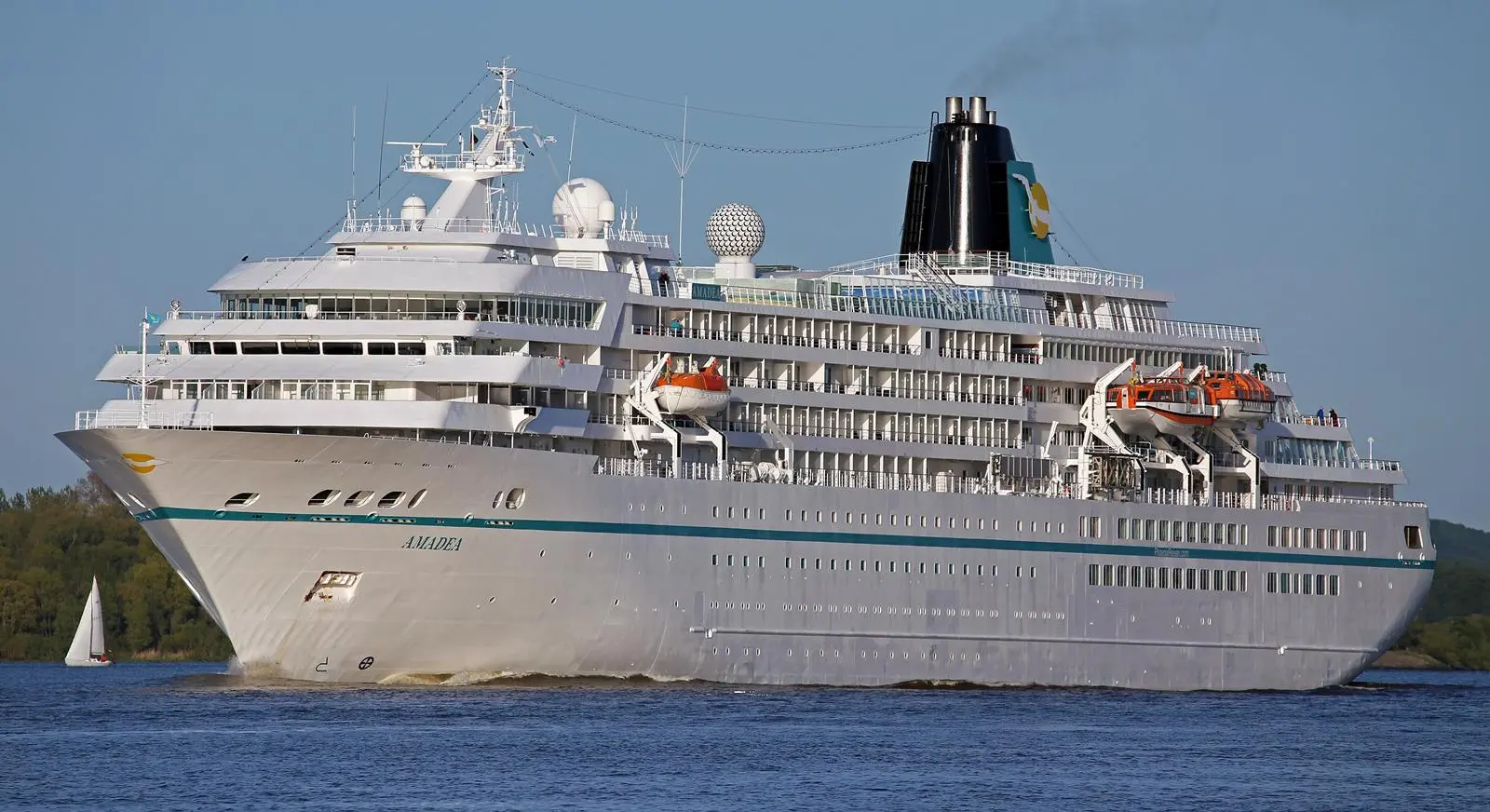
The sixth nominee for the award is for a major refit project for a 30-year-old member of Bernard Schulte Cruise Services (BSM CS) fleet. The MS Amadea will undergo a major refit in 2021 using innovative solutions brought together by some of the leading companies in the marine industry to meet or even exceed the latest engine exhaust emission requirements.
Bernard Schulte Cruise Services (BSM CS) opted to bring together some of the best solutions to meet the IMO III regulations. As a result of a collaboration between Phoenix Reisen, BSM CS, C-Job Naval Architects, Wabtec and VMS Group, the companies are redesigning the powering systems, using new technology equipment, to lower emissions and fuel consumption, while meeting IMO III requirements.
The most noteworthy aspect of the project was in the solution for Wabtec’s diesel engines and generator sets. These generator sets do not require a selective catalytic reduction (SCR) installation, saving tons of Urea per year and reducing both the Capex requirements of the solution, along with the operating costs.
Further savings have been achieved by fully redesigning the power management system. This has led to more efficient use of powering resources onboard. This is developed by the design team of C-Job Naval Architects while working closely with all project partners.
By using each other’s strengths, the project team of BSM CS, Wabtec/VMS, and C-Job together created a project approach which not only ensures the vessel will comply with IMO III requirements, but also features innovative repowering and lowers overall fuel consumption.
World’s first commercial LPG conversion
The seventh nomination for the award is for the world’s first commercial vessel to be retrofitted with a two-stroke liquified petroleum gas (LPG) engine.
The project began in 2017 when shipowner BW LPG decided to retrofit some of its LPG carriers to LPG-fuelled propulsion. The first conversion, of BW Gemini, was completed at Yui Lian Ship Yard in Shenzhen, China in 2020. The project required close collaboration between a number of project partners, including the Retrofit Division of MAN PrimeServ, MAN Energy Solutions’ after-sales division.
The conversion offers immediate environmental performance benefits, reducing GHG emissions by 20% and lowering PM emissions by 90%. The conversion is also expected to lead to fuel efficiency savings of around 10% for its vessels. The conversion will also ensure that the vessels are compliant with upcoming IMO regulations such as the EEXI, potentially extending the operational life of an asset.
The conversion of an engine aboard an existing vessel rather than opting to construct a newbuilding offers indirect GHG savings, in terms of the materials required.
The experience gained during the successful retrofit project also has wider implications for the maritime energy transition. MAN Energy Solutions expects that such retrofits of engines will become increasingly common as additional new fuels and technology enter the market in the future.
Zero-emission concept design
The eighth and last nominee for the award is for a concept design that has yet to receive an Approval in Principle. At the heart of the vessel’s design lies a three-wing aerofoil set, for which the British Windship Technology has applied for a separate Approval in Principle.
Such rigs generate significantly more thrust than single-masted technology. The technology offers the possibility of offering savings of up to 30% for a bulker of 125,000dwt vessel with two different combinations of rigs.
However, the British developer has been nominated for a 115,000dwt tanker ship design which will include onboard CO2 capture from four 2MW generators. The concept design combines Windship Technology’s solid aerofoils technology concept with a number of mature technologies, such as PV panels, and heat recovery to achieve up to 80% in fuel savings for the targeted vessel types.
Another innovative aspect of the concept design is the use of onboard carbon capture, which would permit the vessel to operate on MDO while achieving significant reductions in GHG emissions.
Related Articles
 PROPULSION
 GENERAL NEWS
 HYDROGEN