



DIRECT ELECTRIC DRIVE PROPULSION SYSTEM CHOSEN FOR BULK CARRIER
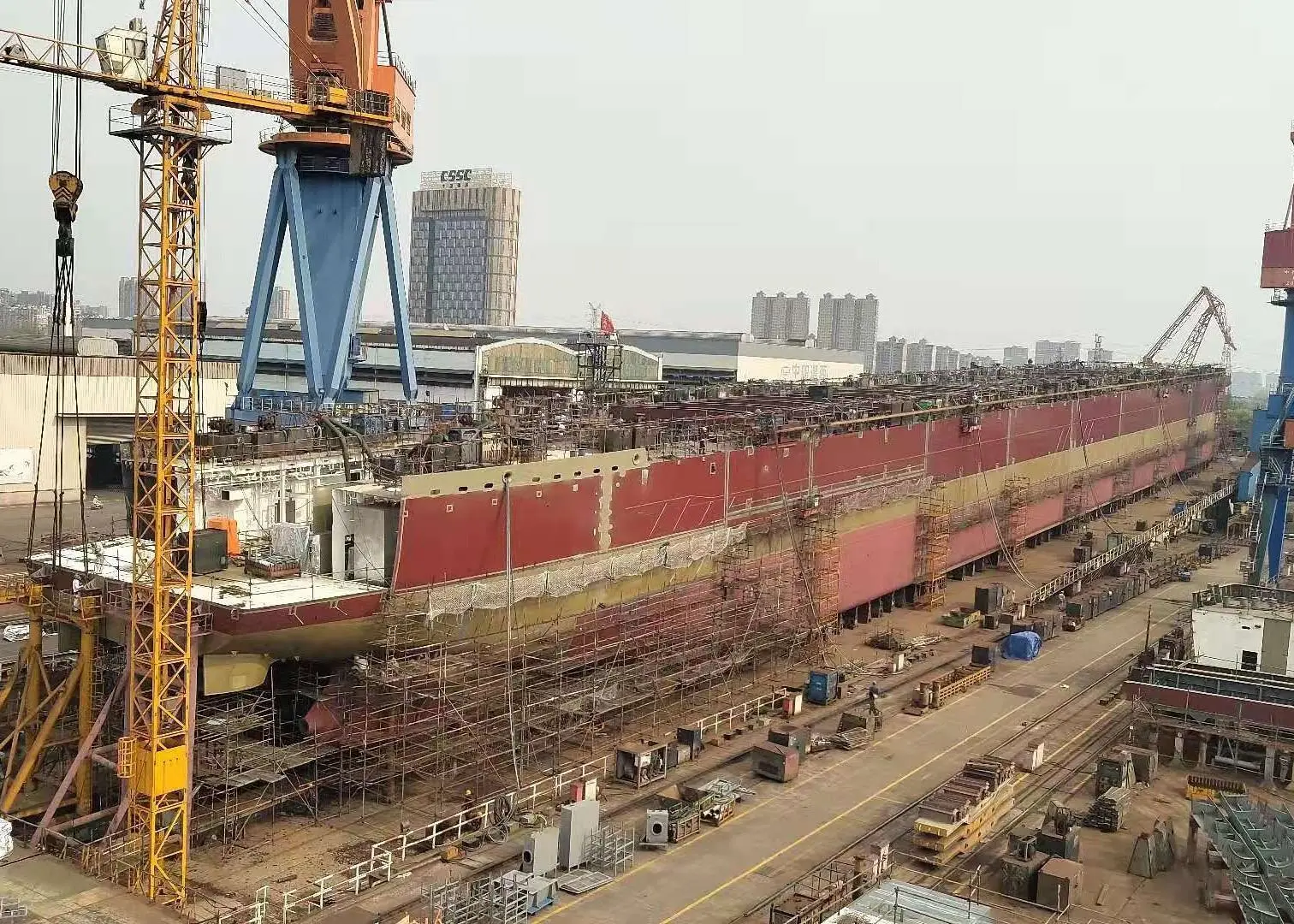
The newbuild 26,000dwt SUL (Self Un Loader) Bulker has been designed by Deltamarin (China) and is being built by CSSC Chengxi Shipyard. It is expected to be commissioned at the end of this year for a Canadian shipowner. Apart from the Twin Fin, Berg Propulsion is also delivering the complete electrical integration package with everything from the variable speed permanent magnet alternators through the DC switch boards, down to the direct drive electric motors and power management.
“In a project of this magnitude and with this level of integration the structure and collaboration between all stakeholders and suppliers is essential to achieve the goals” says Jonas Nyberg, Managing Director West at Berg Propulsion. “We are very proud to be a part of this project and to work alongside professional partners such as CSL and Chengxi”.
Like the Polarcus project, the vessel’s propulsion system is a tailor-made solution that has been adapted to its hullform and integrated into the ship design. It features a full variable speed diesel electric package propelled by two fully-feathering controllable-pitch propellers. Each of these will be directly powered by a 3MW permanent magnet electric motor which will be housed in the fins attached to the hull. The vessel’s four diesel-electric MaK gensets will have a combined total power of 9.5MW, and the solution will achieve a service speed of 12-14 knots.
The patent pending Twin Fin system is a fully flexible solution tailor-made for each project. It was initially developed in partnership with Odense Maritime Technology and Scandinavian Marine Group as a way of making vessels operating in Arctic conditions less vulnerable to damage to their propulsion system. The compact, hydrodynamically-shaped fins are tailor-made and oriented to optimise water and ice flow around the hull and the propellers. They offer additional protection from mechanical damage, and as an option for ice-going vessels, they can be equipped with ice knives that prevent ice from hindering the propellers and affecting performance.
The new vessel will operate with a high degree of flexibility avoiding the reliability pitfalls of podded propulsors, making the Twin Fin electric propulsion system ideal, says Mattias Hansson, Global Account Manager at Berg Propulsion. Twin Fin uses all proven technology, he says. “It’s a smart way of combining the most proven, high performance plant. We have configured the best of the best in a totally different way and patented the concept.” The aim is to balance total ship resistance and propeller thrust performance to obtain maximum gain in terms of net thrust performance while minimising noise and vibration. Additionally, as the fins are positioned externally, they create buoyancy, and in some cases this can add value to the vessel by increasing available cargo carrying capacity.
Berg Propulsion’s design work is all undertaken in Sweden, and last year the company moved all its manufacturing capability there as well. Hansson notes some of the valued suppliers to the project: MaK Motoren, The Switch, Renk, Becker Marine Systems, Toromont Cat and Techsol Marine.
Related Articles
 PROPULSION
 GENERAL NEWS
 HYDROGEN