



Shell to participate in Singaporean PEM FC retrofit project
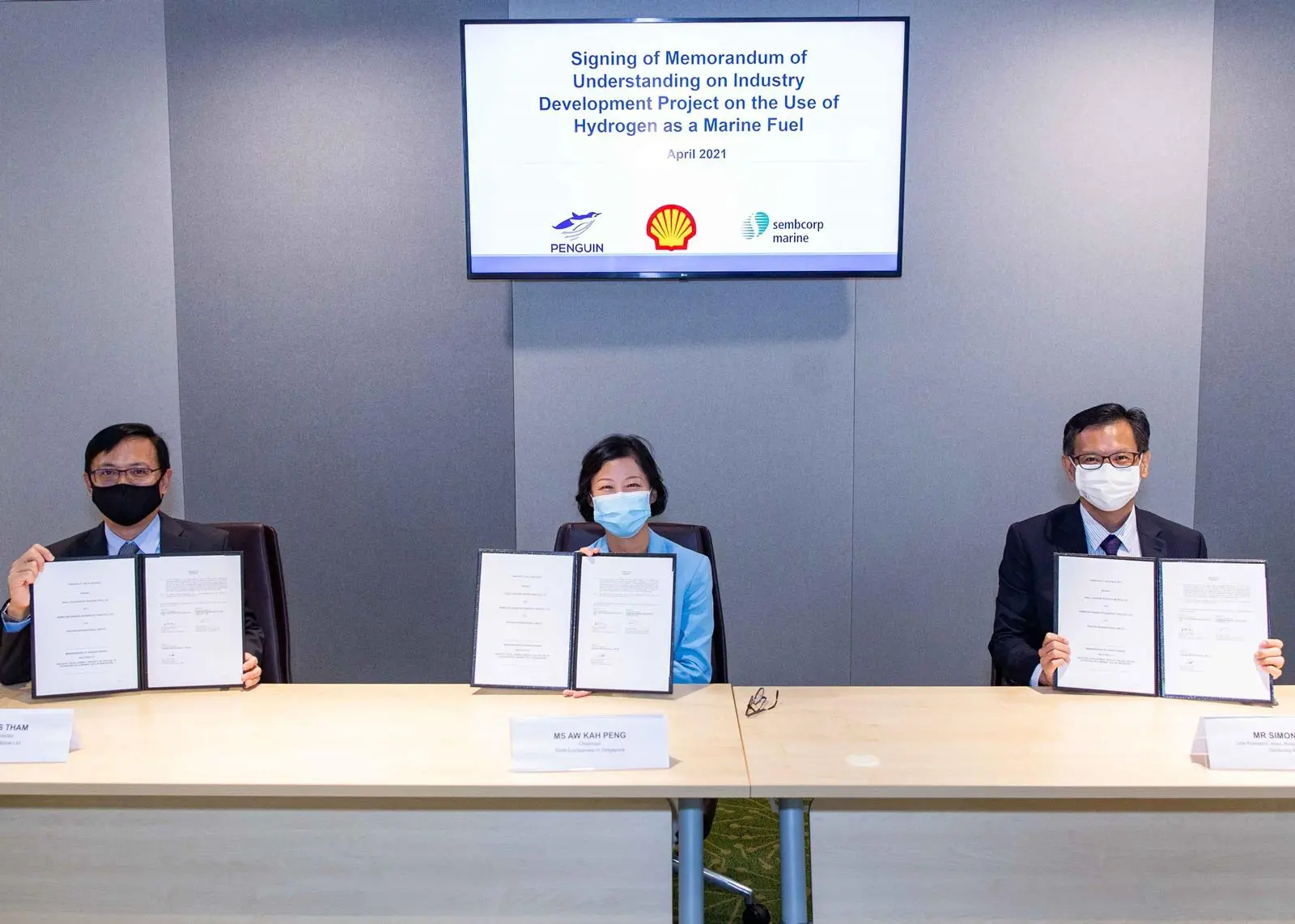
Shell has signed an agreement with Sembcorp Marine and its wholly-owned subsidiary LMG Marin to conduct a feasibility study into retrofitting a RoRo vessel with a Proton Exchange Membrane (PEM) fuel cell auxiliary power unit. The project will be the first such project for Singapore, and also for Shell.
LMG Marin has considerable experience in designing hydrogen fuel cell powered projects, having participated in the MV Hydra development project. That ferry will become the world’s first hydrogen-fuel cell powered ferry when it is delivered in Norway later in 2021.
The Singaporean project envisages SembCorp Marine’s subsidiary LMG Marin AS designing the fuel cell system and the vessel retrofit for Penguin International, the vessel’s Singaporean owner. The RoRo selected transports goods, vehicles and equipment on lorries between the mainland and Shell’s Pulau Bukom production facility, which is located 5km from Singapore’s main island.
The Singaporean RoRo will then operate for a trial period of 12 months, during which Shell will supply the hydrogen fuel.
Shell also announced that it planned to join an LNG fuel cell trial on a commercial deep-sea vessel “to demonstrate the maritime suitability of fuel cells” and to develop the technology for use with future fuels. The LNG-fuelled fuel cell project is likely to entail the use of solid oxide fuel cell (SOFC) technology, The Motorship notes.
Dr Grahaeme Henderson, the Global Head of Maritime and Shipping at Shell confirmed in a speech on Thursday 22 April that he envisaged hydrogen as a maritime fuel occupying a prominent role in maritime decarbonisation over the longer term. Despite Shell’s intensifying interest in hydrogen, which includes participation in a green hydrogen hub in the Port of Rotterdam, and the HySTRA hydrogen transportation project, Dr Henderson stressed that there is no commercially available alternative to LNG in the short term.
Related Articles
 ALTERNATIVE FUELS & LUBRICANTS
 ALTERNATIVE FUELS & LUBRICANTS
 ALTERNATIVE FUELS & LUBRICANTS