



Japanese engine builders to develop hydrogen-fuelled 2-stroke and 4-stroke engines
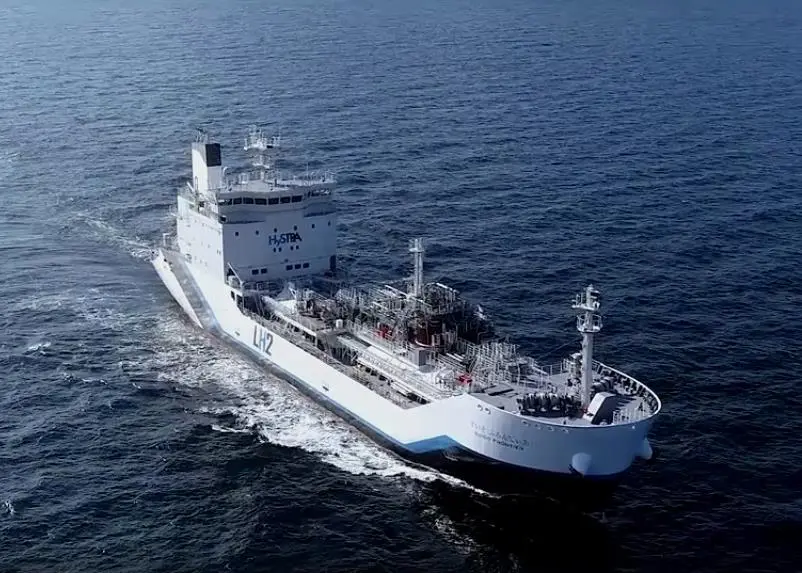
The consortium consists of Japan Engine Corporation (J-ENG), Yanmar and Kawasaki Heavy Industries (KHI), and has the objective of bringing a range of hydrogen-fuelled engines to market by 2025.
The consortium envisages cooperation on fundamental technologies such as basic experiments and analysis on hydrogen combustion, materials, and sealing techniques, as well as classification society safety requirements.
J-ENG will develop low-speed 2-stroke engines, while KHI will develop medium-speed 4-stroke engines. Yanmar will develop medium- and high-speed 4-stroke engines. All three simultaneous developments will enhance the product lineup of propulsion and auxiliary (generator) engines for a wide range of vessels.
The companies announced that a hydrogen fuel storage and supply system will be developed as part of an integrated hydrogen fuel system.
KHI has developed significant insight into the cargo containment requirements of liquefied hydrogen during the construction of the world’s first liquefied hydrogen carrier. J-ENG has undertaken early stage research into hydrogen combustion, and launched a research project into the combustion properties of hydrogen and ammonia with NMRI in 2019, as reported by The Motorship.
The consortium has wider objectives, noting that the project is intended to contribute to the early construction of hydrogen-fuelled ships in the Japanese shipbuilding industry.
Related Articles
 2-STROKE & 4-STROKE
 2-STROKE & 4-STROKE
 2-STROKE & 4-STROKE