



Modular construction for full-electric ferry project to cut costs
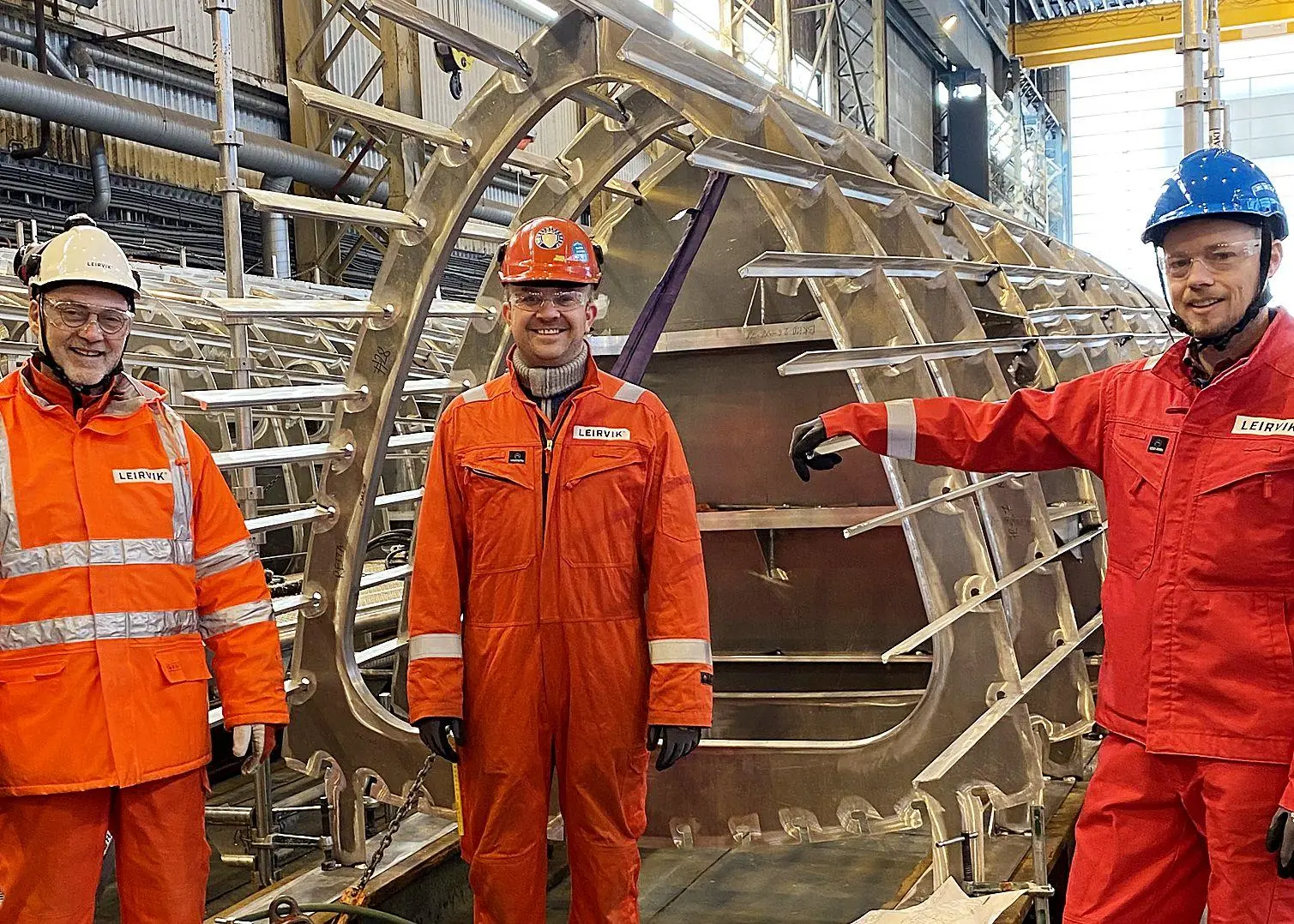
The TrAM (Transport – Advanced and Modular) project seeks to apply simplified design and manufacturing of the future vessels, drawing on Fraunhofer IEM’s experiences in modular production techniques from the car and aviation industries.
Comprised of 13 partners, the TrAM project was implemented in 2018. The project received an EUR11.7 million grant for the project, which was one of the largest single awards from the European Union’s Horizon2020 research and innovation programme.
The project was initiated by industry cluster organization NCE Maritime CleanTech and is coordinated by an independent Norwegian municipal mobility services company, Kolumbus. Wärtsilä is one of the project’s partners, and will supply the full-electric fast ferry’s energy system.
The project aims to lower production costs and engineering hours for electric fast ferries by 25% and 70%, respectively, which will significantly enhance their competitiveness.
Modular architecture enables individual modules to be combined so that subsequent vessels can be adapted to specific customer requirements. Reusing modules also allows for faster development and production. “Increased automation, more efficient use of materials, shorter construction time and lower labour costs together represent a new chapter in shipbuilding while increasing the competitiveness of all stakeholders,” said project manager Mikal Dahle of Kolumbus.
The hull and superstructure will be built in aluminium, which offers weight advantages for full-electric vessels, lowering energy consumption. Norwegian aluminium supplier Hydro Extrusion Norway is one of the project partners.
Construction on the demonstrator project has begun at the Fjellstrand shipyard on the west coast of Norway. The 31-metre long catamaran vessel will be equipped with two electric motors and a 1.5MWh capacity battery with charging power of more than 2MW. The vessel will also be the world’s first fully electric and zero-emission fast ferry to be classed in accordance with the International Code of Safety for High-Speed Crafts (HSC Code).
The demonstrator vessel will begin a trial passenger service between Stavanger and surrounding communities and islands in spring 2022. The modular approach will be validated and refined through the development of two replicators, one of which will undertake passenger operations on the River Thames in London, while the other will be deployed on inland waterways in Belgium.
Related Articles
 BATTERIES, SUPERCAPACITORS, FUEL CELLS AND OTHER ENERGY STORAGE TECHNOLOGY
 BATTERY HYBRIDS & FULL-ELECTRIC VESSELS
 BATTERY HYBRIDS & FULL-ELECTRIC VESSELS