



MAN ES: Managing Methane Slip
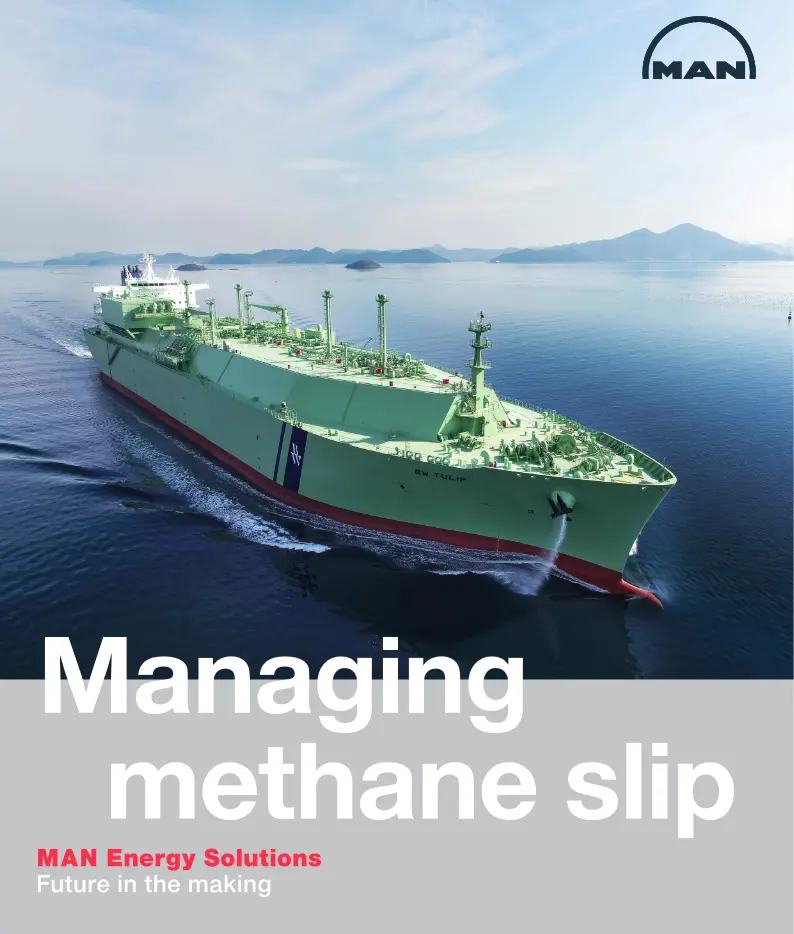
As part of the Maritime Energy Transition, MAN ES sees fuelling with LNG as a first step in preparing engines for the broader use of a range of synthetic fuels, on the way to carbon- neutrality.
One key concern is methane slip, which has raised questions about the climate benefits of LNG. In some contemporary reciprocating engines, the use of LNG (which is 85-95% methane) can lead to emission of small quantities of unburnt methane into the atmosphere.
In this white paper, MAN ES outlines its technical solutions to minimise methane slip for both its two-stroke and four-stroke spark-ignited (SI) gas and dual-fuel (DF) engine portfolios. The four-stroke solutions under investigation include:
- newly developed aftertreatment solutions, namely oxidation catalysts, which have the potential to reduce methane slip by 70%;
- and the potential application of the ME-GI Diesel combustion principle to its four-stroke dual-fuel engines
Related Articles
 MONITORING, CONTROL & DIGITALISATION
 ALTERNATIVE LUBRICANTS
 EMISSIONS REDUCTION TECHNOLOGY