



Confidence in data boosts digital future
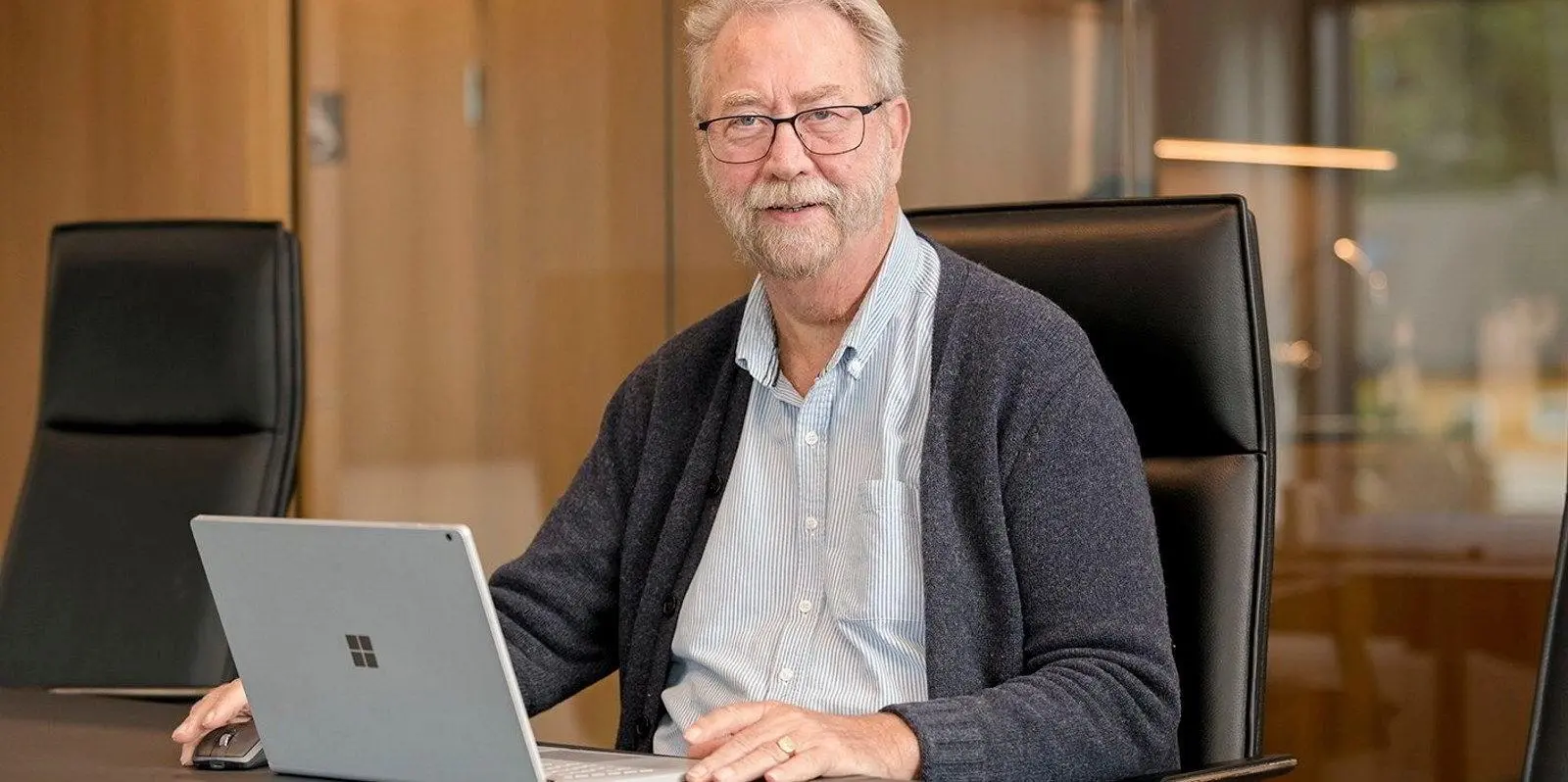
Worries about cyber security for shipboard systems are “a thing of the past” and shipowners can have confidence in their digital systems, said Tor Svanes, managing director of the Norwegian navigation system-provider NAVTOR in an interview with The Motorship. This is not something he would have said even two years ago, he agreed.
But he added a proviso: his confidence applies to equipment that has been accredited by an inspection body, such as a class society. NAVTOR’s automatic updating system, NavBox, for example, uses a DNV type-approved cyber-secure gateway.
This sort of assurance is becoming commercially essential, he indicated. “Customers demand proof that they will be safe when it comes to cyber security” and are pushing equipment manufacturers to provide it.
With its focus on navigation systems, NAVTOR is well-placed to comment on the future trends in digitalisation and the impact it will have on ship operations. In its own field of expertise, Mr Svanes has already written on the company’s website about significant changes to ECDIS that will be introduced in 2024, when new installations will have to meet the latest version of the S-100 suite of standards issued by the International Hydrographic Office (IHO).
At IMO, ECDIS performance standards are set out in Resolution MSC.232(82), which dates from 2006, and this was to be amended to include references to S-100 during IMO’s 8th Sub-Committee on Navigation, Communications and Search and Rescue (NCSR 8) in April, but because of COVID-related time pressures, this was held over. Nonetheless, IHO’s website indicates that hydrographic offices must start producing S-100-compliant electronic charts from the start of 2024.
Navigational data volumes are increasing at a rapid rate, Mr Svanes said, along with data from many other onboard systems and getting this all ashore is testing the capabilities of current communications systems, he said. Asked how digitalisation might develop over the next few years, he said that the prospect of any dramatic change would improve “if communication got better and cheaper”.
Although satellite communications providers regularly improve the speed and cost of the services they offer, “the amount of data is going up, so the total sum may be the same.”
As an indication of this growth, he said that its navigation systems collect AIS position data not only of the ships on which they operate, but also of the vessels that they connect with. As a result, NAVTOR is effectively tracking 150,000 ships and recording their positions every 15 minutes. “It’s a lot of data”, he observed. “Even in the Cloud, there is not endless space.”
This gives it a better real-time image of global shipping even than satellite AIS trackers, since they have difficulty discerning individual vessels in crowded waters such as the South China Sea, he explained.
Big data
NAVTOR is making this data available to Oslo University as part of an EU-funded project, TRANSACT, which started in May with a three-year mission to “develop a universal, distributed solution architecture for the transformation of safety-critical cyber-physical systems,” the project’s website states.
One part of this is to develop AI techniques for marine use and NAVTOR hopes it will yield techniques to plan routes for ships taking into account navigational restrictions, previous voyages for similar ships and current weather data. No current route-planning program is able to address all these parameters in a single program, Mr Svanes said.
It already has experience of EU-funded work, having been involved in the three-year ENABLE-S3 project that ended in May 2019 and looked at the potential of autonomous operations in various modes of transport. NAVTOR represented the maritime sector and the experience underlined that the various transport modes faced similar challenges.
As digitalisation develops, it is the management software that becomes critical, Mr Svanes suggested, “so there will be crossovers with software and technology,” he said. And that is what attracts him to these projects: “it is very important to us to keep in forefront in technology” and it would be “too tough and too slow” to achieve the same results on its own.
It would also be too costly, he said, acknowledging the financial support from the private-equity firm Accel-KKR (AKKR), which took a majority stake in NAVTOR in August 2020. Developing the tools needed to digitalising the shipping industry will need significant investment, Mr Svanes said, but AKKR “is pushing us on development to go more digital every day. They are not afraid to invest in this because they say this is the future.”
AKKR’s website lists 59 companies as current investments – mostly involved in software and management support services to a wide range of industries – and in late June, Mr Svanes attended an inaugural meeting of chief technical officers from most of those companies to encourage exchanging ideas and technology among them. This could lead to using software that has been developed elsewhere to support its own developments, which he said could save time. “This is a very positive move,” he said.
He credited AKKR’s backing with enabling its February acquisition of Houston-based Tres Solutions, which added vessel analytics and performance optimisation to NAVTOR’s e-navigation services. At the time of the acquisition, Mr Svanes said that Tres Solutions’ software could extract operational intelligence from performance data.
With its experience of collaborating on multi-disciplinary EU projects and now collaborating within a diverse group of companies, Mr Svanes believes NAVTOR has broadened its role. “I like to say we are a technology company,” he said as he considered its systems’ role in future autonomous shipping.
During the ENABLE-S3 project, for example, it conducted trials in which it navigated a vessel remotely from shore, “but to go completely autonomous demands a lot more secure communication because there’s a lot of data going back and forth.” Digitalisation, machine learning and artificial intelligence will therefore be critical for the future, he indicated and “we are only at the beginning of this.”
Related Articles
 ENERGY SAVING DEVICES
 LNG
LNG
 ALTERNATIVE FUELS & LUBRICANTS