



UK project for showcase vessel
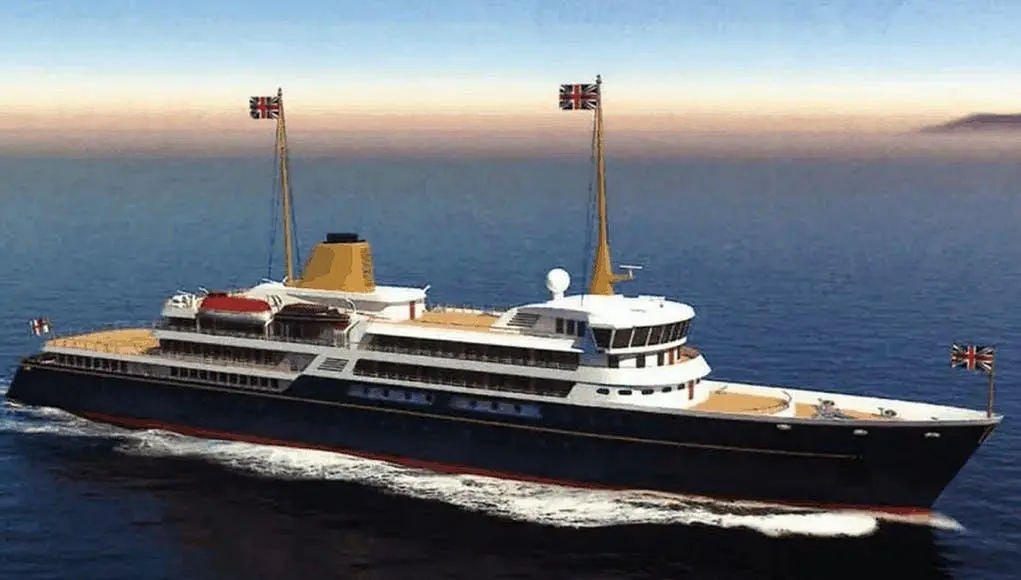
While there has been domestic pressure for a vessel to replace the long-retired Royal Yacht, Britannia, the envisaged newbuild would have the primary role of promoting and showcasing UK business and technology abroad, and acting as a high-level meeting point.
On July 19, the MoD issued a tender entitled ‘National Flagship Procurement—Design Phase 1’, with outline requirements, lacking dimensional and technical parameters. However, it is understood that an industry engagement day is imminent, so as to provide an opportunity for interested parties to obtain further details.
Potential suppliers must submit a pre-qualification questionnaire to be considered for the competitive procurement stage. Depending on the outcome of the response and subsequent negotiations, construction could begin next year, with a view to service entry by the fourth quarter of 2025. While the design is open to international competition, it is stipulated that the build of the vessel has to be within the UK.
She will be used to host trade fairs, ministerial summits and diplomatic talks as the UK looks to strengthen and foster new ties beyond Europe and boost exports in the aftermath of the country’s withdrawal from the European Union (EU).
As well as being a resource for British firms with global export ambitions, and a platform for pursuing UK foreign policy and security objectives, the ship is also foreseen by government, according to the MoD notice, “as a tangible manifestation of British ingenuity and shipbuilding expertise”. The project constitutes a further element of the government’s bid to drive a renaissance in UK shipbuilding.
The newbuild design will be required to maximise use of ‘green technologies’ from the outset and, moreover, must be prepared to facilitate eco technology upgrades throughout the anticipated service life of at least 30 years.
Crewed by the Royal Navy, the flagship will be the subject of a fixed price contract, and the total available budget from the MoD is £150 million (US$206m). This is substantially less than the £200 million-plus (US$275m+) foreseen by industry sources when the scheme was first mooted. For such a custom design, vessel length is less of a price-determining factor than usable volume (measured in gross tonnage) given the space that will be needed for the facilities relating to the trade promotion and conference roles.
Critics of the project and its UK industrial focus had suggested that World Trade Organisation (WTO) obligations would mean that tendering would have to be open to overseas yards. But planned operation under the aegis of the Ministry of Defence/Royal Navy confers a ‘warship’ status, rendering the newbuild plan exempt from the WTO edict.
The revived Harland & Wolff shipyard can be expected to compete for the work, and Cammell Laird has already stated that it stands ready to take on such a contract, building on its completion of the UK’s sophisticated new polar research icebreaker and recent ferry deliveries.
The Royal Yacht Britannia was decommissioned in 1997 at the behest of the ruling Labour Government. Now berthed on the Leith waterfront near Edinburgh, as a visitor attraction, the 5,769gt Britannia is 126m in length and was completed in 1954 by the John Brown yard on Clydebank.
The vessel had an ancillary, never called-upon role as a hospital ship, and was powered by two Tyneside-produced Pametrada (Parsons) steam turbines for a speed of 21.5 knots.
Related Articles
 PROPULSION
 GENERAL NEWS
 HYDROGEN