



Essberger finally implements LNG expansion plan
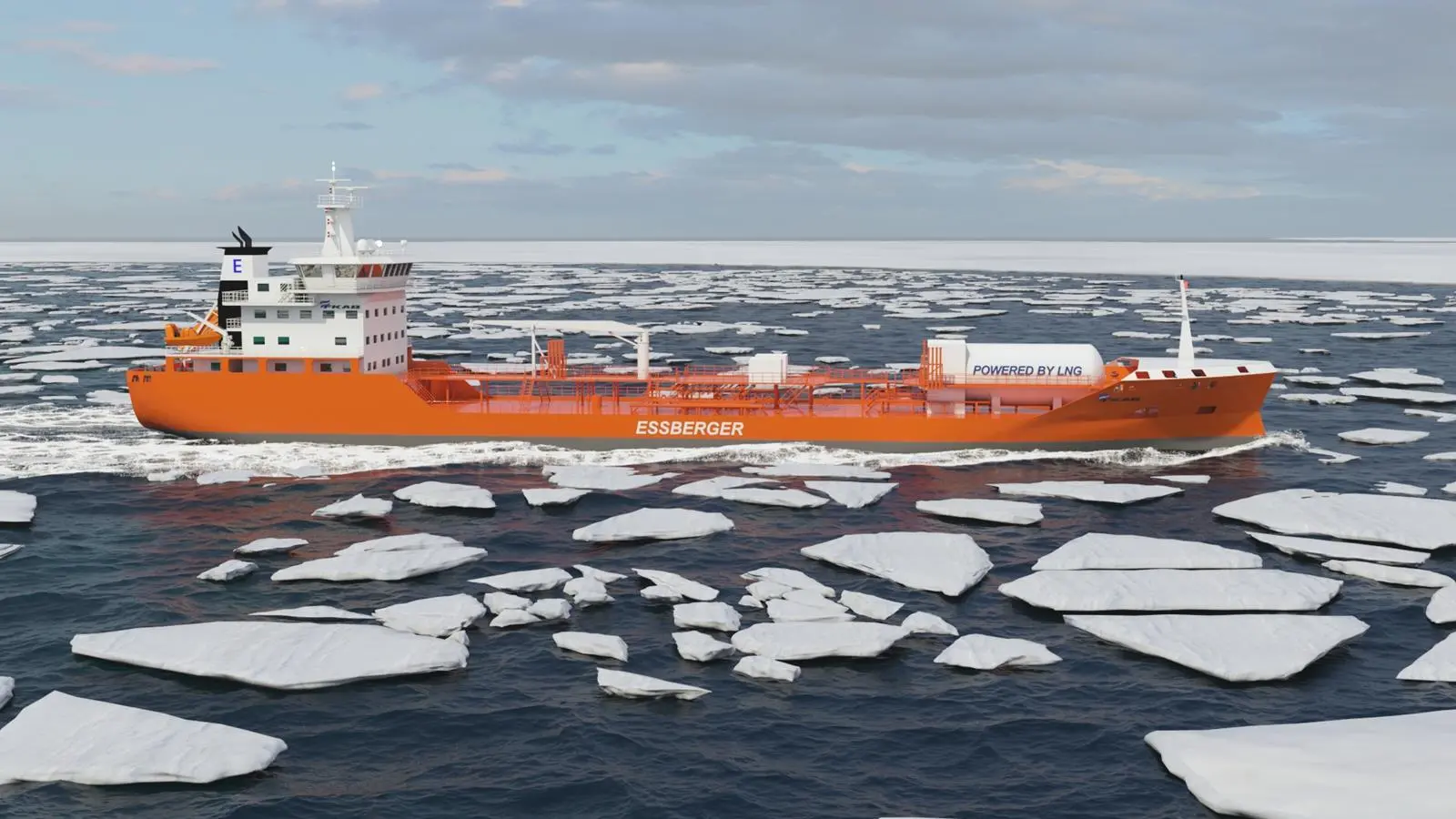
The Hamburg- based group said that with Covid-19 diminishing and travel restrictions easing, it had signed contracts with China Merchants Jinling Shipyard Dingheng to build four 6,600dwt stainless steel parcel chemical tankers while securing options on four more.
The project is being subsidised by the German Government as part of a Mobility and Fuel Strategy (MKS) Programme to the tune of €1.58 million per ship.
Commenting on the latest orders, JTE MD Jan Eghoej said customers were being offered “a long-term high quality service with a greener footprint at competitive conditions”.
JTE first revealed the newbuilding programme in 2019 but did not identify the Chinese shipyard or reveal all the details of the newbuilds at that time. It did however say they would be 115m loa, 18m wide and draw 6.5m.
They would also be LNG capable “highly efficient, single-screw medium speed DF engine-driven Chemical and Oil Products IMO Class II/III tankers with machinery and accommodation located aft”, it declared. Although the exact type of engine had not been decided as of 2019, it would be of approximately 3,000kw and provide a service speed of 12.5 knots, JTE reported at the time.
JTE spokesman Svante Domzlaff told The Motorship this week that the 2019 specifications and details remained valid.
The ships will also have certified Finnish/ Swedish 1A ice class and boast optimised hull design and equipment which will mean a significantly improved energy efficiency of at least 30% and enable the utilisation of shore power in port.
The newbuildings are expected to be delivered from about mid-2023 and will go into operation with JTE Group member E&S Tankers on the European short-sea chemical market.
JTE said its fleet currently consists of 34 parcel chemical tankers operating in Northwest Europe and the Mediterranean seas. All are in operation with E&S Tankers, along with four container vessels.
When the now implemented newbuilding programme was first revealed in 2019, JTE’s Heinrich von Rantzau said: “in 2026, 14 ships of the current fleet will have reached the age limit of 25 years” and added “the clock is ticking”. His brother, Essberger’s Eberhart von Rantzau, added that the group was “in a time of transition, economically and politically”. And he declared: “the figures are clear! We need to act. And that is what we are doing.”
Related Articles
 PROPULSION
 GENERAL NEWS
 HYDROGEN