UK YARDS: BUILDING VALUE FROM RETAINED STRENGTHS

The design of the 129m Sir David Attenborough has potential synergies with a proposed dedicated surveillance vessel to protect telecommunication cables. (credit: British Antarctic Survey)

While a new version of the government’s much-vaunted, defence-orientated National Shipbuilding Strategy is imminent, it is clear that there is no road back to engaging in the mercantile vessel construction markets dominated today by China, South Korea and Japan. Moreover, each of those countries possesses an extensive, powerful merchant fleet which provides a domestic market bedrock for shipbuilders, unlike the situation in the UK where the mercantile marine is a shadow of its former self.
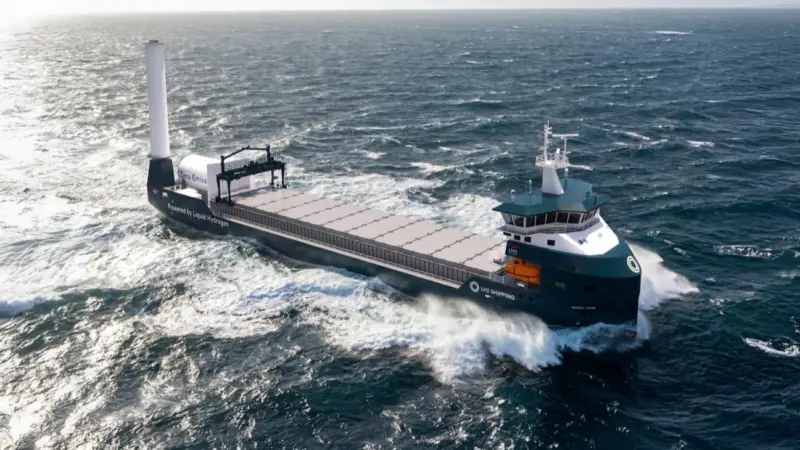
The UK must play to a continuing, and in some cases strengthened, hand in specialised or bespoke smaller ships and craft, while increasingly resourcing efforts to foster design and powering solutions that answer to the new world order in reduced environmental impact and, ultimately, carbon-neutral performance.
Industry sources believe that the ‘refreshed’ national strategy, which would include a three-decade forecast of contracts for government vessels over 150gt, will be presented after the Government’s comprehensive spending review during the autumn.
For a country which in the 1970s and 1980s was heavily involved in exporting shipyard design and shipbuilding know-how, the UK is now in a position where it must tap into foreign technological expertise if it is to reset civil newbuild capacity and productivity. Furthermore, if the commercial shipbuilding tradition is to be maintained, there is a crying need for new blood. Committed, remaining players and some new entrants to the sector have accorded due recognition to the importance of craft apprenticeships, and recruitment into such schemes over recent years is helping to provide the platform that is needed to drive the industry forward.
The fact that the defence market propels the single largest investment scheme currently under way in UK shipbuilding, the construction of a new assembly hall at Babcock’s Rosyth complex, is indicative of the industry’s orientation. But it is also a sign of business will and identification of wider potential, and of the fact that naval newbuild projects have an economic multiplier effect that benefits the whole supply chain.
The £32m (US$44m) building hall at Rosyth is part of a £55m (US$76m) capital expenditure plan implemented on the strength of the contract for five Type 31 Royal Navy frigates. Central to the investment programme is the incorporation of advanced digital technology. The company said that this will result in a transformation of the shipbuilding production system. The new arrangements will be at the heart of a strategy to create what is described as “a digital thread”, covering everything from the vessel design stage, through every aspect of ship construction, equipping and engineering, and extending to the iFrigate data analytics system that will support the vessels once at sea.
The increased efficiencies in the manufacturing, build and assembly processes brought about by digitalisation will increase the group’s competitiveness in the UK naval construction market (hitherto dominated by BAE Systems) and open up international opportunities. Babcock is now chasing naval projects to be launched by the Ukraine and Greece, among others.
In the meantime, it is significant as a mark of UK naval vessel design that the Type 26 frigate class now taking shape at the ultra-modern facilities of BAE Systems on the Upper Clyde for the Royal Navy is providing the template for Australia’s Hunter class nine-ship frigate programme, and for Canada’s 15-ship surface combatant series.
Having completed the acquisition of the principal assets of Harland & Wolff (H&W), Belfast, in December 2019, and subsequently buying the Appledore yard in Devon during August 2020, London-based investment company InfraStrata has implemented a strategy of reviving shipbuilding at both sites, as well as developing business in steel fabrication, offshore energy-related projects, and shiprepair.
The company has this year added to its H&W brand through the purchase of Burntisland Fabrication’s sites at Methil and Arnish in Scotland. Providing complementary capacity to that of the yards at Belfast and Appledore, the move was predicated on opportunities in the renewables market, with both Methil and Arnish being in close proximity to offshore wind projects. The UK currently has the world’s largest offshore wind market and developmental plans could see the sector quadruple in size by 2030. InfraStrata said that its latest acquisition had boosted the H&W Group’s annual throughput capacity by 100,000t per annum.
Testament to the determination of H&W’s new owners to take the Belfast yard back into ship construction, after an 18-year gap, is its agreement with Spanish shipbuilding and defence group Navantia to jointly bid for selected projects.
An early target of the collaboration is the new generation of Royal Fleet Auxiliary (RFA) logistic support and at-sea replenishment vessels planned by the UK Ministry of Defence (MoD). Navantia’s involvement would include technology transfer to raise efficiency and productivity at Belfast. A new competition for the trio of Fleet Solid Support (FSS) ships was launched in July this year. Announcing the tender, the MoD said “Building on the commitment made in the recent Defence Command Paper to create a shipbuilding renaissance, the competition will help revitalise British shipbuilding by requiring a significant proportion of the build and assembly work to be carried out in the UK.”
But any prospective benefit to the UK marine industrial sector is still a way off as the latest stage in the long drawn-out plans for the RFA tonnage allow up to two years before a contract is awarded (i.e. 2023), with deliveries pushed back to a 2029-2032 timeframe.
Meanwhile, hopes that last December’s letter of intent (LOI) with Triumph Subsea Services would result in the construction of a 200m windfarm development vessel at Belfast including an option on a second ship, were dashed when Triumph cancelled the LOI in mid 2021. Triumph remains committed to having the tonnage built in the UK, and stated it would welcome discussions with other shipbuilders or a consortium of yards.
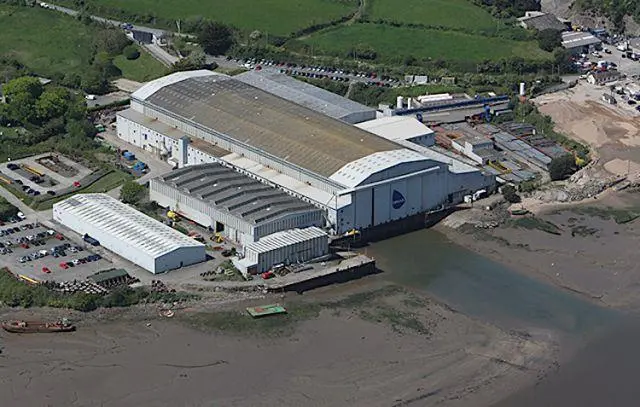
Cammell Laird’s Birkenhead yard on Merseyside, one of the industry’s jewels in the crown, with a huge modular construction hall and four drydocks on a 130-acre site, is seeking to build on its recent track record in high-value contracts, which have included the polar research ship Sir David Attenborough, module deliveries under the Aircraft Carrier Alliance, and production of critical units for the next generation of nuclear submarines on behalf of BAE Systems. Those projects have been interspersed by the completion of three small ferries for UK operators. Cammell Laird is currently setting its sights on the £200m (US$274m) trade promotion ship planned by the UK Government, and on a project for a dedicated surveillance vessel to protect telecommunication cables. The latter has many potential synergies with the Sir David Attenborough design, which would help to de-risk the programme.
The company’s apprenticeship scheme is one of the biggest in the UK maritime industries, representing an investment of more than £19m (US$26m) by July 2021. Over the last 12 years, the yard has recruited nearly 300 apprentices, across a broad range of trades and disciplines.
Artemis Technologies, the firm behind the innovative eFoiler electric propulsion system and hydrofoil-type vessel design applications, has introduced a new apprenticeship programme in conjunction with Belfast Metropolitan College. Commencing this month (September), the three-year Advanced Manufacturing Apprenticeship will combine classroom tuition with hands-on experience at its Belfast premises.
The scheme is seen as a milestone in the roll-out of the Artemis-led Belfast Maritime Consortium project, to create ‘transformative’ marine technology and a new range of zero-emission, local transport vessels and workboats.
The development of UK shipbuilding expertise and competitiveness in the small vessel category is especially well demonstrated by Wight Shipyard, which has quickly asserted itself in the international market.
Formed as recently as 2016 by entrepreneur Sir Charles Dunstone and business partner Peter Morton, with a bold vision to restore UK shipbuilding business, the company has since turned out a series of high-speed passenger ferries and wind farm support vessel from its covered Cowes yard. Some 60% of revenue is attributed to export sales, the largest orders having come from clients in Austria, Mexico, and Malta.
A Scottish-led international research consortium is building competence in alternative, ‘clean’ fuel systems that harness marine renewable sources, and this in turn could ultimately provide opportunities for vessel construction in the UK. As part of the EU-funded, HySeas III research project, the Oslo-listed, London-headquartered consultancy AqualisBraemar has been appointed by Caledonian Maritime Assets (CMAL) to partner in designing a hydrogen fuel cell ferry for the Northern Isles.
HySeas III has been implemented as the final stage in a three-part research programme that began during 2013, and aims to demonstrate that fuel cells may be integrated with a proven marine hybrid electric drive system (electric propulsion, control gear, batteries etc), along with the associated hydrogen storage and bunkering arrangements. A full-size drive train will be developed, constructed, tested and validated on land, for possible subsequent adoption in a newbuild. The proton exchange membrane (PEM)-type FC modules to be employed in HySeas III are already proven in road transport applications.
The project is coordinated by Scotland’s University of St Andrews, and includes Danish, Norwegian, French, German and Swedish participants besides CMA and Orkney Island Council.
The small double-ended ferry foreseen would be for first-line duty in Orkney on the route linking Kirkwall with Shapinsay, where hydrogen fuel is generated through wind power. However, the vessel must also be capable of operating at other ports where hydrogen could become available in the future. Optimum through-life ‘sustainability’ will be the goal and theme permeating the vessel design.
CMAL fleet manager John Salton said “The contract award represents a significant step forward in establishing a new, innovative vessel concept and marks an important shift towards entirely emissions-free marine transport. Hydrogen ferries exist, but this concept is built around using hydrogen fuel cells to power a sea-going ship, the first in the UK and Europe. If successful, the next step will be to take the knowledge and know-how into building a ferry.” The capacity stipulated for the subject vessel is 120 passengers plus 16 cars or two trucks.
Scotland has already broken new ground in small ferry construction, whereby the Ferguson yard completed three 44m diesel-electric hybrid vessels between 2013 and 2015 of for CalMac’s Hebridean services.
While the ongoing contract for CMAL’s two 100m, dual-fuel ro-pax ferries at Ferguson Marine has been beset by well-publicised problems leading to protracted delays and huge cost overruns, with ‘worst scenario’ delivery dates now set at September 2022 and July 2023, respectively, CMAL’s much broader fleet modernisation plan is a point of interest for the shipbuilding community at large. The publicly-owned company is set on transforming the CalMac ferry network with a £580m (US$798m) investment over the 2021-2026 period from the Scottish Government.
Besides the pair of ships in production at Ferguson’s Port Glasgow yard and the upgrading of various terminals and harbours, the programme encompasses a further 19 newbuilds. A tender for the first of six large ro-pax ferries sought was expected to be issued by the late summer of 2021, with a view to awarding a construction contract worth around £50m (US$68m) in March 2022. The vessel is intended to serve Islay and Jura.
The re-tonnaging requirement also spans two freight-carrying ferries for the Northern Isles, three passenger-only ferries for the Firth of Clyde, and seven small vessels for Hebridean routes. For the latter, CMAL said that it would explore the latest proven battery and onshore charging technology, and draw on its experience with the three existing, pioneering hybrids.
Other domestic projects, which will be open to both UK and foreign shipbuilders, include support vessels for Trinity House and the Northern Lighthouse Board (NLB), respectively.
The planned Trinity House newbuild will supersede the 1982-commissioned, 86m Patricia, while NLB’s new ship will take over from the 2000-built, 51m Pole Star. NLB has set in train the procurement process, which is due to culminate in a build contract award next summer, with a targeted in-serve date of September 2024. The prospective fleet entrant will be specified with a hybrid power system, and is expected to offer a carbon emissions reduction of 26% at the very least relative to the Pole Star.
Elsewhere, consultancy BMT has been entrusted with a contract to design the long-awaited replacement for the 1977-built, 68m ferry Scillonian III, mainstay of the lifeline service between the Isles of Scilly and Cornwall, at the western tip of the English mainland.
For all shipbuilding endeavours, large or small, a critical test of expertise is accurate pricing at the outset and first-rate project management and cost control. Unprofitable contracts represent more of a threat to a largely privately-owned industry than lacklustre or ill-informed government policy.