



European Commission to monitor IMO MBM developments during ETS review
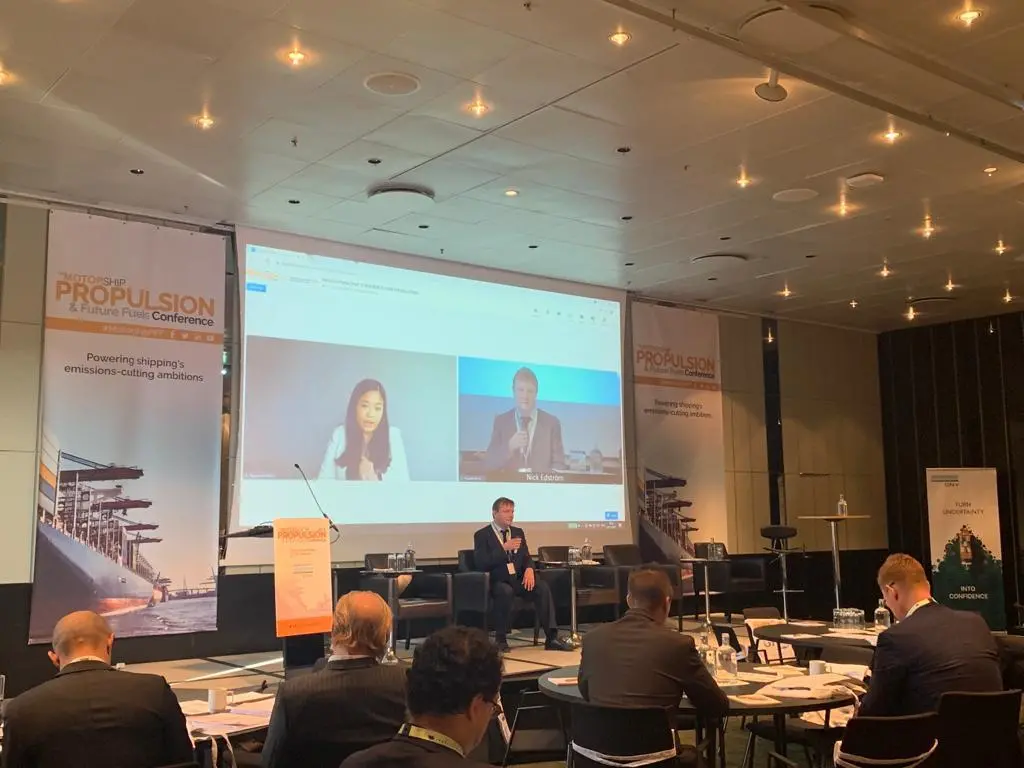
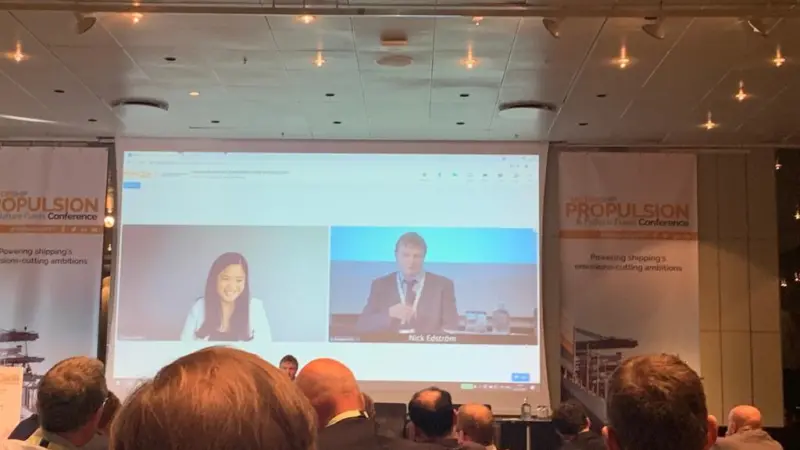
The extension of the EU’s Emission Trading System (ETS) to cover emissions from vessels above the 5,000gt threshold was expected to enter effect by 2024, depending on the progress of the legislation through the European Council and the European Parliament, Ngoc-Lan Lang of DG CLIMA within the European Commission announced during a question and answer session hosted by Motorship editor, Nick Edstrom.
Ms Lang mounted a robust defence of the extension of the ETS to cover shipping, noting that emissions from the shipping sector represented over 13% of the EU’s greenhouse gas (GHG) emissions. While the shipping sector had not been included in previous legislation, it was consistent with the bloc’s broader decarbonisation objectives to include it in July 2021, when the European Commission presented plans to lower GHG emissions from the EU by 55% by 2030 (compared with a 1990 baseline).
The Commission had a goal to shift up to 75% of goods traffic within the bloc from the road to rail or inland waterway transport.
Returning to the operation of the scheme, Ms Lang clarified that ship owners were not going to be allocated free allowances during the early stages of the operation of the scheme, unlike previous ETS extensions. Instead, ship owners and charterers would benefit from a partial discount during the introductory phase, which would taper away over the first three years of operation of the scheme.
The responsibility for filing returns under the EU’s Monitoring Reporting and Verification scheme would be allocated to liable shipping companies, Ms Lang added, noting that the EU followed the IMO definition for shipping company. The scheme allowed ship owners to derogate the responsibility for paying the ETS to ship managers.
The scheme included financial penalties for shipping companies that failed to surrender permits, although the sanction of withdrawing a vessel’s ability to visit EU ports would be reserved for companies that failed to surrender permits for two consecutive years.
While the Commission noted that scheme’s design diverged from the polluter pays principle, the difficulty of redesigning the MRV system represented an obstacle to making charterers or ship operators liable. However, the scheme would permit contractual relationships, through which ship owners could transfer responsibiliy for the ETS to charterers.
The scheme would also introduce mechanisms through which ship owners based or domiciled in third countries would be allocated to an individual EU member state that accounts for the largest proportion of its port calls in the EU27.
The scheme’s R&D proposals attracted a significant number of questions. Ms Lang noted that the scheme’s revenues would be placed into a pool to which R&D projects with a maritime focus could apply. There were no plans to strictly earmark the funds for maritime projects, however.
When asked about the EU’s decision to extend the geographical scope of the scheme to include journeys between the EU and third countries, which would be subject to the ETS applied at a 50% rate, Ms. Lang responded that this was necessary to encourage the industry to work to reduce emissions more broadly.
The proposed extension of the EU’s ETS to cover aviation had encouraged the aviation industry to work to reduce emissions, Ms. Lang noted. From a practical perspective, this was also justified to avoid the scheme leading to unexpected outcomes, such as trade diversion.
In closing, Ms. Lang noted that the scheme had been specifically designed in order to take into account the potential introduction of market-based measures by the IMO. A clause in the legislation will require a review of the scheme to be held in 2028.
Related Articles
 ALTERNATIVE FUELS & LUBRICANTS