



Innovative sliding bearing cuts fuel consumption
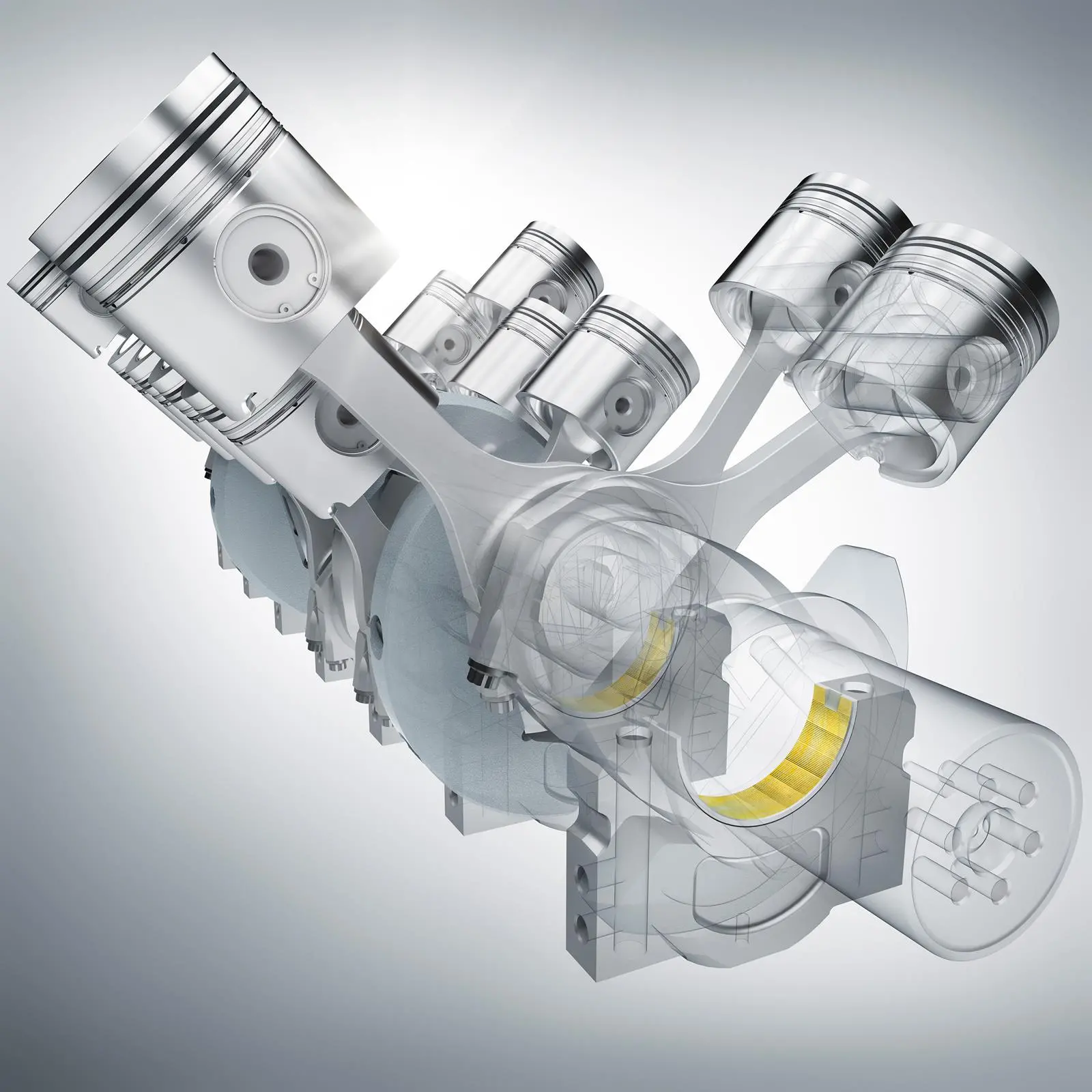
The introduction of fine grooves into the bearing’s surface produces an acquaplaning-like effect which functions as an anti-friction layer. This anti-friction layer reduces, for example, the friction-induced losses arising between crankshaft and bearing by 20-35%, depending on the operating mode. This reduction of friction-induced losses in the engine permits power output to be maintained, while lowering fuel consumption (and greenhouse gas emissions) by around 1%.
It is planned that mtu engines produced in higher volumes by the company will be fitted with the new sliding bearing in the near future. mtu engines already in service shall be gradually retro-fitted in the course of overhauls. The future plan is for the new bearing to be marketed as an individual component by Miba AG.
The innovative bearing is the result of a collaborative effort between a small project team in Friedrichshafen, bearing manufacturer Miba, and the MontanUniversität Leoben in Austria.
The sound signature of the bearing also changes as the bearing wears, which would permit major maintenance of the bearing to be scheduled accordingly. Premature maintenance is avoided and excessive wear identified in good time, saving both material and operating costs.
The bearing, for which a patent is pending, is not only suitable for use in mtu engines from Rolls-Royce. “It is suitable for all equipment in which sliding bearings must withstand high loads,” explained Dr Thomas Kottke, who is heading up the project.
Related Articles
 2-STROKE & 4-STROKE
 2-STROKE & 4-STROKE
 2-STROKE & 4-STROKE