



Condition-based maintenance shift to lead to optimisation advice
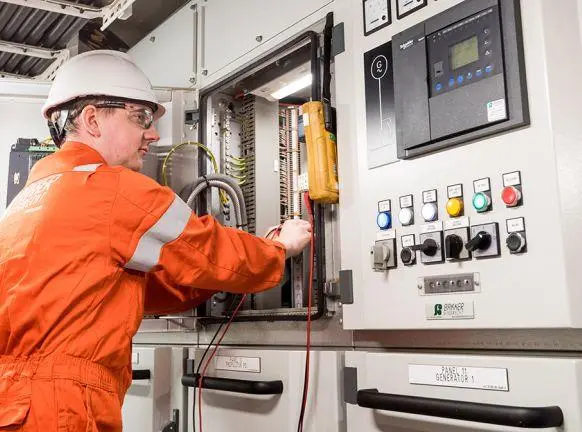
By monitoring the actual status and condition of electrical drive systems and components, Bakker Sliedrecht claims that it can ensure that maintenance, repair and replacement are only planned and carried out when necessary.
The company notes that motors, drive systems, transformers, components and their parts can last much longer than the manufacturer’s prescribed term, particularly in the offshore and dredging sector, where vessels are not always in continuous operation. Switching from a periodic overhaul or replacement model to a condition-based one can result in cost savings. On the other hand, motors or parts can also wear out earlier if they experience heavier loads than previously expected.
Condition-based maintenance prevents unnecessary repairs and replacement if measurements show that maintenance can take place at a more convenient time. With condition-based maintenance, monitoring is based on visual inspections and electronic measurements. The collected data gives clear insights whether maintenance, overhaul or replacement is necessary. The main advantage of the new method is that the maintenance cycle can be optimised around the actual lifetime of equipment instead of pre-scheduled replacement. This also allows the required maintenance to be executed at a more convenient time, while the system is also able to predict the occurrence of likely failures, as it monitors equipment.
“We see that many systems and parts wear much less quickly and last out longer than expected. With time-based maintenance, we replaced everything after a certain number of years, while our condition measurements now show that this is often not yet necessary,” says Arend van der Velde, head of technology and innovation at Bakker Sliedrecht. “These are essential parts of the whole power plant. The measurements give us a much better insight into the status and condition. That is why you see that condition-based maintenance is increasing in the market.”
First condition-based contracts
Bakker Sliedrecht has already introduced and applied the new maintenance method to various dredging and offshore companies, as well as industrial partners. For the propulsion of some dredgers, for example, the bearings of generators and electric motors are monitored on the basis of condition-based maintenance. Also the Rotterdam World Gateway (RWG) container terminal on Maasvlakte 2 Bakker Sliedrecht uses this method to maintain the frequency inverters and circuit breakers of sixteen automated container handling cranes. “These cranes contain a large number of frequency drives. If you can postpone the replacement for two to three years with condition measurements, then you are talking about serious cost savings,” says Van der Velde.
Currently, service technicians use their laptops to collect and analyze data when performing condition measurements. The deviations and the fail values are immediately visible on the screen.
Optimisation possibilities
Bakker Sliedrecht wants to be able to read this data remotely and further automate it in the future. “That depends on the method of data storage and the accessibility of vessels. To utilise the full potential of condition-based maintenance, solid cooperation with the client is very important,” explains Van der Velde.
By collecting and comparing the data from multiple assets, Bakker Sliedrecht will eventually be able to see whether processes on board are running efficiently and where they can be further improved. “Based on the observations from analyzed data, we can make recommendations to the client. For example, about a submersible pump that often runs up against the cavitation limit. We can then advise changing the drive speed. In this way, we hope to advise in more areas in the future to make ships operate more efficiently,” says Van der Velde.
Related Articles
 ENERGY SAVING DEVICES
 LNG
LNG
 ALTERNATIVE FUELS & LUBRICANTS