



Wuhu wins Finnish dual-fuel multipurpose vessel series order
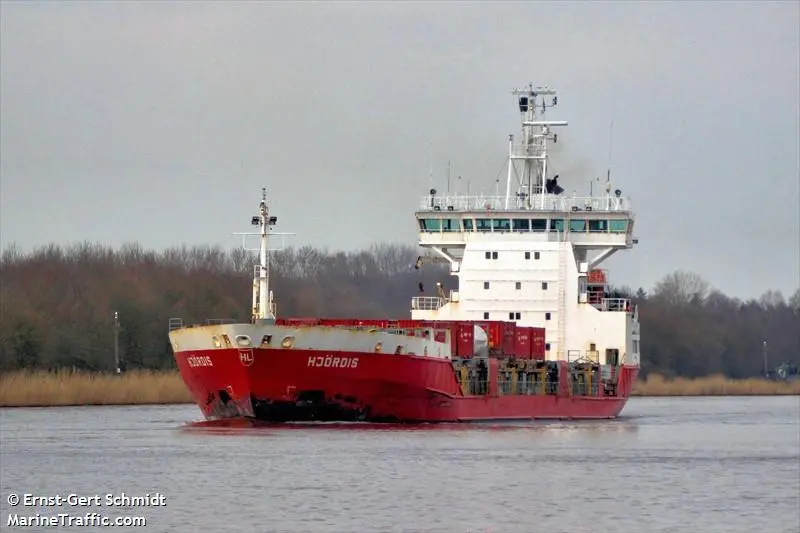
The series of three newbuildings has been ordered on behalf of Finland-based Langh Ship. The delivery for the first vessel is scheduled for mid-2023, closely followed by the other two vessels in the series.
The vessels are expected to be chartered to stainless steel producer Outukumpu, which currently transports stainless steel coils from its works in Tornio, Finland to customers in Europe via its continental hub in Terneuzen, the Netherlands. Some of the cargoes consist of semi-finished stainless steel products, which are processed at Outukumpu’s cold rolling plants in mainland Europe.
The vessels will be loaded with steel scrap on the back-haul route. Stainless and ferrous scrap is the main raw material of Outokumpu’s stainless steel, along with chromite produced at a mine, Kemi, near the Tornio works.
The design has been developed by Langh Ship in collaboration with Outokumpu and the Chinese ship designer Shanghai Merchant Ship Design and Research Institute (SDARI). The design has been refined drawing on Langh Ship’s years of experience on this trade, which has led to improvements in the design of the cargo holds and cargo handling solutions for the new vessels.
The vessel features Langh Ship’s patented pontoon-type coil cradle tween deck, which will be used to transport stainless steel coils. Langh Ship claims that by loading coils both on the bottom of the hold and on the tween deck, the weight is distributed in a way making the ship’s motions in heavy seas slower. This makes the transport safer and reduces the risk of cargo damage.
The hold is box-shaped and equipped with adjustable bulkheads to create optimal hold sizes for other cargo as well as the dimensions are optimized for containers.
Heavy steel containers especially developed by Langh Cargo Solutions can be carried on the hatch covers. The starting point for designing the cargo solutions has been to maximize the utilization of the cargo capacity. This will at the end, serve both targets, reducing further the transport emissions and being as cost efficient as possible.
The 7,800dwt vessel will be equipped with a dual fuel main engine with an output of 4,500 kW. In the future, the vessels can be converted to run with various fossil-free fuels. As initial fuel they will use liquefied natural gas, LNG which can be directly replaced by liquefied biogas (LBG). The ship’s LNG tank is both methanol and ammonia ready. Furthermore, the vessels are prepared for installation of onshore power, which would make them emission-free during port calls. There is also space reserved for the installation of batteries, which enable hybrid solutions.
”Thanks to the energy-efficient hull shape, these vessels have a lower engine power than the current vessels. Despite that they can load more cargo and keep the same service speed”, says Laura Langh-Lagerlöf, Managing Director, Langh Ship.
“The design has been developed in close cooperation between Outokumpu and Langh Ship. Both companies have the joint target to make the vessels as energy efficient, environmentally friendly and as flexible as possible. The future will bring alternative fuels, shore power and battery technologies, which these vessels are already equipped for”, says Eero Pajunen, Chief Operating Officer, Langh Ship.
Related Articles
 2-STROKE & 4-STROKE
 2-STROKE & 4-STROKE
 2-STROKE & 4-STROKE