



Japan advances hydrogen supply chain based on liquid organic carrier
Japan currently depends on fossil fuels for about 94% of its primary energy supply and was the first nation to adopt a national hydrogen framework in 2017. It plans to expand its hydrogen market from two to three million tons per year by 2030, increasing to 20 million tons per year by 2050.
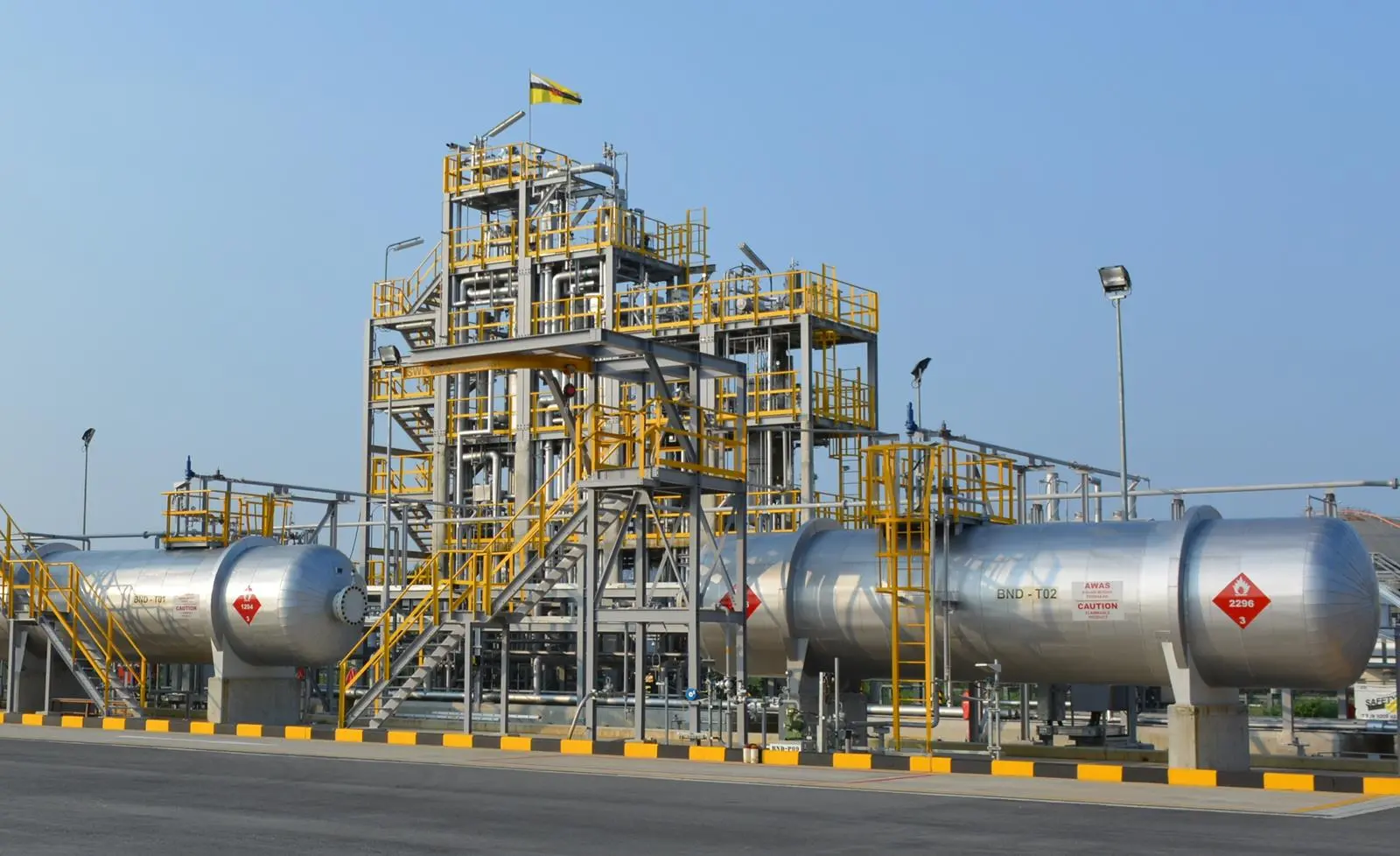
Key to the plans is Chiyoda’s SPERA Hydrogen™ technology based on the liquid organic hydrogen carrier Methylcyclohexane (MCH). This carrier, produced from toluene, can be used to safely store hydrogen under ambient temperature and pressure in large quantities for long periods, resulting in a volume of approximately one 500th that of hydrogen at ambient temperature and pressure. It can be in a liquid state from -130°C to 100°C, can be carried by existing chemical tankers and is compatible with existing industrial petroleum-based infrastructure. After dehydrogenation, the toluene can be repeatedly recycled to produce more MCH.
Australian potential
In November, Japanese energy company ENEOS furthered its collaboration with Chiyoda and the Queensland University of Technology in Australia by expanding the scale of their technical verification of a supply chain initially tested in 2018. A technology produced by ENEOS significantly simplifies the production of MCH by producing it directly from water and toluene. Previously, it was necessary to store hydrogen produced via water electrolysis in a tank before converting it to MCH. ENEOS says the new electrolysis process can reduce production costs by approximately 50%. In 2023, ENEOS plans to complete a 150kW electrolyser, with an electrode surface area of about 3m3. By 2025, it plans to have a 5MW system.
ENEOS signed an MoU with Australian energy company Origin in August to study the development of a supply chain out of Queensland shortly after signing one with Neoen exploring the potential for a supply chain out of South Australia. Neoen has over 2GW of renewable energy generation in operation or under construction in Australia. In South Australia, the Goyder Renewables Zone and Crystal Brook Energy Park combine wind, solar and battery storage to provide a stable renewable energy supply. ENEOS is also exploring the potential for MCH exports from Western Australia with Fortescue Future Industries.
Refinery trials
In Brunei, ENEOS, Chiyoda Corporation, Mitsubishi Corporation, Mitsui & Co. and Nippon Yusen Kabushiki Kaisha (NYK) have agreed to use hydrogen produced in Brunei for ENEOS’s refinery decarbonization trials. The hydrogen, delivered as MCH, will be supplied by the Advanced Hydrogen Energy Chain Association for Technology Development (AHEAD), an organization that was jointly established by the partners in July 2017. The ENEOS trials are being funded by Japan’s consortium for resilient oil supply (CROS).
AHEAD successfully completed trials of the world’s first international shipment of MCH and stable extraction of its hydrogen in 2020 when it delivered MCH produced in Brunei to Japan. AHEAD used 24-kilolitre ISO tank containers to ship the MCH, but it plans to use 10,000dwt chemicals tankers for the ENEOS trials.
At present, most of the industrial-use hydrogen in Japan is consumed during the desulfurization process at petroleum refineries. This is so-called grey hydrogen which is derived from fossil fuels in processes that emit CO2. Replacing it with CO2-free hydrogen derived from MCH can help to reduce industrial CO2 emissions.
ENEOS is also collaborating with Petronas in Malaysia on the development of a CO2-free hydrogen supply chain. The two companies plan to convert hydrogen produced in Malaysia into MCH for transport to ENEOS refineries. Petronas plans to use co-product hydrogen produced at its petrochemical plants, a source it sees as highly stable. Green hydrogen derived from renewable energy and blue hydrogen produced from fossil fuels will also be considered.
Chiyoda makes global plans
Separately, Mitsubishi Corporation, Chiyoda and Sembcorp Industries have agreed to explore the development of a commercial-scale, green hydrogen supply chain for Singapore. Sembcorp plans to test the blending of green hydrogen with natural gas via its domestic power generation assets and also plans to supply carbon-neutral hydrogen to local customers for fuel, chemical feedstock and other applications.
Chiyoda and Mitsubishi Corporation are also teaming up with Port of Rotterdam Authority and Koole Terminals to determine the feasibility of importing MCH into Europe. The companies aim to import up to 200,000 tonnes a year in 2025 and to double that by 2030.
Chiyoda anticipates that demand for MCH will continue to grow as hydrogen demand around the world grows exponentially.
Related Articles
 ALTERNATIVE FUELS & LUBRICANTS
 ALTERNATIVE FUELS & LUBRICANTS
 ALTERNATIVE FUELS & LUBRICANTS