



Major customers in drive to slash Scope 3 emissions
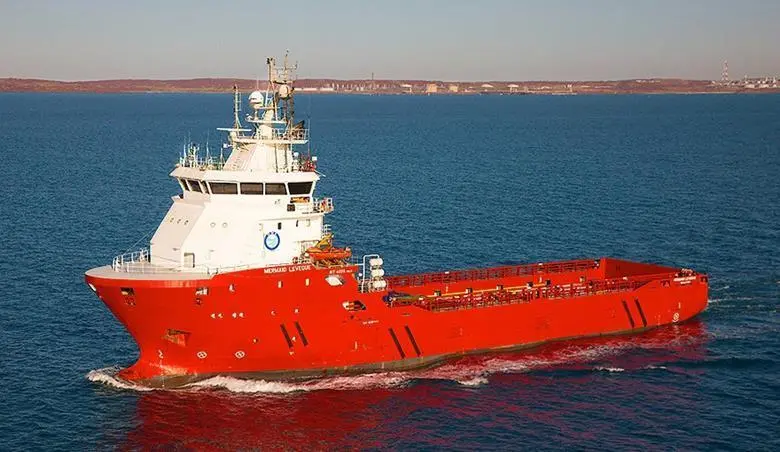
These efforts can have a material effect on shipping, but they also provide an opportunity for shipping and its customers to develop new, greener technologies that will help both to reach their environmental targets.
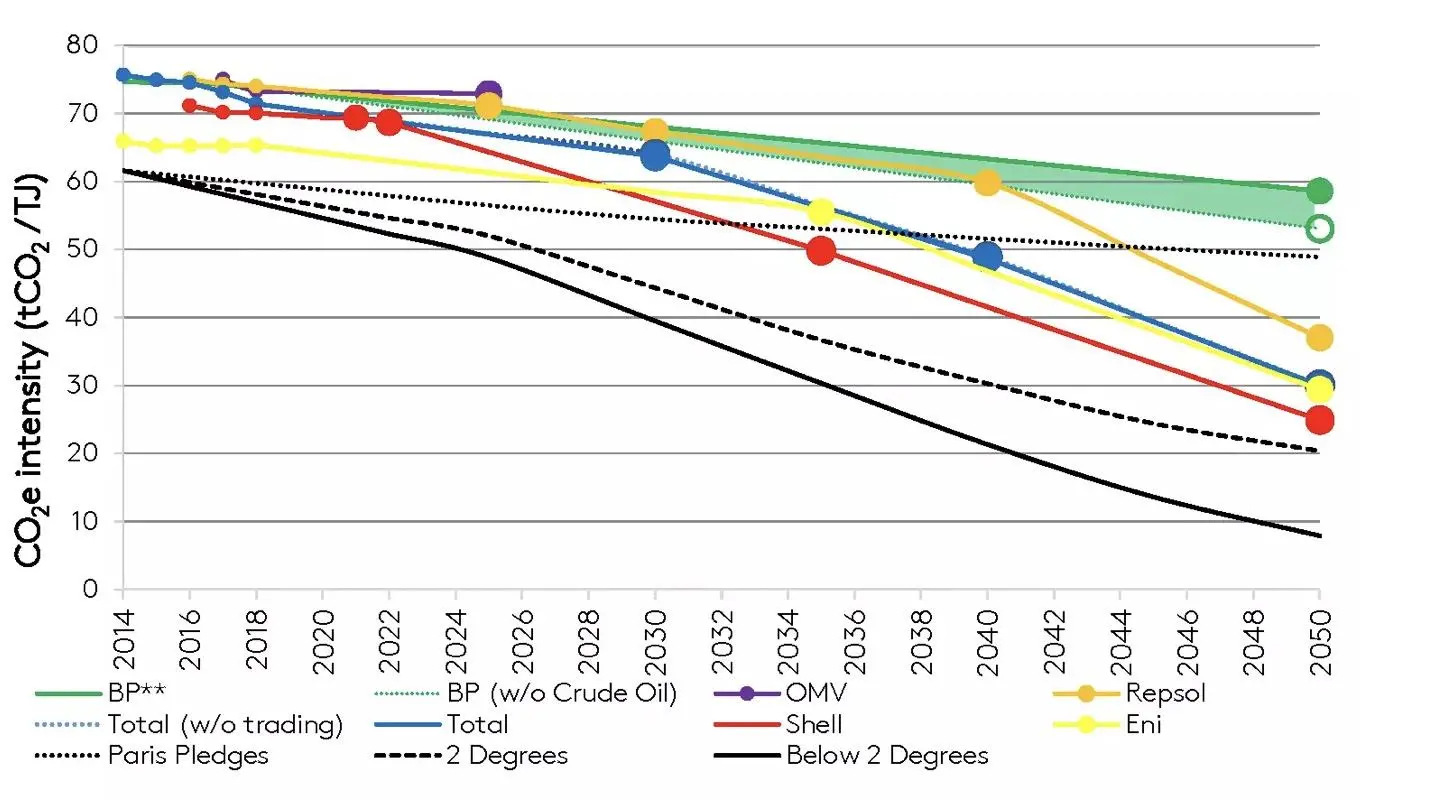
Several oil majors have set their strategies to reduce their CO2 emissions and the London School of Economics and Transport Pathway Initiative have calculated how major European integrated oil and gas companies intend to proceed, including their Scope 3 emissions
Among the observations that the research team headed by Simon Dietz, professor of environmental policy, was that if the companies increase their renewable sales exceed those of fossil fuels, then the carbon intensity of their operations would decrease. For this reason, it is important that emissions are looked also in absolute terms rather than relative ones, they noted.
The world’s first dual fuel LNG powered VLCC started sea trials in September in China and Total was the first oil company to opt for this fuel on a VLCC when in 2020 it agreed to take on charter two newbuildings due to enter service in 2022.
It is not just the oil companies that are looking to reduce their Scope 3 emissions, but also those in the mining sector. The proportion of shipping of the total Scope 3 emissions may be rather small, but these companies have taken shipping under scrutiny as well and quite a few have set targets to reduce them significantly.
Brazil-based mining major Vale has announced a target to reduce its net Scope 3 emissions from its client and supply chain by 15% by 2035, with further reductions likely to be announced at 5-year intervals.
To put the scale of such a reduction into context, Vale’s transportation-related Scope 3 emissions in 2019 accounted for 3% of Vale’s total greenhouse gas emissions, or around one-third more than its Scope 1 and 2 emissions put together.
Other mining companies have also announced plans to amend Scope 3 emissions. Anglo American PLC, the London based mining company, which has calculated that its Scope 3 emissions amounted to 225.37 million tonnes of CO2 equivalent in 2018. Upstream transportation and distribution of purchased goods accounted for 0.45 million tonnes of this and the company says this is not considered to have a material impact on the overall Scope 3 emissions.
However, it also said: “The company’s influence over suppliers, delivery frequencies and modes and the company’s exposure in this regard to climate-risks makes these activities a priority for this exercise,” referring to reducing greenhouse gas (GHG) emissions.
On the downstream side, these admissions were about ten times greater, 4.31 million tonnes and the company said it considers emissions from its iron ore business as material to overall Scope 3 emissions. “This product type accounts for most emissions arising from downstream transportation and distribution activities, due to customer distances being notably greater than for the other commodity types and the significance of the bulk product moved,” it noted in a report on its emissions.
It regards emissions from this category as material, as well as considering climate-risk exposure and the company’s influence over supplier practices.
LNG and biofuels in spotlight
The company has committed itself to reach carbon neutrality in shipping operations that it controls – the company operates a fleet of about 30 bulk carriers – by 2040 and a reduction of 30% in emissions by 2030, it said in a strategy unveiled in early November.
“Our ambition to decarbonise our controlled ocean freight activities is aligned with our climate related goals set out in our Sustainable Mining Plan. We aim to fulfil it through a framework of comprehensive solutions that will include alternative marine fuel options and will be backed by regular and validated emissions performance reporting,” Silvia Danti, communications lead, marketing told The Motorship.
“At this stage we have committed to four LNG-fuelled Capesize plus vessels. The vessels will be owned by U-Ming Marine Transport and are expected to be delivered by 2023,” she added. The ships were ordered in 2020 and their CO2 emissions should be 35% less than those of a comparable size vessel using conventional fuel.
In the summer, Anglo American trialled the use of a biodiesel blend on a Capesize bulk carrier on a voyage from Singapore to South Africa. Waste cooking oil was processed to biofuel by Alpha Biofuels, a company based in Singapore, and a biodiesel blend that used 7% of this and 93% of regular fuel was supplied by Toyota Tsusho Petroleum.
Rio Tinto, the Anglo Australian mining giant, has set a target to reduce its Scope 3 emissions by working together with steelmakers to cut carbon intensity of this process by at least 30% from 2030, with carbon neutrality as an aim by 2050, according to a report by IHS Markit.
This – and similar statements by other companies – could be significant for the shipping industry, given their importance in a number of major commodities carried by Capesize bulk carriers.
Rio Tinto has also opted for LNG powered ships to reduce its Scope 3 emissions. These totalled 519.4 million tonnes of CO2 equivalent in 2020, of which transport and distribution accounted for 8.1 million tonnes.
To reduce these, the company has agreed to take on 10 year time charters 12 Newcastlemax vessels that will use LNG as fuel and which will be owned by Eastern Pacific in Singapore and H-Line Shipping in South Korea.
The ships, which will be built at two Chinese shipyards, will have high- pressure ME-GI engines from MAN Energy Solutions and have two 3,100 m3 C-type LNG storage tanks. Each vessel will cost $67 million and they will be delivered from late 2023 to early 2024.
Australia-based BHP, which announced plans to end its dual-listing in London in August 2021, was the first mining company to agree a deal for LNG powered Newcastlemax ships. In late 2020, it decided to take on five year time charter five ships that Eastern Pacific would order in China, with deliveries set for 2022.
Related Articles
 ALTERNATIVE FUELS & LUBRICANTS
 ALTERNATIVE FUELS & LUBRICANTS
 ALTERNATIVE FUELS & LUBRICANTS