



Fully autonomous ship navigation systems tested on Japanese ferry
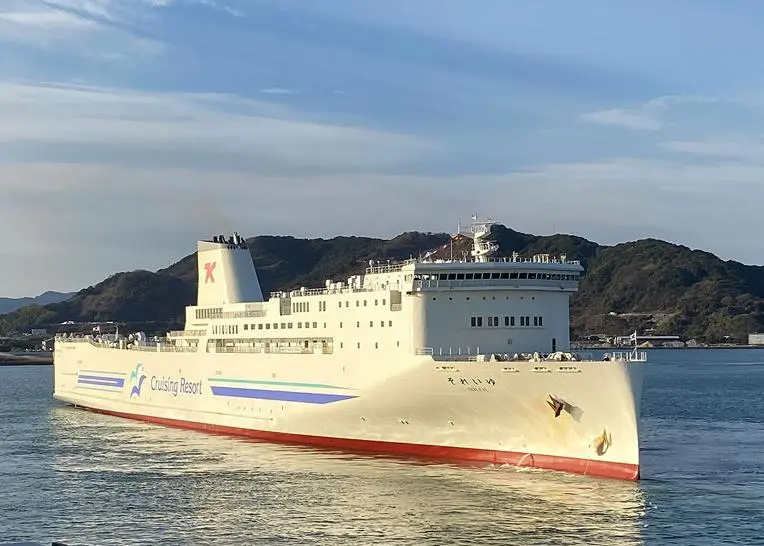
The voyage was conducted on the Iyonada Sea on January 17 and was part of MEGURI 2040, a project promoting the development of fully autonomous vessels supported by The Nippon Foundation.
The newly built Soleil began navigating with an onboard crew on July 1, 2021, compiling data for the development of a fully autonomous ship navigation system. In the January test, the 222-meter ferry underwent autonomous port berthing and unberthing using turning and reversing movements and high-speed navigation of up to 26 knots. The 240-kilometre route from Shinmoji (Northern Kyushu) to Iyonada took approximately seven hours, at a maximum speed of 26 knots.
The vessel was equipped with a high-precision sensor image analysis system with infrared cameras that can detect other ships even in darkness, a SUPER BRIDGE-X automated ship navigation system that includes an automated avoidance function, and an advanced automated port berthing/unberthing operation system that can perform turning and reversing movements that are difficult for manned vessels.
As one of the biggest issues for a fully automated vessel is fault prediction, an enhanced engine monitoring technologies that monitors motor conditions was also tested. The project is developing various other technologies essential to the promotion of fully autonomous navigation, including platforms for advanced data security to protect the navigation data used for onshore monitoring and support.
The Nippon Foundation launched the MEGURI 2040 fully autonomous ship navigation project in February 2020 and will be demonstrating their fully autonomous navigation system concepts from January to March 2022.
“This was the world’s first fully autonomous ship navigation of a large vessel of over 200 meters in length with a maximum running speed of 26 knots,” said Mitsuyuki Unno, Executive Director, The Nippon Foundation. “I hope this will lead to further development toward practical use. There are still many issues to be resolved, however, and I believe today’s results will be a guide toward the creation of international rules for fully autonomous vessels.”
Related Articles
 ENERGY SAVING DEVICES
 LNG
LNG
 ALTERNATIVE FUELS & LUBRICANTS